

THE PERFECT ITINERARY
How Dorian Would Do It
Milford Track NZ: Book the Three Huts Before the Flights

Co-Founder & Travel Advisor, Dorian Destinations · Published October 6, 2026 · ET
Plan a Milford Track NZ trip around the hut nights →
Every New Zealand enquiry I take opens with Queenstown. It is the wrong first question. A Milford Track NZ booking is the one thing on the whole South Island you cannot buy late, and every other date in the trip has to bend around it.
Here is the constraint nobody mentions until it is too late. The Department of Conservation runs three huts on the track — Clinton, Mintaro and Dumpling — at forty bunks apiece, camping is not permitted anywhere along it, and the whole thing can only be walked in one direction over three nights and four days. That is a hard ceiling of a hundred and twenty people a night, moving the same way, on one of the most wanted walks on earth. There is no late availability, no reversing it to dodge weather, and no shortening it. You either hold three consecutive hut nights or you are not walking.
Two sources carry this piece. Every distance, walking time, hut capacity, season date and fee below comes from the Department of Conservation, which administers the land and runs the booking system. Everything about the wider property — its size, its boundaries, what is actually protected and why — comes from the UNESCO World Heritage inscription for Te Wahipounamu, South West New Zealand.
What we cannot give you is a weather forecast or a guarantee. Fiordland is one of the wettest inhabited places in the world and the pass day is exposed; which of your four days is the clear one is luck.
Where this piece is making a judgement call rather than quoting a source — how long to leave on either end, which way round to walk the Routeburn, how much buffer a February booking needs — it says so in the line itself. Hut prices are DOC list rates in New Zealand dollars and change between seasons, so treat them as the shape of the cost, not a quote.
Te Wahipounamu encompasses many complete mountains-to-the-sea or mountains-to-inland-basins landscape sequences. — UNESCO World Heritage Centre, on the Integrity of Te Wahipounamu
Why the Milford Track NZ Season Decides Everything Else
The Great Walks season for 2026–27 runs from 1 November 2026 to 30 April 2027, with the last departure on 28 April. Inside those dates the huts are staffed, a DOC ranger is in residence, the bridges are in and the track sits in DOC’s intermediate category. Outside them it is reclassified as advanced and expert, facilities are stripped back, and DOC is blunt that it should only be attempted by people with alpine, river-crossing and navigation skills. For almost every traveller we work with, that means the walk exists for six months of the year and not the other six.
So the planning order inverts. You do not pick a fortnight in New Zealand and slot the walk in. You take whatever three consecutive hut nights you can get, and then you build the trip outward from them. DOC currently has bookings open for stays through to 30 June 2027, which tells you how far ahead the serious walkers are working.
It helps to know what you are actually walking into. Te Wahipounamu was inscribed in 1990 and covers 2.6 million hectares — ten per cent of New Zealand’s entire landmass — in a 450km strip running inland from the Tasman Sea. It swallows four whole national parks: Fiordland, Mount Aspiring, Mount Cook and Westland. The track is four days inside the first of them, and the single best argument for adding days at the end is that you are already standing in the other three.
The Route · Queenstown to Milford, then back up to the Routeburn · Tap a stop
- Queenstown — 2 nights. Land, hire what you are missing, lose the jet lag.
- Te Anau — 2 nights. The DOC desk, the forecast, and the last supermarket.
- Clinton Hut — 1 night. A boat, then 5km of beech forest.
- Mintaro Hut — 1 night. 17.5km up the Clinton Valley to the foot of the pass.
- Omanui/McKinnon Pass — 13km over the top at 1,154m, down to Dumpling Hut.
- Sandfly Point — 18km out to the boat and Milford Sound/Piopiotahi.
- The Routeburn — 2 nights, 33km, and a second national park.
1. Queenstown: Two Nights You Will Be Glad You Bought
Almost everyone flies into Queenstown, and almost everyone treats the first two nights as dead time. They are not. They are the buffer that absorbs a delayed connection, a bag that went to Auckland without you, and the discovery that the boots you have not worn since last summer no longer fit over the socks you brought. Queenstown has the gear shops to fix all three, and Te Anau does not, not at that range of stock.
It is also where a Milford Track NZ trip stops being an idea. You will see the Southern Alps from the air on the way in — UNESCO notes they rise to nearly 4,000m within 30km of the sea, which is why they look wrong from a plane window, too steep and too close to the coast at once.
Best for: absorbing travel failure before it costs you a Milford Track NZ hut night.
Go when: you have at least one spare day between landing and the trailhead — our judgement, not a DOC rule, but on a Milford Track NZ booking we have never once regretted buying it.
2. Te Anau: the Last Town Before the Milford Track NZ Trailhead
Two hours south of Queenstown, Te Anau is where the Milford Track NZ actually gets organised. The DOC visitor centre is here, and so is the last supermarket worth the name. This is where you weigh the pack honestly, buy the four days of food you will carry, and read the forecast with somebody who reads it for a living.
Give it two nights rather than one. The second night is not sightseeing. It is the one that lets you repack on a morning you are not also catching a boat. Lake Te Anau, for the record, is the largest body of fresh water in Australasia, and the Kepler Track leaves from the edge of town if you want a loaded day walk to test the boots.
Best for: the last decisions you can still change before the Milford Track NZ boat.
Go when: the day before your first hut night, so the boat departure is a short morning rather than a long one.
3. Glade Wharf to Clinton Hut: Five Kilometres, and That Is the Point
Day one is a 1 hour 15 minute boat across Lake Te Anau from Te Anau Downs, then 5km of walking that DOC times at an hour to ninety minutes. People find this faintly embarrassing. It is the most intelligent short day the Milford Track NZ route has.
What it does is put the whole party in one place, rested, on the same night, at the start of a four-day commitment nobody can leave early. The walk itself follows the Clinton River through beech forest, and there are swimming holes near the hut and a wetland boardwalk if the afternoon is yours. The ranger sometimes runs a guided walk late in the day. Clinton Hut has 40 bunks, flush toilets, heating, solar lighting and cold tap water that DOC says to boil. It does not have cooking utensils or a shower, and it will not for the next three nights either.
Best for: arriving on the Milford Track NZ with the day still ahead of you.
Go when: the boat goes — the departure is fixed and the walking is not the constraint.
4. Clinton Hut to Mintaro Hut: Seventeen and a Half Kilometres of Warning
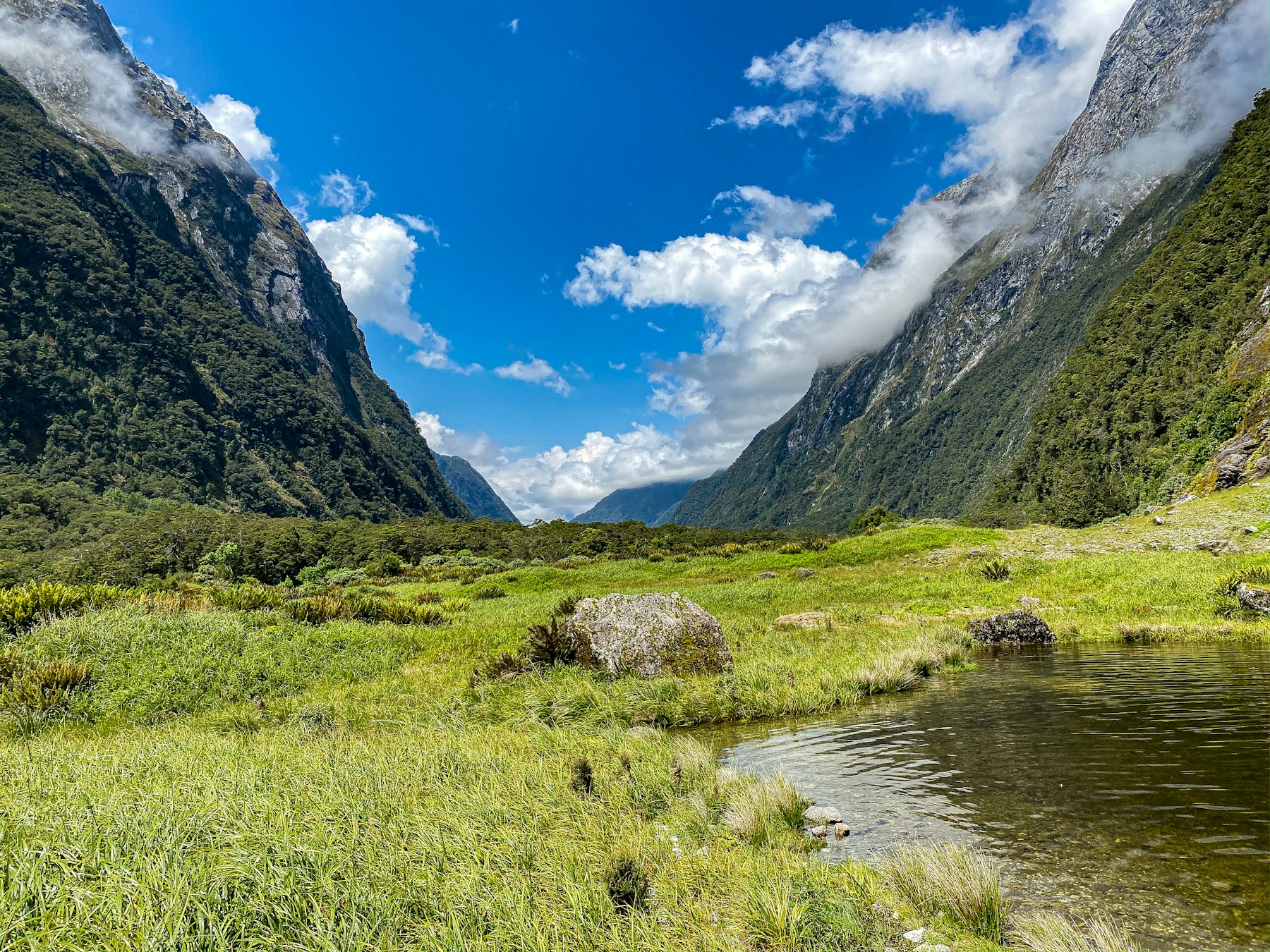
Six hours, 17.5km, and a gradual climb that follows the Clinton River all the way to its source at Lake Mintaro. This is the Milford Track NZ day the valley does its work on you. The walls close in, you pass Hirere Falls, and somewhere along it you get your first proper look at Omanui/McKinnon Pass and the Pompolona icefield above it.
It is the day that tells you what tomorrow is. Two-thirds of the property is southern beech and podocarp, some of it over 800 years old, and you will walk up through the vegetation changing by altitude as the canyon narrows. Mintaro Hut is another 40 bunks at the foot of the climb. Sleep early. There is no version of the pass day that starts late and goes well.
Best for: understanding the scale before you are standing in it.
Go when: you have eaten properly the night before — this is the Milford Track NZ day the pack still weighs almost everything it did at the wharf.
5. Mintaro to Dumpling: the Milford Track NZ High Point
Thirteen kilometres, six to seven hours, and the only part of the whole route that is genuinely alpine. You climb to Omanui/McKinnon Pass and the memorial to Quintin McKinnon, with Lake Mintaro and the Clinton Canyon opening up behind you as you gain height. The pass shelter sits at 1,154m and is the highest point on the track.
This is the day the route graphic above is really about. Everything before it is a valley floor and everything after it is a valley floor; there is one crossing, in one direction, and no way to take it out of the itinerary. That single constraint is the reason a Milford Track NZ booking cannot be rearranged, and it is why we tell people to buy the hut nights and then argue about the flights.
Watch for kea on the tops. UNESCO’s inscription records it as the only alpine parrot in the world, and it will take an unattended pack apart with real competence. From the shelter you drop steadily through alpine garden to the valley floor, past a run of waterfalls along the Roaring Burn, to Quintin Shelter. Leave the pack there and take the Sutherland Falls side trip — DOC times it at an hour and a half return, and the falls drop 580m in three leaps out of Lake Quill. It is the single best ninety minutes on the track and the one thing people regret skipping.
Dumpling Hut, the last on the Milford Track NZ, is a further stretch on, 40 bunks again. By now the pack is three days lighter and you have crossed the only thing standing between the lake and the sea.
Best for: the one Milford Track NZ day you will describe to people for years.
Go when: you wake to a window in the weather — and if you do not get one, you go anyway, because the hut behind you is booked by somebody else tonight.
6. Dumpling Hut to Sandfly Point: the Last Eighteen Kilometres
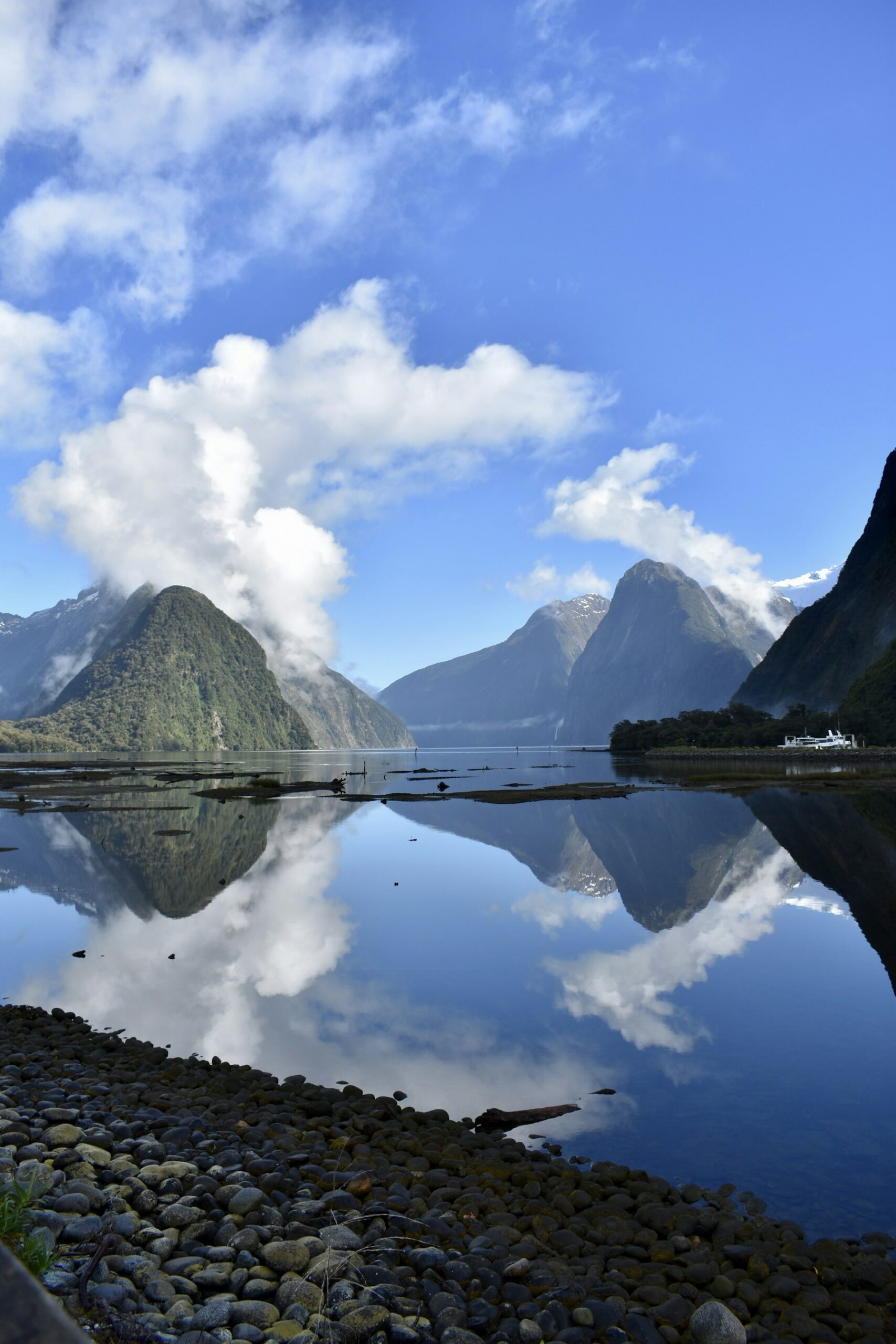
Five and a half to six hours and 18km, following the Arthur River past the historic Boatshed, Mackay Falls and Bell Rock. The last 3km run along a smooth, wide track cut by a prison labour gang between 1890 and 1892, which is an odd thing to be grateful for and you will be grateful for it anyway.
There is no road at Sandfly Point. A short boat takes you out, and the views on the way are of Milford Sound/Piopiotahi itself. Give yourself a night here or back in Te Anau before you drive anywhere — our judgement, but four days of walking and then three hours behind the wheel is how good trips end badly.
Best for: finishing somewhere you cannot simply walk away from.
Go when: your boat is booked — DOC requires Milford Track NZ bookings for transport as well as huts, and the two are not the same reservation.
7. The Routeburn: the Half of the Property Almost Nobody Walks
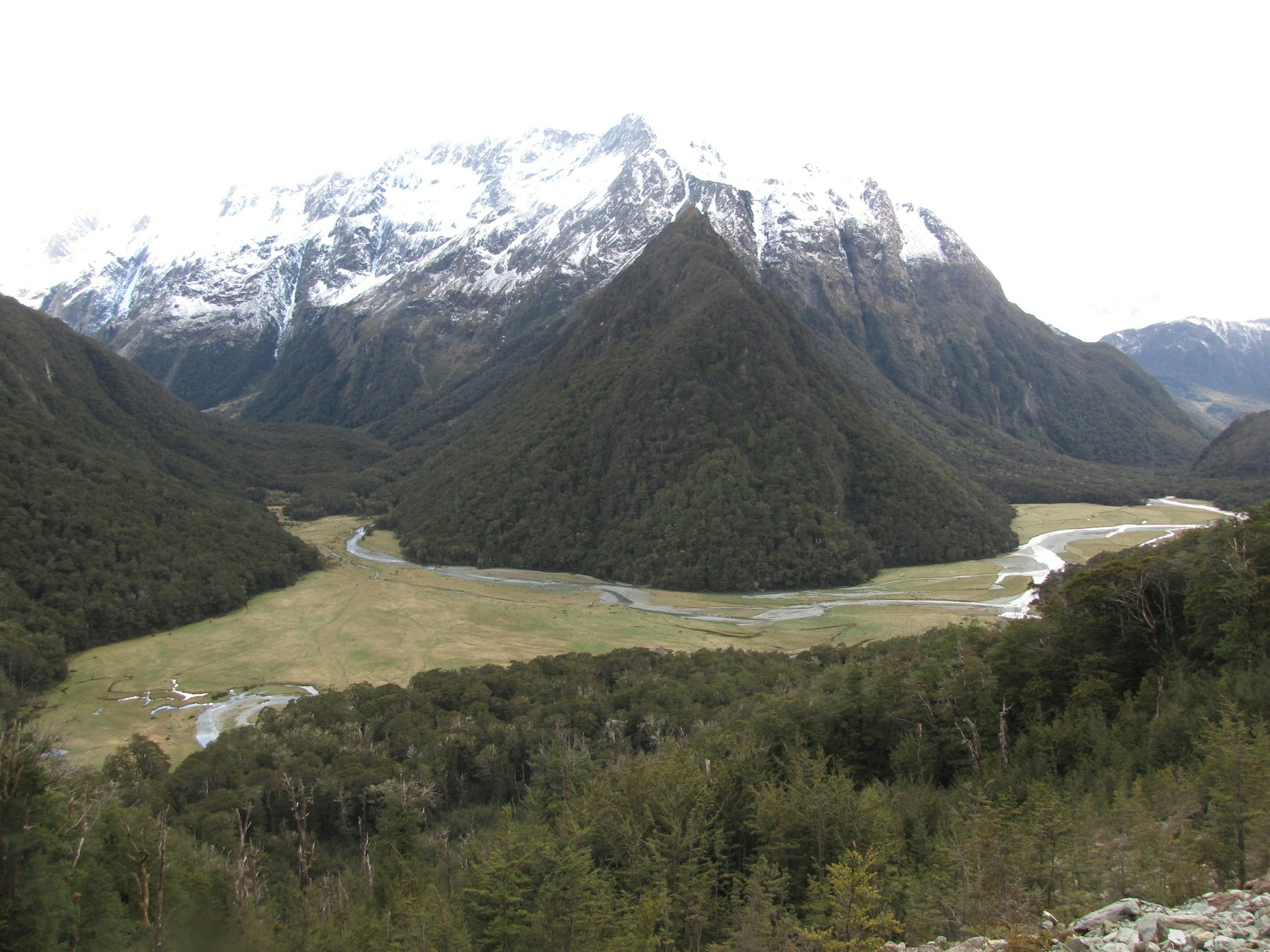
Here is the thing worth knowing. Te Wahipounamu as it exists today is a 1990 reformulation of two separate properties inscribed in 1986 — Fiordland, and Westland/Mount Cook. The 1990 listing added 1.2 million hectares of the land in between, almost doubling the inscribed area. The Routeburn crosses exactly that kind of ground: DOC lists it in Mount Aspiring National Park and Fiordland National Park, because it walks over the boundary between them.
It is 33km, two to four days, and unlike the Milford Track NZ it can be walked in either direction. Most people take three days and two nights, staying at Routeburn Falls and Lake Mackenzie. There are campsites as well as huts, which the Milford does not allow at all. You can also link it to the Greenstone and Caples Tracks and make a circuit of it.
Best for: the traveller who worked out that the Milford Track NZ was never the whole point.
Go when: it sits after the Milford Track NZ in your week — by then you are fit, and the Routeburn rewards fitness with its high sections rather than punishing you for arriving soft.
More from Dorian Destinations: the same booking-first logic, on a bigger mountain — Everest Base Camp Trek: Book the Villages, Not the View.
The Three Fiordland Great Walks, Side by Side
The Milford Track NZ is the one everybody names, but it is one of three Great Walks run out of the same corner of the same property, and they are not interchangeable. The differences that matter when you are choosing are the direction rule, whether you can camp, and when the season opens.
| Track | Length | Days | Direction | Camping | 2026–27 season | Hut, adult intl, in season |
|---|---|---|---|---|---|---|
| Milford Track | 53.5 km one way | 4 | One direction only | Not permitted | 1 Nov – 30 Apr (last departure 28 Apr) | NZ$152 per night |
| Routeburn Track | 33 km one way | 2–4 | Either direction | Two campsites | 1 Nov – 30 Apr | NZ$132 per night |
| Kepler Track | 60 km loop | 3–4 | Loop | Two campsites | 27 Oct – 30 Apr | NZ$132 (Luxmore priced separately) |
Every figure in this table is DOC’s own published rate or measurement for the 2026–27 season, not our estimate. Fees are per person per night at the international adult rate and drop sharply outside the Great Walks season; child, infant and New Zealand resident rates differ. The Kepler season opens five days earlier than the other two, which is DOC’s published date and the only thing on this table we would call a planning lever.
Booking the Milford Track NZ: What Actually Happens
What you are actually reserving
Three specific hut nights, in sequence, on named dates, walked in one direction. Not a permit, not a window. DOC also requires bookings for the transport at both ends, and those are separate reservations you have to make yourself. People lose trips by holding the huts and assuming the boats follow.
What the huts do and do not have
Bunks, mattresses, heating, flush toilets, basic cooking facilities, solar lighting, cold running water to be boiled, and a DOC ranger in residence. No cooking utensils, no showers, no food, no bedding. Forty bunks each at Clinton, Mintaro and Dumpling, and no camping anywhere on the track.
What it costs before you have flown anywhere
In the 2026–27 Great Walks season DOC charges NZ$152 per adult international visitor per night, so the three Milford Track NZ hut nights alone are NZ$456 a head. New Zealand residents pay NZ$106 with proof of eligibility. Outside the season the same bunk is NZ$30, which tells you what you are paying for: the ranger, the bridges and the staffing, not the view.
The twelve nights, counted
Two in Queenstown, two in Te Anau, three on the track at Clinton, Mintaro and Dumpling, one at Milford or back in Te Anau, two on the Routeburn, and two in Queenstown at the end. Twelve. Build that around the Milford Track NZ hut dates you got, not the other way round.
See how we structure a 12-night South Island route →
Frequently Asked Questions
How hard is the Milford Track NZ, really?
Inside the Great Walks season DOC rates it an intermediate tramping track, which means a formed route with bridges and marked surfaces rather than technical ground. The hard parts are the distance on consecutive days and the pass crossing at 1,154m. Outside the season the same track is rated advanced and expert.
Can you still book the Milford Track NZ for this season?
DOC has bookings open for the 2026–27 season and currently takes reservations for stays through to 30 June 2027. Whether any given date is still available is a different question entirely, and the realistic answer for peak summer is no. Check DOC directly and take whatever consecutive three nights exist.
Can you walk the Milford Track in both directions?
No. DOC states the Milford Track can only be walked in one direction, over three nights and four days. The Routeburn, by contrast, can be walked either way, and the Kepler is a loop. That single rule is the main thing that makes the Milford so inflexible to schedule.
Do you need to book transport as well as the huts?
Yes. DOC lists bookings as required for huts and transport on this track. You need the boat from Te Anau Downs to Glade Wharf at the start and the boat out from Sandfly Point at the end, because there is no road access at either point. Book them with the huts.
Should you add the Routeburn Track to a Milford Track NZ trip?
If you have the days, yes. It is 33km over two to four days, it crosses from Fiordland National Park into Mount Aspiring National Park, and it covers ground that only entered the World Heritage property in 1990. It is also cheaper per hut night and far easier to schedule.
The Dorian Destinations Verdict on the Milford Track NZ
It is worth it, and it is worth doing in the only order that works. Take the Milford Track NZ hut nights you can get, in whatever month you can get them, and then buy the flights. Every traveller we have watched do it the other way has either walked in the wrong week or not walked at all.
The sharper point is the one the inscription makes for you. Te Wahipounamu is 2.6 million hectares and four national parks, and the Milford is four days in one valley of it. That is a magnificent four days and it is also a very small sample.
The reason we put the Routeburn at the end of this route rather than offering it as an alternative is that it costs you two more nights and takes you over a park boundary into country that was not even part of the property forty years ago. Walk one and you have seen a valley. Walk both and you have started to see the place.
If you want the same argument on different ground, we have made it before about Everest and about Patagonia: the famous objective is rarely the best thing in the protected area that contains it.
Talk to a specialist who has booked these huts before →
Sources: distances, walking times, hut capacities and facilities, season dates and fees from the New Zealand Department of Conservation’s pages for the Milford Track, Routeburn Track and Kepler Track. Property size, boundaries, inscription history, criteria and natural values from the UNESCO World Heritage Centre inscription for Te Wahipounamu — South West New Zealand and its New Zealand state party record. Related Dorian Destinations planning: Peru Itinerary and Kilimanjaro Climb Tours.
Itineraries · New Zealand · Adventure Travel · National Parks