

Adventure & Expedition Travel
Travel Beyond the Ordinary
Trekking Tours: Book the Beds Before You Book the Mountain

Co-Founder & Travel Advisor, Dorian Destinations · Published October 8, 2026 · ET
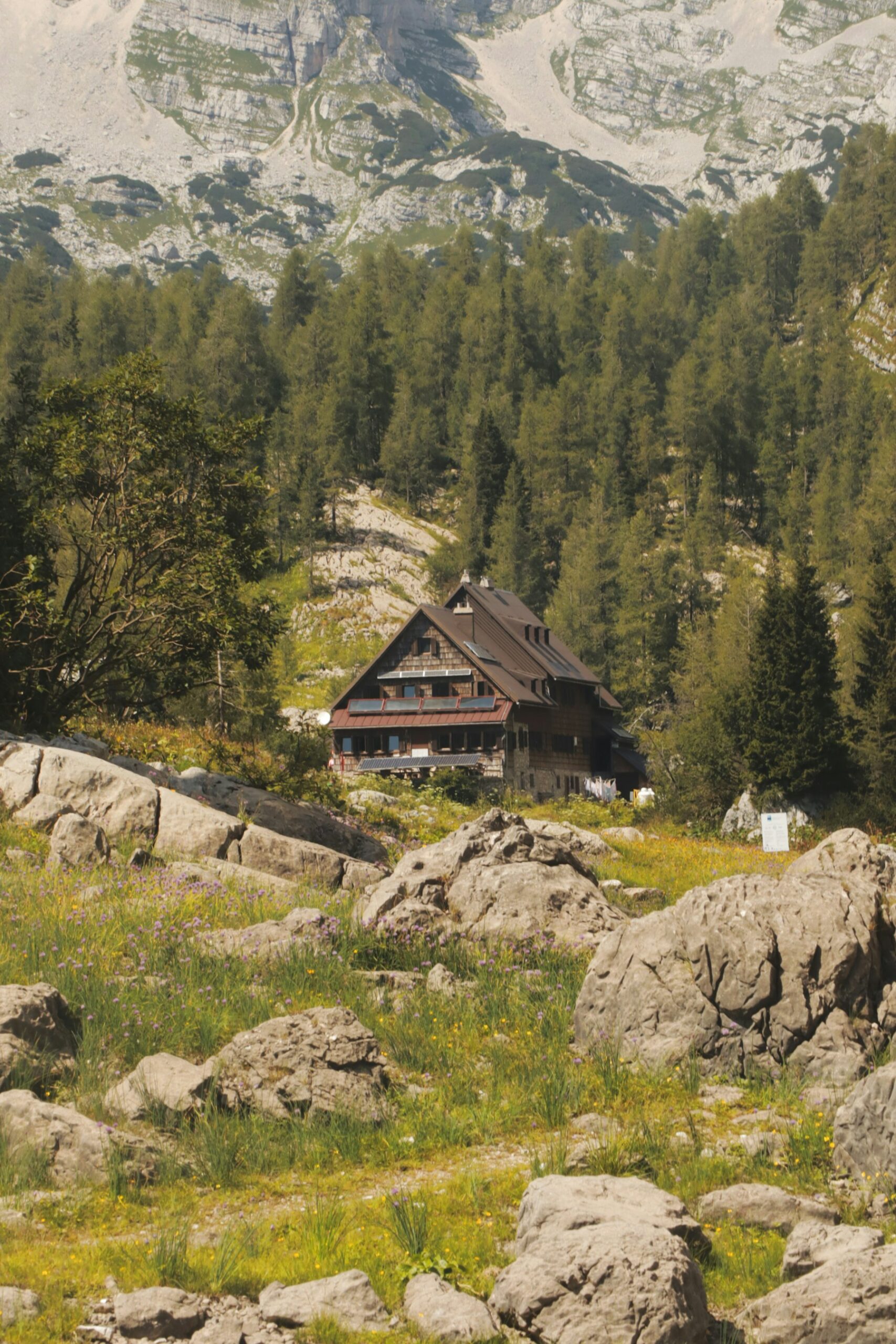
Plan trekking tours around the beds, not the summit →
Almost every trek that falls apart falls apart in an office, not on a mountain. The beds ran out. The permit window shut. The season moved three weeks and nobody told the client.
We have now written four of these walks up one at a time — Patagonia, Kilimanjaro, the Khumbu, the Milford Track — and the same sentence keeps turning up in all four. The mountain is not the constraint. The mountain has been there for several million years and will be there next April.
What is scarce is a bunk, a permit, a guide and a weather window, and those four things are governed not by the peak you are photographing but by the protected area it sits inside. So this is the piece above the other four: seven great walks, sorted by the World Heritage property each crosses, and what that property’s paperwork says to book first.
Every figure below — areas, inscription years, elevations, boundary language — comes from the UNESCO World Heritage Centre’s own property records, linked where it appears. Where a number was not published by UNESCO, it is not here. We quote no price, permit fee or hut tariff anywhere, because those change on their own schedule and a stale number is worse than none.
The shape of the piece is ours, and it is judgment rather than sourcing. UNESCO publishes boundaries; it publishes no running order for seven walks on five continents and has no opinion about which you should book first. The order below, the seasonality calls and every line marked Go when: are our reading of how these places behave for clients, labelled as judgment wherever they appear.
And the honest limit: we are travel advisors, not a trekking outfitter. We hold no hut allocation on any of these routes, we employ no guides or porters on any of these mountains, and we cannot get you a bed in a Fiordland hut in January that somebody else booked in July.
Its impressive landscape has played an important role in European art, literature, mountaineering and alpine tourism.
— UNESCO, on the Swiss Alps Jungfrau-Aletsch property
What Trekking Tours Are Actually Selling You
Read that quote again. UNESCO is listing why a mountain range deserves world protection, and one of its reasons is alpine tourism — the walking is part of the inscribed value, not a nuisance the property tolerates.
Most trekking tours are sold the wrong way round. The brochure photograph is a summit; what you are buying is a system of beds, tracks, permits and seasons, run by whoever manages the protected area. Where that system is generous, trekking tours can be assembled in a month. Where it is tight — fixed bunks, one legal direction, a season with a published start date — the walk is rationed, and the rationing is public information you can read before you pay anybody.
So the seven trekking tours below are not ranked by beauty. They are ordered by what rations them, from a property so generous it misleads you to the one where a fixed number of bunks governs everything.
1. The Dolomites, Italy — the name on the brochure is not a boundary
Start with the one that teaches the wrong lesson, because it is the one most people meet first. The Dolomites were inscribed in 2009 and the property runs to 141,902.8 hectares with a further 89,266.7 hectares of buffer zone — but it is a serial property made of nine separate components, not one block. UNESCO’s citation describes cliffs that rise more than 1,500 metres and ranks them among the highest limestone walls found anywhere in the world.
Here is the practical consequence. Trekking tours sold as the Dolomites may cross one component, several, or none at all, and the brochure will not tell you which. The infrastructure is also the loosest on this list: rifugi are dense, valleys are roaded, and a walk can be assembled late. That freedom is the trap. It trains people to think every famous range works this way.
Best for: a first hut-to-hut week, and for anyone who wants to learn how huts work before the stakes rise. The gentlest trekking tours here.
Go when: our judgment, summer into early autumn, and late enough that the high refuges are staffed — ask the operator which of the nine components you actually enter.
2. The Tasmanian Wilderness, Australia — a quarter of an island, and a track through the middle
The Tasmanian Wilderness was inscribed in 1982, with significant boundary modifications in 1989, and now covers 1,584,233 hectares — which UNESCO describes as almost a quarter of the Australian island state. It is a mixed property, listed for nature and culture together, and the cultural half changes how you read it. UNESCO records Tasmanian Aboriginal occupation going back approximately 40,000 years, calls the property one of the world’s great archaeological provinces, and describes a landscape shaped by Aboriginal fire management practices over millennia.
So the thing walkers call wilderness is a managed place with a 40,000-year management history, and that is why trekking tours here run on a booking system and a published season rather than on whim. Scale is the other lesson: a quarter of an island, and a six-day walk sees a corridor of it.
Best for: walkers who want a long, serious, properly remote track without altitude in the equation.
Go when: judgment — the southern summer, and book the moment the season opens rather than when you decide to go. Trekking tours here vanish within days of that date.
3. Te Wahipounamu, New Zealand — where trekking tours sell out first
Te Wahipounamu – South West New Zealand was inscribed in 1990 and covers 2,600,000 hectares, which UNESCO puts at ten per cent of New Zealand’s landmass, spread over a 450-kilometre strip reaching 40 to 90 kilometres inland from the Tasman Sea. The numbers in the citation are the kind you read twice.
The Southern Alps rise to nearly 4,000 metres within a mere 30 kilometres of the sea. Fifteen fiords indent the Fiordland coast. Thirteen forested marine terraces have been lifted more than 1,000 metres over the past million years. The Franz Josef and Fox Glaciers descend into temperate rainforest. The great Alpine Fault running through it is one of only three segments of the world’s major plate boundaries on land.
And then the walking. UNESCO’s criterion (vii) says the property holds New Zealand’s highest mountains, longest glaciers, tallest forests, wildest rivers and gorges, most rugged coastlines and deepest fiords and lakes — a sentence that reads like a tourism board wrote it, except that an evaluation committee did.
This is the tightest infrastructure on the list and the reason the piece exists. The famous track through it runs one direction only, on fixed nights, in huts with a fixed number of bunks, inside a season with a published start date.
We wrote that walk up on its own a fortnight ago, and the most useful thing in it is the order of operations: the huts first, then the flights, then everything else. Trekking tours here are not sold out because the operator is clever at marketing. They are sold out because the property’s managers decided how many people sleep in the valley each night, and that number is small.
Best for: walkers who will plan a year out; the most controlled, least crowded trekking tours in this article.
Go when: judgment — the published season only. On these trekking tours the hut booking date is the real departure date.
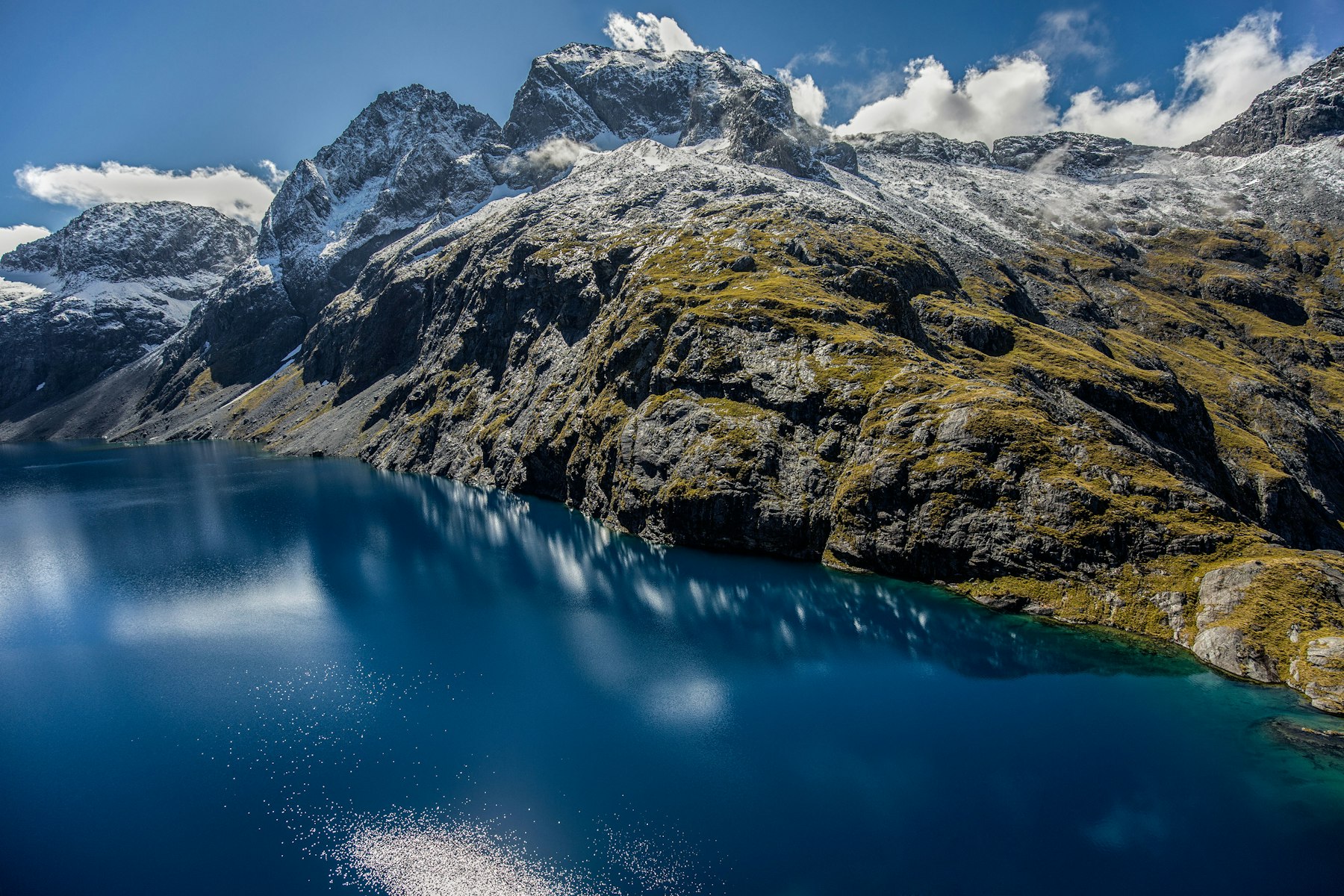
4. Sagarmatha, Nepal — the beds are outside the boundary
Sagarmatha National Park was inscribed in 1979 and covers 124,400 hectares in the Solu-Khumbu, with an elevation range of 6,000 metres and Everest itself at 8,848 metres. UNESCO’s record also notes seven peaks other than Everest above 7,000 metres inside the same property, which is the sort of fact that quietly rearranges what you thought you were booking.
The boundary does something stranger. The buffer zone to the south was designated in 2002 and, in UNESCO’s own words, is not part of the inscribed property. That is where most of the villages are. So the beds you sleep in on the standard walk are, by legal definition, outside the World Heritage site you came to see — and they are run by the people whose land management UNESCO credits with the park’s survival.
Book the villages and the mountain comes free; book the mountain and you may find the villages full — the clearest case here of trekking tours rationed somewhere other than where you are looking. We argued this at length in our Everest Base Camp trek guide.
Best for: trekking tours where the bottleneck is a lodge bed rather than a permit quota, and where the culture is half the point.
Go when: judgment — the two dry windows either side of the monsoon, and book the lower villages first.
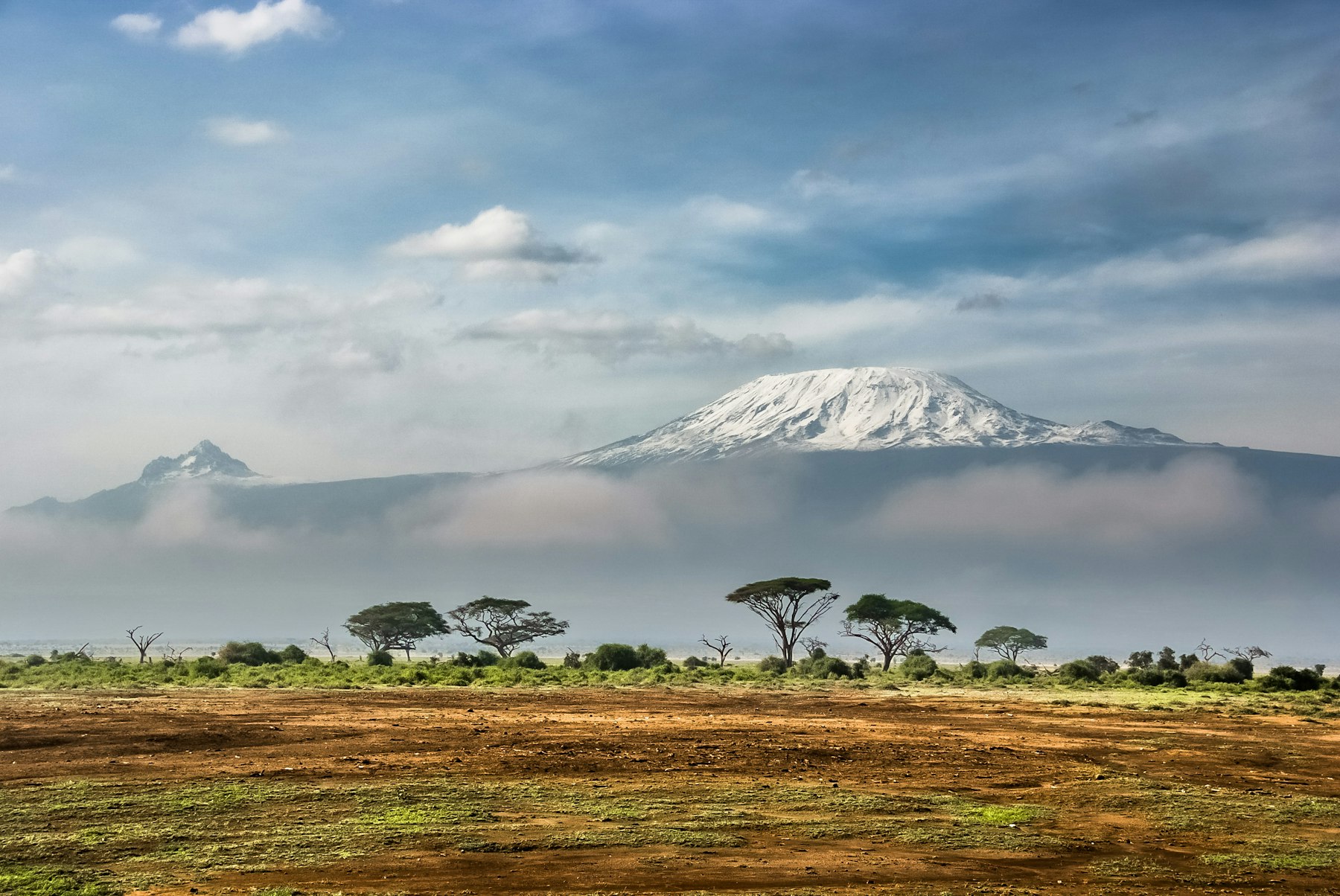
5. Kilimanjaro, Tanzania — the smallest property here, and the busiest
Kilimanjaro National Park was inscribed in 1987 and is the smallest property in this article at 75,575 hectares — the park itself was established in 1973. UNESCO calls it the largest free-standing volcanic mass in the world and the highest mountain in Africa, rising 4,877 metres above the surrounding plains to a summit of 5,895 metres. Subtract one from the other and the savannah you start from sits at a little over 1,000 metres, which is why the climb crosses five vegetation zones and three volcanic peaks — Kibo, Mawenzi and Shira — in under a week.
Smallest property, biggest crowd. Trekking tours here are rationed by route and by crew rather than by bunks: which trail the operator holds, how many nights it spends, how its porters are paid. That is a procurement question, not a mountaineering one. Our Kilimanjaro guide sets out what to ask.
Best for: a first high-altitude summit, and for travellers with a fortnight rather than a month.
Go when: judgment — the drier months. Of the trekking tours on offer here, buy the longer itinerary over the cheaper one every time.
6. Huascarán, Peru — the high range almost nobody walks
Huascarán National Park was inscribed in 1985 and covers 340,000 hectares of the Cordillera Blanca, which UNESCO describes as the world’s highest tropical mountain range. Mount Huascarán rises to 6,768 metres above sea level. The citation adds deep ravines watered by numerous torrents, glacial lakes, a wide range of vegetation, and the spectacled bear and Andean condor among its species.
By every measure that sells a trek this should be as famous as the Khumbu, and it is not. So the infrastructure is loose for a good reason: there is less pressure on it. That cuts both ways. Trekking tours here can be planned inside a season, but fewer operators really know these valleys, which moves the risk from availability to competence. If Peru is already on your list, our Peru itinerary covers the acclimatisation problem that governs everything up here.
Best for: experienced walkers who have done one big-name trek and want their next trekking tours without the queue.
Go when: judgment — the Andean dry season, and give the altitude the same respect you would in Nepal.
7. Los Glaciares, Argentina — the one where the weather does the booking
Los Glaciares National Park was inscribed in 1981 and now covers 726,927 hectares. UNESCO describes rugged, towering mountains and numerous glacial lakes, including Lake Argentino at 160 kilometres long, and at its farthest end three glaciers meeting to launch icebergs into grey glacial water.
Southern Patagonia closes the list because it is the exception. Beds are comparatively gettable and permits are not the obstacle; the wind is. Days get cancelled, and the only defence is spare days, which you buy at the planning stage and cannot buy later. Trekking tours that run to the minute here are trekking tours that have not met Patagonia. Our Patagonia hiking guide makes the case for building the slack in deliberately.
Best for: walkers who can carry flexible dates and want big ice without altitude.
Go when: judgment — the southern summer. Build two spare days into any trekking tours here before you book anything that cannot move.
More from Dorian Destinations
Milford Track NZ: Book the Three Huts Before the Flights — the single clearest worked example of everything above, leg by leg.
The seven properties, by size
One thing is worth seeing side by side, because it undoes a lazy assumption: people read “national park” as a unit of measurement. It is not. The largest property here is roughly thirty-four times the size of the smallest, and the trekking tours through each take about the same number of days.
| World Heritage property | State party | Inscribed | Area (ha) | What that means for a walker |
|---|---|---|---|---|
| Te Wahipounamu | New Zealand | 1990 | 2,600,000 | Vast, and almost none of it walkable — which is why the few legal beds are rationed hardest |
| Tasmanian Wilderness | Australia | 1982 | 1,584,233 | A quarter of an island; the famous track sees a corridor of it |
| Los Glaciares | Argentina | 1981 | 726,927 | Room to move, so the constraint moves to the weather |
| Huascarán | Peru | 1985 | 340,000 | Big, high and under-visited; availability is not your problem, finding expertise is |
| The Dolomites | Italy | 2009 | 141,902.8 | Nine separate components — check which one you actually enter |
| Sagarmatha | Nepal | 1979 | 124,400 | Small, and the beds sit in the buffer zone outside it |
| Kilimanjaro | Tanzania | 1987 | 75,575 | Smallest here and busiest; rationed by route and crew, not by bunks |
Areas and inscription years are UNESCO’s own published property figures, each linked in the section above. The final column is our judgment, not UNESCO’s, and reflects how these places behave for clients rather than how they are managed.
How to Audit Trekking Tours Before You Pay a Deposit
None of this is specialist knowledge. It is three questions whose answers are public, which is why a vague answer tells you so much.
Ask which property you actually enter, and on which days
Every walk above names a World Heritage property with a published boundary. A good operator will tell you which days are inside it and which are not. A weak one will say the name of a region and move on. The Dolomites is the sharpest test, because there are nine components and a week can miss all of them.
Ask what the limiting resource is
Bunks, permits, crew or weather — it is one of those four on every route here, and the answer changes the plan. If the limit is bunks, the booking date is the trip. If it is weather, spare days are. Trekking tours whose operator cannot name the limiting resource are telling you something.
Ask what happens on the day it does not work
Then ask a second: what happened the last time it did not work, to a real group, and what did it cost them. The answer to the second tells you far more than the first, because the first is a policy and the second is a track record.
Have us audit a trek quote before you pay →
Frequently Asked Questions
Are trekking tours worth it, or should I book the trek myself?
If the route is rationed by bunks or permits, the value of trekking tours is in getting the booking date right rather than in the guiding, and that is a planning job. On a route limited by crew or weather, the operator choice is the whole thing. Decide which kind you are on first.
How far in advance should I book trekking tours?
It depends on the limiting resource, not the destination. Trekking tours on fixed-bunk systems can require booking the moment a season opens, often most of a year out. Weather-limited routes can be arranged far later, because the scarce thing is spare days in your own calendar rather than a bed.
Which of these seven walks is hardest to get a place on?
Te Wahipounamu, on the evidence of how its huts are run: one direction, fixed nights, a fixed number of bunks and a published season. Nothing else in this article is rationed that precisely, and no amount of money or persuasion adds a bed to a hut that is full.
Do you need a guide to walk inside a World Heritage site?
It varies by property and by route, and UNESCO does not set that rule — the national or state agency managing the property does. That is the body to check with, and it is also the body whose published season dates and booking systems you should be working from rather than a brochure.
Which trek is best for a first-timer?
Our judgment is the Dolomites, for the reason that makes it the weakest entry on this list: the infrastructure is forgiving. You learn how huts, stages and mountain weather work somewhere a bad day is recoverable, which is worth more than a harder badge earned once.
The Dorian Destinations Verdict on Trekking Tours
Do not book the famous walk that happens to be available. That is the whole position, and it is the opposite of what the market rewards.
When a celebrated route has your exact dates free at six weeks’ notice, one of a few things is true. The season is wrong. The route has been swapped for a lesser one with the same name. Or the nights are spent outside the property you think you are visiting. Availability on rationed trekking tours is information, and it is almost never good news.
Move your dates to fit the beds. If the beds are gone, walk somewhere else this year and keep the famous one for next.
That advice costs us money and we would rather say it than not. Short-notice trekking tours are the easiest thing an advisor sells: the client is motivated, the dates are fixed, nobody asks to see a boundary map, and the margin beats a trip we spent nine months assembling around a hut booking. Nobody has ever rung us annoyed that they got the trek they wanted a year late. Plenty have rung from the wrong valley.
Talk to a Dorian Destinations advisor →
Sources: UNESCO World Heritage Centre property records for The Dolomites, the Tasmanian Wilderness, Te Wahipounamu – South West New Zealand, Sagarmatha National Park, Kilimanjaro National Park, Huascarán National Park, Los Glaciares National Park and the Swiss Alps Jungfrau-Aletsch. Descriptions are available under licence CC-BY-SA IGO 3.0. Seasonality, ordering and every line marked as judgment are ours. Photographs via Unsplash, credited in each caption.
Adventure Travel · National Parks · Best of Travel · Luxury Travel