

Beyond the Obvious
Discover More
Rhine River Cruise: Get Off the Ship at These Seven Stops

Co-Founder & Travel Advisor, Dorian Destinations · Published September 23, 2026 · ET
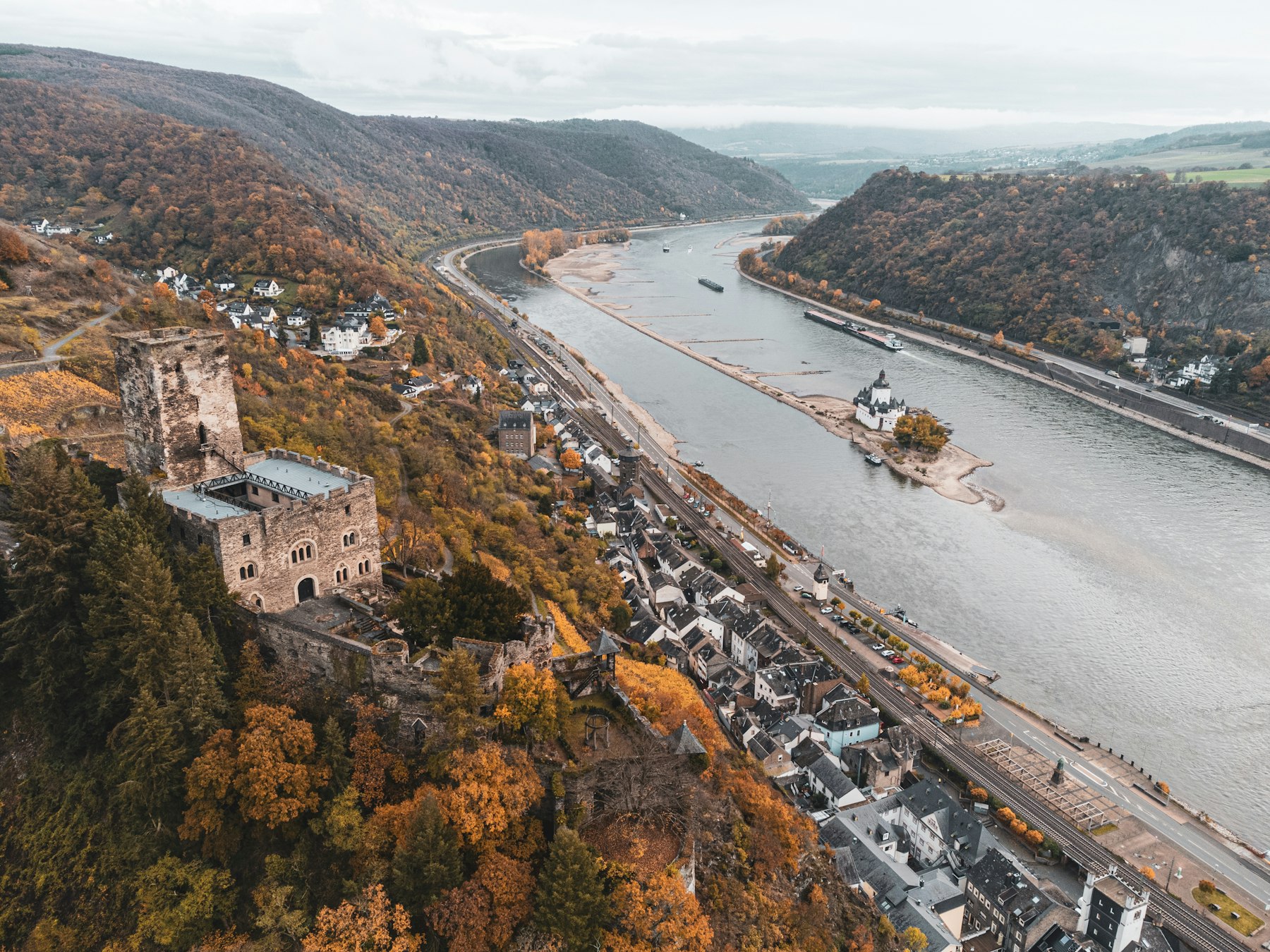
Almost every Rhine river cruise sails the same water. The difference between a good one and a forgettable one is not the ship. It is whether you are awake, and ashore, for the right sixty-five kilometres.
Germany has 55 properties on the UNESCO World Heritage List. The Netherlands has thirteen. One of them belongs to both countries at once, and it runs along the Rhine itself. That single fact reframes the whole Rhine river cruise category for me, because it means the river is not just the thing carrying you between attractions. In places, the river is the attraction, inscribed and mapped and argued for in exactly the way a cathedral is.
Everything below is sourced from one place: the UNESCO World Heritage Centre property records for Germany and the Netherlands. Inscription years, site boundaries, areas and descriptive language are theirs. The stop-by-stop ordering, the timing calls and the opinions are ours, and I have flagged them as judgment wherever they appear.
One limit worth stating plainly: we are travel advisors, not architectural historians, and we hold no cabin allocation and no shore-excursion inventory of our own on the Rhine. What we can do is read a Rhine river cruise sailing plan and tell you which hours of it are worth the fare.
UNESCO on the Upper Middle Rhine Valley: the gorge is reflected in “its sixty small towns, the extensive terraced vineyards and the ruins of castles that once defended its trade.”
What a Rhine River Cruise Actually Sails Past
Pull up the World Heritage map of Germany and the Netherlands and the Rhine corridor lights up. Reichenau on Lake Constance. Speyer Cathedral. The ShUM Sites of Speyer, Worms and Mainz. The Upper Middle Rhine Valley. Cologne Cathedral. The Lower German Limes. Kinderdijk. Amsterdam’s canal ring, inscribed in 2010, where most sailings tie up on the last morning.
That is a serious run of properties for one waterway, and the standard Rhine river cruise week puts you within walking distance of most of them. What it does not do is guarantee you see them. Ship schedules are built around dinner service, evening entertainment and the next morning’s port call, and the scenic stretches get slotted wherever they fit.
So the way we build these trips is backwards from the list below. We start with the seven places worth standing in, then find the sailing that puts you there in daylight with time to walk. Sometimes that means a different line. More often it just means a different week.
1. Reichenau, Before the Ship Even Starts
The monastic island of Reichenau sits in Lake Constance, at the very top of the navigable Rhine, and almost no cruise itinerary touches it. UNESCO inscribed it in 2000 for an ensemble of three medieval churches that hold Carolingian, Ottonian and Salian architecture in one place. The crossing, transepts and chancel of the Mittelzell basilica were consecrated in 816, and UNESCO calls them exceptional both in size and in state of preservation. There is a surviving stretch of the Carolingian monastery too, with a heating system modelled on Roman examples.
It is a two-night add-on before your Rhine river cruise boards, which is exactly why nobody does it. It is also the only stop on this list where you will have the place largely to yourself.
Best for: Rhine river cruise travellers who would rather arrive early than arrive on time.
Go when: late May into June, in our judgment — the lake is warm enough to be pleasant and the summer coach traffic has not started.
2. Speyer Cathedral, the Church Cologne Overshadows
Speyer gets skipped because Cologne is downstream and taller. That is a mistake. Konrad II founded the cathedral in 1030, probably just after his imperial coronation, and Henry IV rebuilt it after 1077 as what UNESCO describes as the first and largest consistently vaulted church building in Europe. It was the burial place of the German emperors for almost three hundred years.
UNESCO is unusually direct about its significance: by its proportions it is the largest example of Romanesque architecture in Europe, and by the history attached to it, the most important. It was built in conscious competition with the Abbey of Cluny, as the building that represented the papal opposition during the Salian period of 1024 to 1125. The inscribed property is tiny — 0.558 hectares — because it is one building and nothing else.
Best for: anyone who thinks a Rhine river cruise has exactly one great church.
Go when: any shoulder month; it is an interior, so weather barely matters.
3. The Rhine River Cruise Stop Nobody Sells: the ShUM Sites
This is the one I would put money on you not having heard of, and it was only inscribed in 2021. ShUM is a Hebrew acronym built from the initial letters of the Hebrew names of Speyer, Worms and Mainz — three Upper Rhine cathedral cities that formed a league of prominent qehillot, or communities, of Ashkenazi Jews.
The property is a serial one with four component parts: the Speyer Jewry-Court, the Worms Synagogue Compound, the Old Jewish Cemetery at Worms and the Old Jewish Cemetery at Mainz. Together they cover 5.56 hectares. UNESCO calls them an exceptional testimony of Jewish communal diasporic life from the tenth century onwards, and notes that the fundamentals of Ashkenazic Judaism were established between the tenth and thirteenth centuries, with the scholars of these three cities playing a prominent role. The communities were bound by joint ordinances passed around 1220, the Taqqanot Qehillot ShUM.
Two of the three are standard port calls on this stretch. Nobody is selling you the walk.
Best for: the traveller who wants one thing on a Rhine river cruise that was not on the brochure.
Go when: whenever your sailing calls at Worms or Mainz; check opening days for the cemeteries before you commit, since our experience is that they run shorter hours than the cathedrals.
4. The Upper Middle Rhine Valley, All Sixty-Five Kilometres
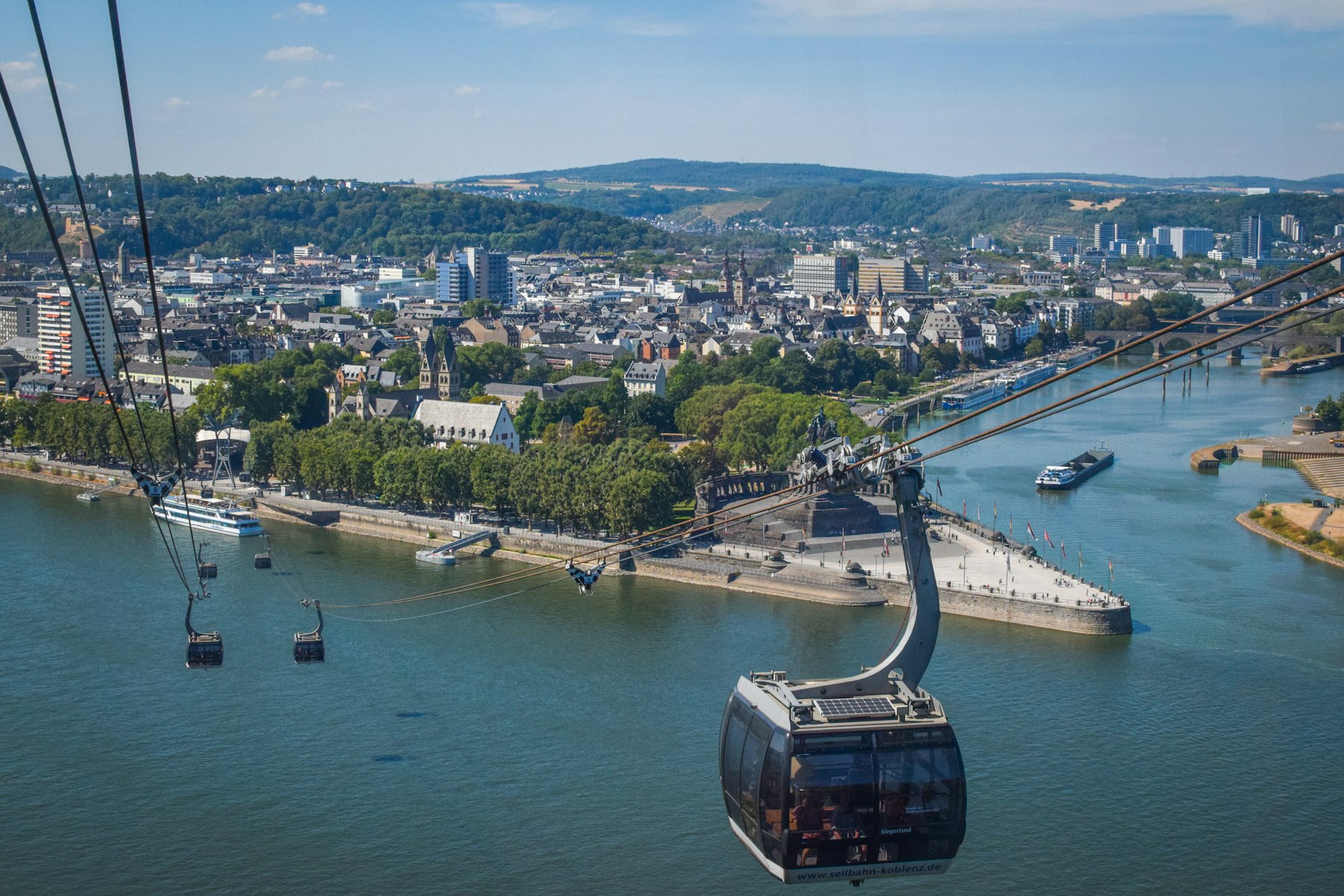
Here is the spine of the whole argument. UNESCO inscribed the Upper Middle Rhine Valley in 2002 — 27,250 hectares covering a dramatic 65-kilometre stretch between Bingen, Rüdesheim and Koblenz. The river breaks through the Rhenish Slate Mountains here, connecting the broad floodplain of the Oberrheingraben with the lowland basin of the Lower Rhine.
The detail is worth knowing because it tells you where to stand. The property runs from the Bingen Gate, where the Rhine enters the canyon section, through the fifteen-kilometre Bacharach valley with its V-shaped side valleys, to Oberwesel, where soft clay-slates give way to hard sandstone. That transition produces a series of narrows. The most famous is the Loreley, no more than 130 metres wide and, at 20 metres, the deepest section of the Middle Rhine. Then the Lahnstein Gate, and the valley opens out again.
And the thing nobody will tell you at booking: some sailings run this stretch during dinner, or overnight. That is the single biggest avoidable mistake in Rhine river cruise planning. Ask when the ship passes Bingen before you pay a deposit — that is our advice, not a published schedule, and it changes by week.
Best for: everyone. If you only stand still once on a Rhine river cruise, stand still here.
Go when: September into mid-October, in our judgment — the terraced vineyards are in harvest and the low light works on the slate.
5. Cologne Cathedral, and Why the Overnight Matters
Everybody gets Cologne. Very few people get Cologne properly, because the ship ties up, the walking tour goes at eleven, and you are back aboard by two. Inscribed in 1996, the cathedral was begun in 1248 and not completed until 1880 — over seven centuries its successive builders stayed, in UNESCO’s phrase, faithful to the original plans.
The numbers are the point. It is a High Gothic five-aisled basilica, 144.5 metres long, with a transept projecting 86.25 metres and a tower facade rising 157.22 metres. The nave stands 43.58 metres high and the side aisles 19.80. Inside, the original liturgical fittings of the choir largely survive: oak choir stalls from 1308 to 1311, painted choir screens from 1332 to 1340, fourteen statues on the choir pillars from around 1300, and a high altar built on a monolithic slab of black limestone believed to be the largest in any Christian church.
If your Rhine river cruise itinerary includes a Cologne overnight, take it. An hour in that building after the day groups have gone is worth more than another port.
Best for: travellers who want one unarguable masterpiece on a Rhine river cruise.
Go when: early evening, whatever the month — the light through the choir is the reason to be there late.
6. The Lower German Limes, the Site Two Countries Share
This is the property that makes the downstream half of a Rhine river cruise interesting, and it is barely marketed at all. The Frontiers of the Roman Empire — The Lower German Limes ran 400 kilometres along the Lower Rhine, from the Rhenish Massif south of Bonn to the North Sea coast in the Netherlands, marking the north-eastern boundary of the province of Germania Inferior. Inscribed in 2021, it covers 812.75 hectares across 102 component parts in 44 clusters.
The story in it is a story of failure turned into infrastructure. The first military bases went up in the last decades BC for the conquest of territory across the Rhine. Once that ambition collapsed, the left bank was converted into a fortified frontier instead, and it held for more than 450 years. UNESCO singles out the engineering: the positioning and design of the installations, and the water management works, as innovative responses to a dynamic lowland river.
Best for: anyone who has already done the castles and wants the layer underneath them.
Go when: spring, on our reading — the sites are low, open and largely outdoors, and summer crops obscure several of them.
7. Kinderdijk, Where a Rhine River Cruise Ends
By the time you reach the delta the Rhine has stopped behaving like a river and started behaving like a problem to be managed. The Mill Network at Kinderdijk-Elshout, inscribed in 1997 and covering 322 hectares, is the monument to that management. UNESCO describes it as the dramatic demonstration of a centuries-long battle to drain land and protect it from inundation, with every major element of the system still standing.
The inventory is specific and it is worth reading before you go: polders, high and low drainage and transport channels, embankments and dikes, 19 drainage mills, 3 pumping stations, 2 discharge sluices and 2 Water Board Assembly Houses. The mills fall into three types — eight round brick ground-sailers, ten thatched octagonal smock mills and a single hollow post mill. Knowing which is which turns a pretty photograph into something you can actually read.
Best for: the last full day of a Rhine river cruise, when everyone else has mentally checked out.
Go when: take the earliest departure offered; our experience is that the site fills steeply after mid-morning.
MORE: If the gorge argument here appeals, the same logic applies one country south — see Rhone River: The Case for Europe’s Most Skipped Waterway.
The Seven Stops, Side by Side
| Stop | UNESCO property | Inscribed | Inscribed area | Our read |
|---|---|---|---|---|
| 1. Reichenau | Monastic Island of Reichenau | 2000 | not stated in the record we read | Pre-cruise add-on; two nights, and worth them |
| 2. Speyer | Speyer Cathedral | 1981 | 0.558 ha | The most under-rated building on the river |
| 3. Speyer, Worms, Mainz | ShUM Sites of Speyer, Worms and Mainz | 2021 | 5.56 ha | The genuine discovery; walkable from two standard port calls |
| 4. Bingen to Koblenz | Upper Middle Rhine Valley | 2002 | 27,250 ha | The reason to book at all; guard the daylight |
| 5. Cologne | Cologne Cathedral | 1996 | not stated in the record we read | Take the overnight if it is offered |
| 6. Bonn to the North Sea | Frontiers of the Roman Empire — The Lower German Limes | 2021 | 812.75 ha | The joint German and Dutch property; needs a guide to come alive |
| 7. Kinderdijk | Mill Network at Kinderdijk-Elshout | 1997 | 322 ha | Go early or do not bother |
Three kinds of cell here. Property names, inscription years and areas are UNESCO’s, read from the individual property records. The stop numbering is ours, ordered upstream to downstream. The right-hand column is editorial opinion, not sourced fact. Where a record we read published no area figure, the cell says so rather than sitting blank.
Planning a Rhine River Cruise Without Wasting the Good Hours
Work backwards from the gorge
Pick the week that puts the Bingen-to-Koblenz run in daylight, then choose the ship. Most people do it the other way round and inherit whatever schedule the line has published. It is the same fare either way.
Decide early whether you are adding Lake Constance
Reichenau is not on any Rhine river cruise sailing, so it is either a deliberate two-night pre-stay or it is nothing. Add it at the point you book the flights, because retrofitting it later means moving an arrival airport, and that is where the cost creeps in.
Budget a real half-day in Cologne
An overnight moored in Cologne is worth more than an extra port call, and it is the one schedule variable we push hardest on. If the itinerary offers a short afternoon there and an early departure, it is telling you what it thinks of the cathedral.
Frequently Asked Questions
How long is a Rhine river cruise?
The standard product runs about a week between Basel and Amsterdam, in either direction. That is enough for the gorge, Cologne and the delta. Adding Reichenau at the Lake Constance end, which no sailing includes, pushes the trip to nine or ten nights once flights are allowed for.
What is the best time of year for a Rhine river cruise?
Our judgment, not a published figure: September into mid-October. The terraced vineyards UNESCO cites in the gorge inscription are in harvest, the low light suits the slate cliffs, and the day-trip crowds at Kinderdijk have thinned. April and May are the next best window if autumn will not work.
Which part of the Rhine is a UNESCO World Heritage site?
The Upper Middle Rhine Valley, inscribed in 2002, covering 27,250 hectares along a 65-kilometre stretch between Bingen, Rüdesheim and Koblenz. It is the river itself that is inscribed, not a single monument, and it includes the Loreley narrows at 130 metres wide and 20 metres deep.
Do Rhine river cruise ships stop in the gorge?
Some tie up at Rüdesheim or Boppard, some simply sail through. The variable that matters is not whether the ship stops but when it passes. Ask the line for the timing of the Bingen-to-Koblenz run on your specific departure before you commit, because it changes week to week.
Is a Rhine river cruise better than a Danube cruise?
Different trips. A Rhine river cruise is denser, with seven World Heritage properties inside a week and a genuinely inscribed stretch of water. The Danube gives you more capital cities. If it is your first river sailing in Europe and architecture is the draw, we would send you to the Rhine.
Should I book the Rhine or the Rhone first?
The Rhine, if you want the bigger set pieces and the easier logistics. The Rhone rewards a second visit, and we make that case in full in our guide to Europe’s most skipped waterway. Both are better in shoulder season than in July.
The Dorian Destinations Verdict
Book the gorge in daylight or do not book a Rhine river cruise at all. That is a harder line than a travel agency is supposed to take, and it costs us business, because the Christmas market sailings are the easiest thing we sell on this river and they run the inscribed stretch in the dark. If markets are what you want, our Christmas market river cruise guide is the honest place to start, and you should go in knowing you are buying a different trip.
What makes this river unusual is the density. Seven World Heritage properties inside a week, one of them shared between two countries, one of them the water under the hull. Nothing else in European river cruising stacks up like that, not the Danube and not the Douro. But the density only pays if the schedule cooperates, and the schedule is the part almost nobody checks. Fix that one variable and the rest of a Rhine river cruise looks after itself.
Sources: UNESCO World Heritage Centre — Germany, Netherlands, Monastic Island of Reichenau, Speyer Cathedral, ShUM Sites of Speyer, Worms and Mainz, Upper Middle Rhine Valley, Cologne Cathedral, Frontiers of the Roman Empire — The Lower German Limes, Mill Network at Kinderdijk-Elshout and Seventeenth-Century Canal Ring Area of Amsterdam. UNESCO descriptive text is used under CC-BY-SA IGO 3.0 and quoted rather than reproduced. Further reading on our own site: the Douro, luxury river cruise itineraries and European versus Asian river cruising.
Tagged: River Cruises · Rhine River Cruise · Germany · Europe