

Beyond the Obvious
Discover More
Douro River Cruise: Why the Smallest Ships Win in Portugal

Co-Founder & Travel Advisor, Dorian Destinations · Published September 9, 2026 · ET
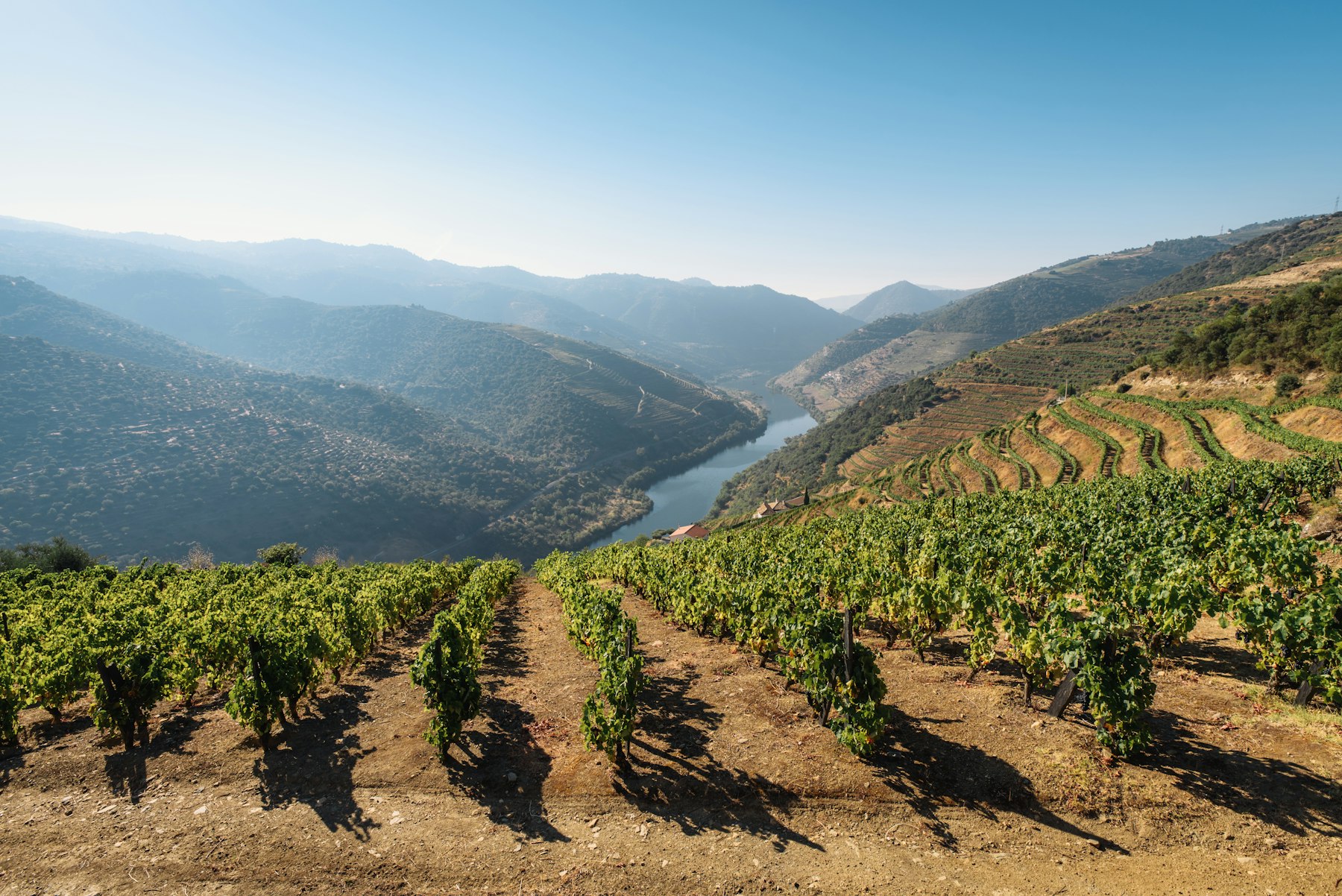
A Douro river cruise is the only one in Europe where the boat is small because the river insists on it. Portugal has 208 kilometres of navigable Douro, five locks, and a lock chamber that will not accept a vessel longer than 83 metres. Every ship on the river is built to that ceiling. Nothing bigger has ever sailed it, and nothing bigger ever will.
I have sat in enough client meetings that begin with the Rhine and end with the Douro to know how the conversation usually goes. Someone has seen a photograph of terraces the colour of rust, they ask whether it is like the Danube, and I say no, and then I have to explain why. The honest answer has nothing to do with wine or weather. It is engineering. The Douro is a short, steep, dead-end waterway that climbs 125 metres from the Atlantic to the Spanish border, and everything travellers love about it and everything that frustrates them comes out of that one fact.
The numbers here come from the authority that runs the waterway, the Administração dos Portos do Douro, Leixões e Viana do Castelo, which publishes the channel dimensions, the lock limits and the minimum depths stretch by stretch. The wine geography comes from the Instituto dos Vinhos do Douro e Porto, the regulator that has defined this region since it was demarcated. The heritage designations come from UNESCO directly. What follows is our reading of those sources against the trips we have actually built. And to be plain about what we are: we do not own a ship, we hold no Douro allocation, and we are paid the same whether you sail with one line or another or decide in the end to stay ashore. That is exactly why we will tell you when the cruise is the wrong shape for the trip you want.
UNESCO describes the Alto Douro landscape as “a series of impressive views but also a seriously complex machine, still working.”
The 83-metre rule, and what it actually buys you
APDL sets the maximum vessel dimensions for the Douro locks at 83 metres in length and 11.4 metres in beam, with an air draught limit of 7.2 metres along the channel. Those are not guidelines. A lock chamber is a box, and a ship either fits or it stays home. The box sets the hull, the hull sets the guest count, and that is the whole reason the Douro fleet is made up of small ships. It is the one constraint on this river that no operator can spend their way out of.
What that ceiling buys you is a kind of trip that has become genuinely rare in European river cruising. Small public rooms. A crew that learns your name in a day rather than a week. Sun decks low enough to the water that you watch the terraces from below rather than level with them, and low enough under the bridges that the wheelhouse folds down to get through. It also buys you scarcity. There are only so many 83-metre hulls in Portugal, they sail a season roughly from spring to late autumn, and the good cabins on the good weeks go early. That is judgment rather than data, but it is the most consistent pattern we see in our own booking calendar.
The other half of the 83-metre rule is what it costs you. There is no gym worth the name, no second speciality restaurant, no theatre. If your reference point for a cruise is what an ocean ship provides, the Douro will read as thin. If your reference point is a country-house hotel that moves, it will read as exactly right.
1. Porto and Vila Nova de Gaia
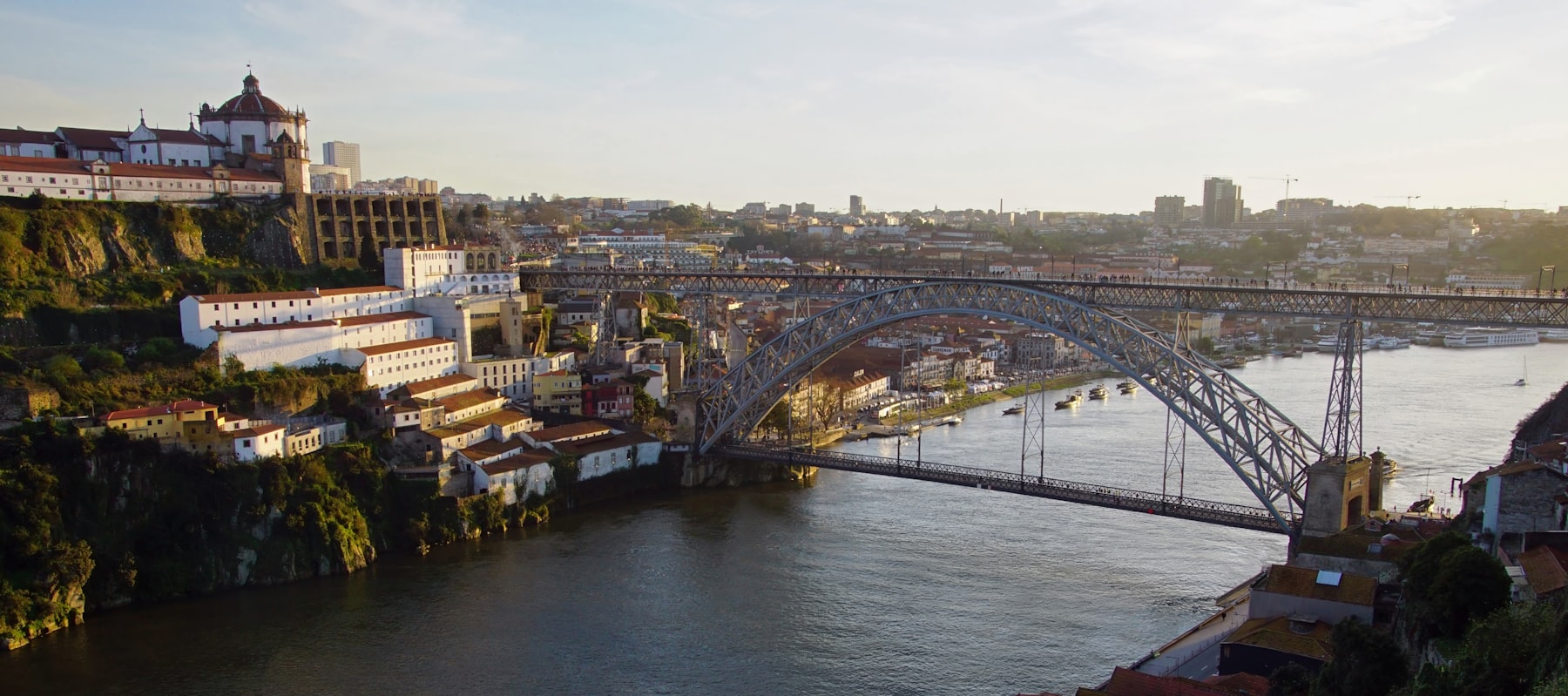
Nearly every sailing starts here, at the river mouth, and nearly every traveller gives the city too little time. Porto has been inhabited for two thousand years, the Romans called it Portus, and UNESCO inscribed the historic centre together with the Luís I Bridge and the Monastery of Serra do Pilar in 1996. The port lodges are across the water in Vila Nova de Gaia, which is a separate city and matters for your logistics: the tasting you booked is a bridge walk away, not a taxi ride.
Two nights in Porto before you board, not one. Embarkation day eats an afternoon, the ship’s own city tour will be brisk, and the Ribeira at seven in the morning is one of the few genuinely quiet things left in Porto.
Best for: travellers who want a real city at one end of the trip rather than an airport transfer.
Go when: the shoulder weeks either side of the peak, when the Ribeira is walkable and the Gaia lodges are not queueing out the door.
2. Five locks and 125 metres of climbing
From the Atlantic to the border, the waterway rises 125 metres, and it does it in five steps. APDL puts the individual lock drops between 13 and 35 metres. That upper figure is worth pausing on, because a 35-metre lift is a genuine event: the ship slides into a concrete canyon, the gates close behind you, the daylight narrows to a strip, and then the water comes up and the valley reappears from a completely different height.
Two practical consequences. Locks take time, and time in a lock is time you are not sailing past terraces, which is why good itineraries put the dull stretches overnight and the beautiful ones in afternoon light. And the locks are operated, not automatic — traffic queues, and a queue reshuffles an afternoon. Any Douro itinerary that reads like a train timetable is overpromising.
Best for: anyone who finds infrastructure more interesting than they expected to.
Go when: whenever you sail — but ask, at booking, which locks you transit in daylight.
3. Peso da Régua and the Baixo Corgo
Régua is where the wine region becomes unmissable rather than merely present. The Instituto dos Vinhos do Douro e Porto divides the Douro Demarcated Region into three sub-regions, and the Baixo Corgo — the lowest and westernmost — carries the largest planted area of the three, 13,204 hectares under vine across 45,000 hectares of land. It is the wettest end of the valley too: IVDP records annual rainfall as high as 1,200 millimetres in the Lower Corgo.
This is the stretch that looks the way people expect the Douro to look, green and densely worked, and it is also the stretch most geared to visitors. Not a criticism — if you want a quinta lunch with a view and a cellar tour done ten thousand times competently, it is here.
Best for: first-time visitors who want the postcard version done well.
Go when: late September into October, for the vintage, if you can tolerate the crowds that come with it.
4. Pinhão and the Cima Corgo
Pinhão is the hinge of the whole river, and it is a hinge in two senses. Commercially, it sits in the Upper Corgo, which IVDP records as 20,427 hectares under vine — the largest vineyard sub-region by planted area, and the heart of serious Port. Navigationally, it is where the Douro stops being generous. APDL guarantees a minimum channel depth of 3.8 metres from the sea up to Pinhão. Above Pinhão, that figure falls to 2 metres as far as the Pocinho dam, and the authority notes explicit restrictions upstream because the channel narrows.
So Pinhão is the last comfortable place on the river, and it is not an accident that so many itineraries make it their furthest overnight or their turning point. The village itself is small enough to walk out of in ten minutes, which is the point: this is where you hire a car or a driver and go up into the hills, because the best quintas in the Cima Corgo are not on the water.
Best for: travellers who care about what is in the glass more than what is on the deck.
Go when: May and June, before the summer heat settles into the valley floor.
5. Above Pinhão, on two metres of water
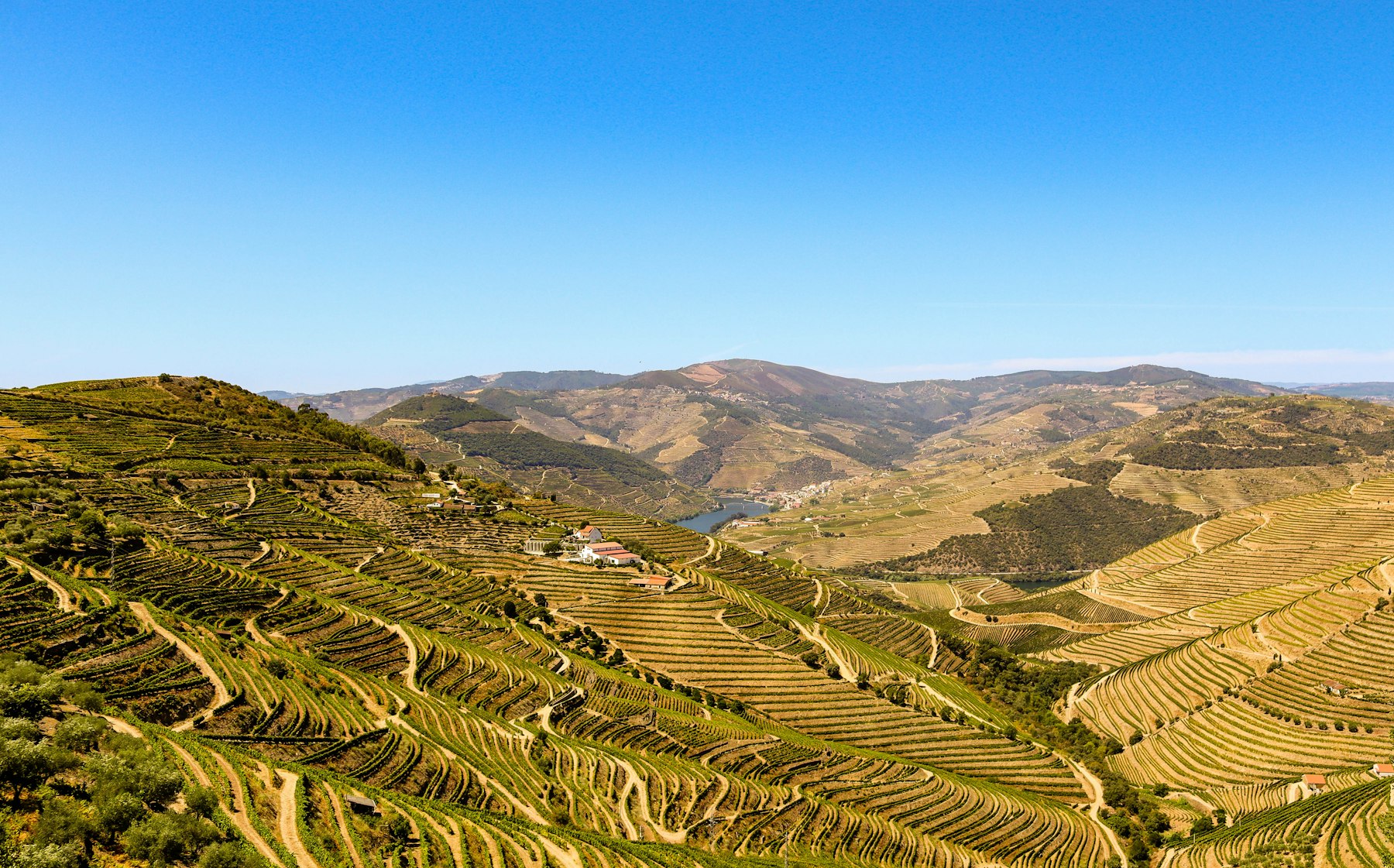
This is the part nobody writes about, and it is the most interesting part of the river. Upstream of Pinhão the Douro tightens into the Valeira stretch, and there is a reason the wine map changes here too. IVDP records that the original divider between the Alto Douro and the Douro Superior was the Cachão de Valeira, a granite outcrop in the river that simply stopped boats — nothing went past it. The block was removed during the reign of Queen Maria II, and only then did the vineyards spread eastwards.
You are, in other words, sailing through a hole that somebody blasted in a mountain so that wine could get out. The landscape above it is drier and emptier than anything downstream. IVDP puts annual rainfall at Barca d’Alva, at the top of the river, at 380 millimetres against 1,200 at the bottom. Same region, one third of the water. It reads as almost Spanish, and the vineyard density collapses accordingly: the Douro Superior has 110,000 hectares of land and only 10,177 under vine.
Best for: repeat visitors, and anyone who found the lower valley too tidy.
Go when: spring, when the upper river is green rather than scorched — by August this stretch is genuinely hot.
6. Pocinho, and the Côa Valley almost everyone skips
If there is one argument for sailing the full length of the Douro rather than the pretty half, this is it. The Côa is a Douro tributary, and the rock art on its banks at Vila Nova de Foz Côa was inscribed by UNESCO in 1998. The scale is hard to take in from a description: UNESCO counts around 5,000 animal figures carved into the open-air panels there, and calls the ensemble the most remarkable open-air Palaeolithic art on the Iberian Peninsula.
It is a short run inland from Pocinho, and it is the single most under-sold excursion on the river. Most passengers choose the wine option instead, which I understand — you came for wine — but you can taste Port in Gaia any afternoon of your life and you cannot see this anywhere else. Take the rock art. Book it early, because visitor numbers at the panels are managed and the good slots are finite.
Best for: anyone travelling with someone who does not drink, and anyone who likes their heritage 20,000 years old.
Go when: whenever you are there — but confirm the excursion is offered on your specific sailing before you assume it.
7. Barca d’Alva, and the Salamanca question
Barca d’Alva is the end. The navigable Douro terminates at the cross-border point between Barca d’Alva and the Spanish quay at Vega Terrón, and there is nowhere further to go by ship. That is the structural oddity of this river: it is a dead end. There is no onward link to another waterway, no repositioning to the Rhine, no two-river itinerary. The Douro is the only Portuguese waterway included in the Trans-European Transport Network, and it goes 208 kilometres and stops.
Which is why almost every operator bolts a coach day to Salamanca onto the upstream end. It is a fine city and a legitimate excursion, and it is also a long drive on the day you would most like to sit still. My own view, preference rather than fact: worth it on a first Douro trip, skippable on a second.
Best for: first-timers who want a second country stamped into the week.
Go when: avoid it in high summer, when the drive is hot and the city is hotter.
The Douro waterway, by the numbers
Every figure below is published by APDL, the authority that runs the navigable Douro. The right-hand column is our reading of what each one means once you are on board.
| Measure | Figure | What it means for your trip |
|---|---|---|
| Navigable length (Portugal) | 208 km | Short. A full-length sailing is a week, not a fortnight. |
| Total rise, Atlantic to border | 125 m | You are climbing a staircase, not drifting along a plain. |
| Navigation locks | 5 | Five scheduled bottlenecks; itinerary timings are estimates. |
| Individual lock drop | 13–35 m | The deep ones are a spectacle. Be on deck. |
| Maximum vessel length | 83 m | The hard cap on ship size, and therefore on guest numbers. |
| Maximum beam | 11.4 m | Narrow hulls. Cabins are efficient rather than generous. |
| Maximum air draught | 7.2 m | Low sun decks; wheelhouses fold for bridges. |
| Minimum depth, sea to Pinhão | 3.8 m | The comfortable, reliable half of the river. |
| Minimum depth, Pinhão to Pocinho | 2.0 m | The constrained half. Upstream restrictions apply. |
| River quays along the route | about 60 | Plenty of mooring points, so ports change between lines. |
The three sub-regions of the Douro Valley, compared
If you want to understand why the river changes character as you go up it, this is the table. Figures are IVDP’s.
| Sub-region | Total area | Under vine | Share planted | Character |
|---|---|---|---|---|
| Baixo Corgo (Lower Corgo) | 45,000 ha | 13,204 ha | 29% | Wettest, greenest, most densely worked and most visited. |
| Cima Corgo (Upper Corgo) | 95,000 ha | 20,427 ha | 22% | Largest planted area; the heart of serious Port. Pinhão sits here. |
| Douro Superior (Upper Douro) | 110,000 ha | 10,177 ha | 9% | Hot, dry, nearly empty. Runs east to the Spanish border. |
| Douro Demarcated Region | 250,000 ha | 43,808 ha | 18% | Worked by roughly 20,000 growers, averaging 2 ha each. |
How we build a Douro river cruise week
Add land at both ends, not one
If this is your first river cruise of any kind, our step-by-step guide for first-timers covers the mechanics we are assuming here. The sailing is the middle of the trip, not the trip. Two nights in Porto before, and two or three nights in a quinta in the Cima Corgo after, turns a pleasant week into a proper one. The hill quintas are where the valley stops performing for visitors, and you cannot reach them from a mooring.
Come one way by rail if you can
The Linha do Douro runs along the river for much of its length, and the stretch above Régua is one of the great short train rides in Europe. Using it in one direction and the ship in the other gives you the valley from two heights. This is a preference, not a rule, and it does add a logistics knot to the itinerary — but it is the single change that most often improves a Douro trip.
Choose the side, not just the deck
On an 11.4-metre hull, the difference between a cabin facing the terraces and one facing a rock cutting is more consequential than on a wide ship, because you have fewer public spaces to escape to. Ask which side faces the vineyards on the upstream run. Any decent line will tell you.
Treat August as a compromise
IVDP describes the Douro climate as very cold winters and hot, dry summers, with the driest months July and August and rainfall thinning sharply as you head east. In a valley this steep, that heat sits on the water. We steer clients to May, June, late September and October, and we say so plainly when a family’s school calendar makes August the only option: it is workable, it is not ideal.
Compare Douro Sailings With an Advisor
Frequently Asked Questions
How long is a Douro river cruise?
The navigable Douro is 208 kilometres and dead-ends at the Spanish border, so a full-length round trip from Porto occupies roughly a week once five lock transits are allowed for. Shorter sailings exist, but they buy their brevity by turning round below Pinhão and missing the upper valley entirely.
What is the best time of year for a Douro river cruise?
May, June, late September and October, in our experience. IVDP characterises the Douro climate as very cold winters and hot, dry summers, with July and August the driest months. In a valley of this steepness the summer heat pools on the water, and the vintage in late September brings the valley to life.
Why are Douro river cruise ships so small?
Because the locks will not take anything larger. APDL caps vessels using the Douro locks at 83 metres in length and 11.4 metres in beam, with a 7.2-metre air draught limit along the channel. Above Pinhão the channel narrows further and the minimum depth falls to two metres.
Do Douro river cruises go into Spain?
By ship, only as far as the frontier. The waterway ends at the crossing between Barca d’Alva and the Spanish quay at Vega Terrón. Most operators then run a coach excursion inland to Salamanca, so Spain usually appears on the itinerary as a day trip rather than a sailing.
Is a Douro river cruise better than staying in the Douro Valley?
It depends on what you came for. The ship gives you the river’s engineering, the gorge views and no packing. A quinta in the hills gives you the wine, because the best estates in the Cima Corgo are not on the water. Travellers who care most about tasting are often better served ashore.
How much does a Douro river cruise cost?
We will not quote you a single number, because the honest answer depends on the month, the deck, the cabin’s aspect, whether Salamanca and the rock art are included, and how much land you add at either end. Anyone quoting one figure has not asked you when you want to go.
The Dorian Destinations Verdict
Sail the whole river or do something else. The half-length Douro itineraries that turn back below Pinhão are the weakest product on this water: they give you the busiest, greenest, most heavily visited stretch and none of the strangeness. Everything that makes the Douro worth a week is above Pinhão — the two-metre channel, the hole blasted through the Cachão de Valeira, the 380 millimetres of rain a year at the top, the 5,000 Palaeolithic figures on the Côa.
And be honest with yourself about the wine. If what you actually want is to drink seriously in the place the wine comes from, book a quinta in the hills and hire a driver, and we will tell you that even though it earns us no more than a cruise would. The ship is the right answer when you want the river itself — the locks, the terraces from below, three UNESCO designations in one narrow valley, and a boat small enough that the crew knows your name by Tuesday. That is a real thing, and the 83-metre rule is the reason it still exists.
Speak With a Dorian Destinations Advisor
Sources, all checked 9 September 2026: APDL — Via Navegável do Douro, Canal de Navegação (navigable length, total rise, lock count and drops, vessel dimensions, minimum depths, quays, Trans-European Transport Network status); Instituto dos Vinhos do Douro e Porto — Characteristics of the Region (sub-region areas, planted hectares, grower numbers, rainfall, climate, Cachão de Valeira); UNESCO World Heritage Centre for Alto Douro Wine Region (inscribed 2001), Prehistoric Rock Art Sites in the Côa Valley (inscribed 1998) and Historic Centre of Oporto, Luiz I Bridge and Monastery of Serra do Pilar (inscribed 1996). Seasonality, cabin and pacing recommendations are our own judgment, based on the trips we build, and are labelled as such above.
River Cruises · Portugal · Porto · Douro Valley · Europe · Luxury Travel