

Adventure & Expedition Travel
Travel Beyond the Ordinary
Gorilla Trekking: Seven Parks and a Register Full of Gaps

Co-Founder & Travel Advisor, Dorian Destinations · Published October 22, 2026 · ET
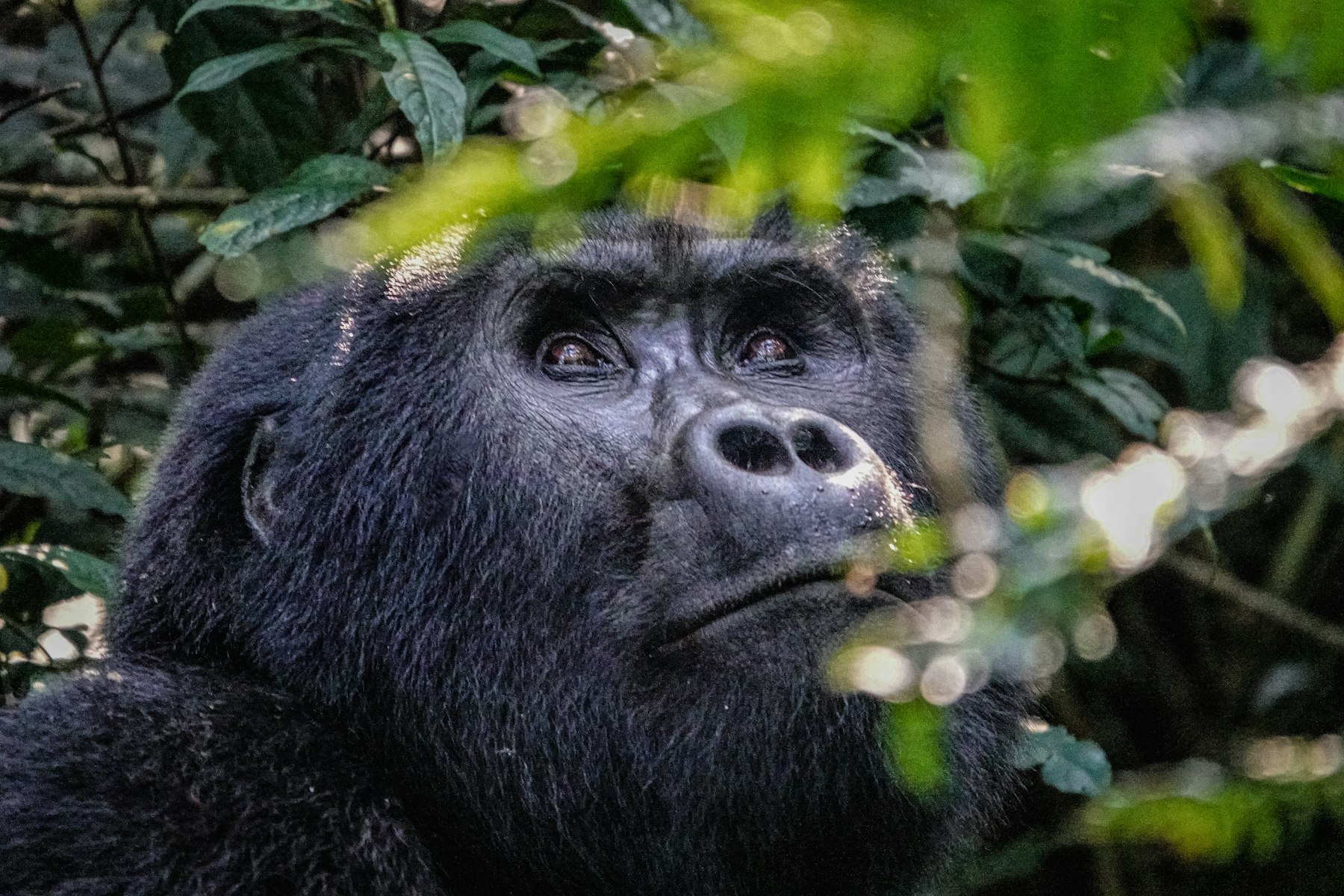
Plan gorilla trekking around the record, not the reputation →
Four parks sell an hour with a mountain gorilla. The World Heritage List treats those four in four completely different ways, and almost nobody planning a gorilla trekking trip has ever been told so.
The brochures flatten it into one product. An hour with a habituated family, a permit, a porter, a muddy climb. What they leave out is that the four parks you can actually buy that hour in sit at four different points on the international register — one inscribed and celebrated, one inscribed and in danger, one waiting nineteen years for a decision, and one that has never been put forward at all. That is not trivia. It changes who is funding the protection, what the management plan has to answer to, and how much of your permit fee is holding a boundary together.
Every figure below — inscription year, criteria, hectares, Danger List status — comes from the property record or the state party page on UNESCO’s own site, pulled today rather than remembered. Where a gorilla trekking park is not inscribed, we checked the relevant Tentative List directly instead of inferring it.
We do not quote permit prices, and we have not here. They move, they differ by nationality and residency, and a number printed in October is a liability in March. What we can tell you is which of these gorilla trekking parks has a management authority accountable to an international convention and which does not, because that is a matter of record and it does not move.
The seasonality notes marked Go when are our judgment, drawn from how we build gorilla trekking trips and from the altitude and rainfall ranges in the records themselves. They are not sourced claims and we have labelled them so. Anything about security in eastern DRC is beyond what a travel desk should assert; we say what the register says and stop.
“Community benefits arising from the mountain gorilla and other ecotourism may be the only hope for the future conservation of this unique site.” — UNESCO, on Bwindi Impenetrable National Park
How we ordered a gorilla trekking map that nobody draws this way
Not by price, and not by how good the sightings are — both of those are sales arguments and neither is checkable. We ordered the seven parks by what the World Heritage Convention has actually done about them, starting with the one forest whose protection is written into an international instrument and ending with the massif you should give your second week to. Three of the seven are in Uganda, two in Rwanda, two in the Democratic Republic of the Congo. Five are inscribed properties. One has been sitting on a Tentative List since 2007. One has never been nominated by anybody.
Read down the list and a pattern shows up that no operator will put in a brochure: the park most travellers book is the least protected on paper, and the park with the strongest paper trail is the one most people have to be talked into.
1. Bwindi Impenetrable National Park, Uganda — the gorilla trekking forest that is itself the heritage
Bwindi went onto the World Heritage List in 1994 under criteria (vii) and (x), covering 32,092 hectares on the eastern edge of the Albertine Rift. UNESCO describes it as one of the largest areas in East Africa still holding Afromontane lowland forest that runs up into the montane belt, probably a Pleistocene refugium, and “a biodiversity hotspot with possibly the greatest number of tree species for its altitude in East Africa.” The altitude range is 1,160 to 2,706 metres. The record counts over 200 tree species including ten endemics, some 104 ferns, and 202 montane forest butterflies — 84 per cent of Uganda’s total.
The sentence that matters for anyone booking is this one: the property is “home to almost half of the world’s mountain gorilla population.” Not a share of the trekking market. Half the species.
What makes Bwindi the right first choice for gorilla trekking is also what makes it fragile, and the integrity statement is blunt about it. The forest sits inside one of the most densely populated rural areas in the country, more than 350 people per square kilometre. There is, in UNESCO’s words, “no possibility for a buffer zone at the forest edge” apart from four square kilometres donated by communities at the southern end. The boundary is marked with planted trees and concrete pillars where rivers do not do the job. Narrow corridors between sectors restrict wildlife movement and there is little that can be done to widen them.
So the thing gorilla trekking walks you into is not wilderness with a town near it. It is a forest island with farmland pressed against the fence line, held open by a management plan, a permanent research institute inside the property, and the fee you paid. That is a better reason to go than any sighting guarantee.
Best for: a first gorilla trekking trip where the forest, and not just the animal, is the inscribed thing you came to see.
Go when: our judgment — the drier windows either side of the long rains; at 2,000-plus metres in a rainforest, “dry” is relative and you will be wet anyway.
2. Mgahinga Gorilla National Park, Uganda — nineteen years on a waiting list
Mgahinga is the Ugandan corner of the Virunga massif, 33.7 square kilometres in Kisoro District with Rwanda to the south and the DRC to the west. It holds three of the Virunga volcanoes: Muhabura at 4,127 metres, Gahinga at 3,474 and Sabyinyo at 3,645. Uganda Wildlife Authority submitted it to Uganda’s Tentative List on 30 January 2007 under criteria (vii), (viii), (ix) and (x).
It is still there. Nineteen years on, the dossier has not converted into an inscription — and Mgahinga is the only one of the three massif parks sitting in a queue at all, because the Congolese side was inscribed outright in 1979 and the Rwandan side has never been put forward. For gorilla trekking purposes it is a small park with a long paper trail and no decision at the end of it.
Best for: travellers who want gorilla trekking plus golden monkeys and a volcano climb in one small park, without the long drive to Bwindi.
Go when: our judgment — same windows as Bwindi; the volcano ascents punish wet ground far more than the forest walk does.
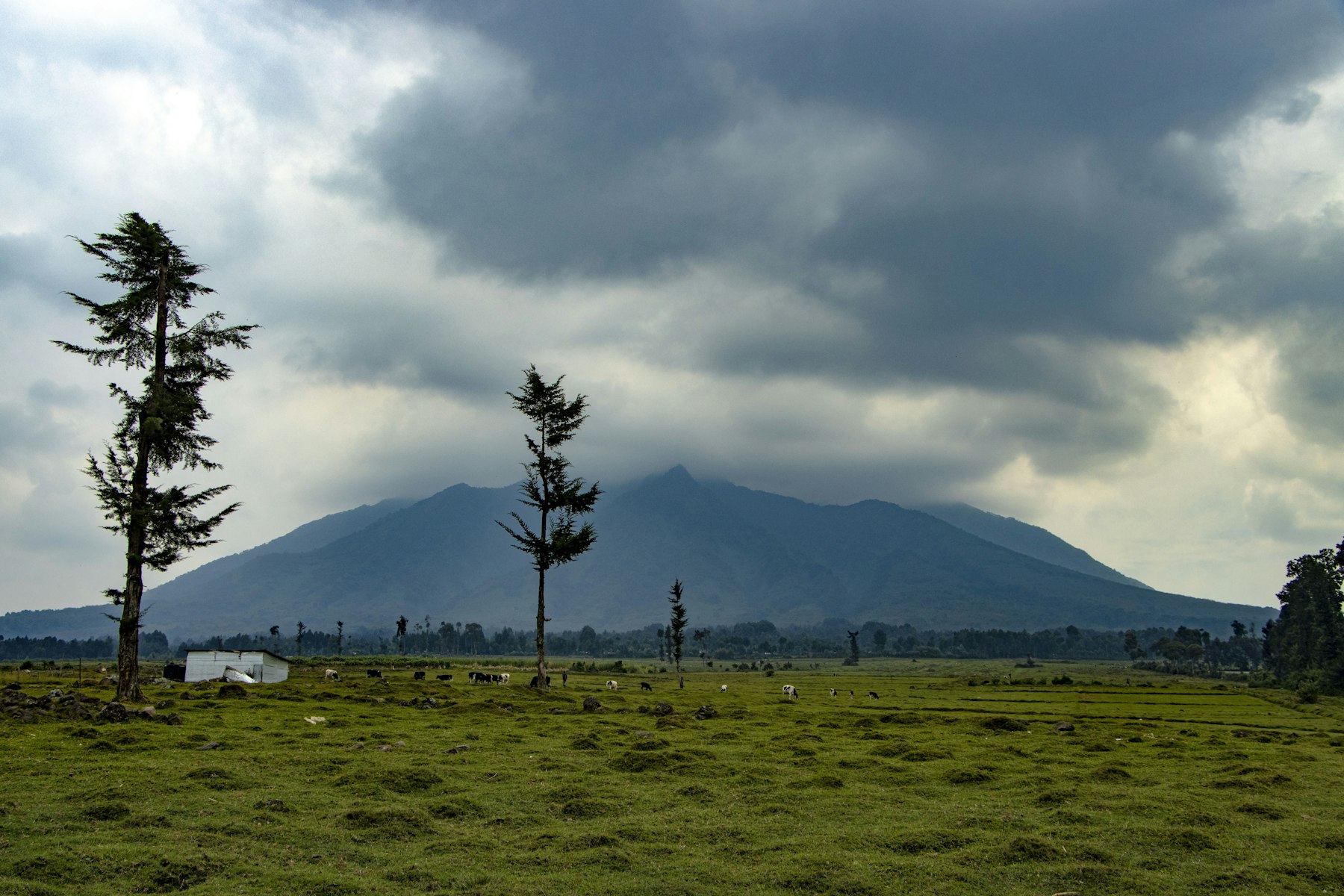
3. Volcanoes National Park, Rwanda — the most booked gorilla trekking park, and the biggest gap
Parc National des Volcans is 160 square kilometres, a figure that comes from Uganda’s own Mgahinga dossier describing the cross-border complex. In our experience it is the single most requested gorilla trekking park we are asked to book, by a distance.
It is not a World Heritage property. More than that: a Tentative List query for Rwanda returns 0 Sites. Rwanda has two inscribed properties — the Memorial sites of the Genocide and Nyungwe National Park — and nothing at all queued behind them. The most famous gorilla forest on earth has never been nominated by anybody, which is a fact about paperwork rather than about the park, and worth knowing before you assume the register tracks reputation.
Best for: short trips and excellent lodges; in our experience it is the shortest road transfer from an international airport of any gorilla trekking option here.
Go when: our judgment — June to September reads driest, and it is also when permits go first.
4. Virunga National Park, DRC — inscribed in 1979, in danger since 1994
Virunga is the oldest and largest of them: 800,000 hectares, inscribed in 1979 under criteria (vii), (viii) and (x). UNESCO calls it “unique with its active chain of volcanoes and rich diversity of habitats that surpass those of any other African park,” running from steppe and marshland through afro-montane forest to permanent glaciers, and names the mountain gorilla among its globally threatened species.
It is also on the List of World Heritage in Danger. UNESCO’s own account is that since 1994 all five of the DRC’s World Heritage sites were listed in danger because of war and civil conflict in the Great Lakes region, and that a 1999 international safeguarding campaign funded a four-year, US$3.5 million emergency programme explicitly to protect the habitat of the mountain gorilla, the northern white rhino and the okapi. Four of those five are still on the Danger List today; Salonga is not.
Best for: no gorilla trekking client we would book today — included because 1994 is the hinge year, and because the register says what a travel desk should not.
Go when: we do not advise on this, and we will not pretend to. Read the state party record, not a brochure.
5. Kahuzi-Biega National Park, DRC — a different gorilla entirely
This one is on the list because it corrects a mistake people make constantly. Kahuzi-Biega, inscribed in 1980 under criterion (x) and covering 600,000 hectares, protects Gorilla beringei graueri, the eastern lowland or Grauer’s gorilla — a subspecies endemic to the DRC and a different animal from the mountain gorilla you trek in Bwindi or the Virungas. UNESCO calls it “the most important world population” of them, in a mosaic of lowland and Afro-montane forest, bamboo and small sub-alpine prairies beneath Mounts Kahuzi (3,308 m) and Biega (2,790 m).
It is also on the Danger List. If someone sells you gorilla trekking and the species is not named in writing, ask which one.
Best for: understanding that “gorilla” is not one booking category.
Go when: same answer as Virunga — not a judgment we will make from a desk.
6. Nyungwe National Park, Rwanda — the 2023 inscription that is not about gorillas
Nyungwe came onto the List in 2023 under criterion (x), covering 101,963.67 hectares in three component parts — Cyamudongo, Gisakura and Nyungwe Natural Forest. UNESCO calls it one of the most biologically important and diverse Afromontane forests in Africa, the largest remaining montane rainforest in Rwanda, running from 1,480 to 2,950 metres.
There are no gorillas in it. UNESCO calls the property one of the most species-rich montane rainforest primate communities in Africa and records that one-fifth of Africa’s primate species are present within it, including the globally threatened Eastern Chimpanzee and Golden Monkey. It is the only natural property Rwanda has. For anyone building a Rwandan gorilla trekking week it is the obvious second half, and it has the paperwork the gorilla park lacks — which is a neat illustration of how little the register and the itinerary have to do with each other.
Best for: pairing a Volcanoes gorilla trekking permit with the one Rwandan forest the Convention has actually inscribed.
Go when: our judgment — the chimpanzee tracking reads best in the wetter months when the groups stay low; the canopy walk is better dry.
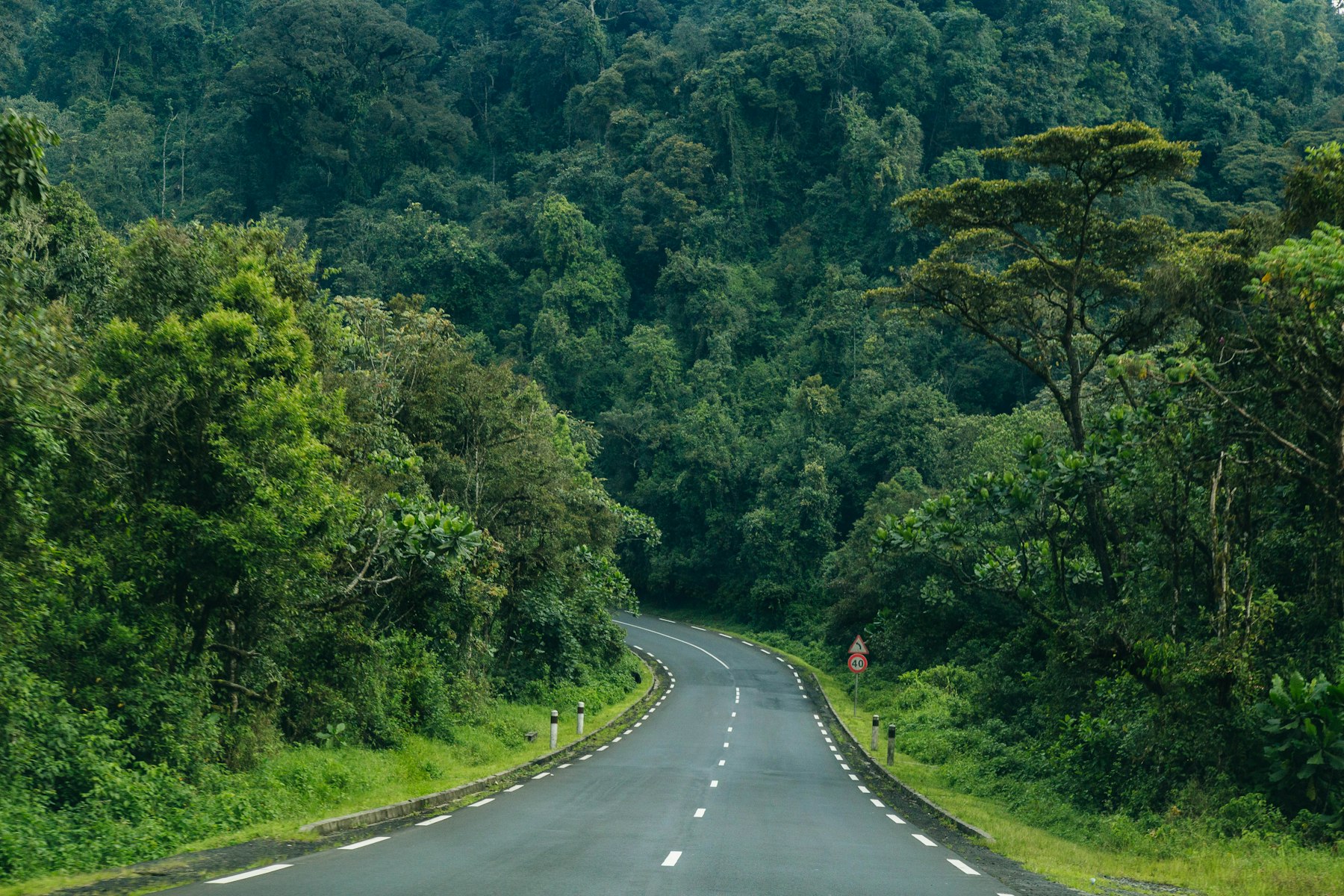
7. Rwenzori Mountains National Park, Uganda — where to put the second week
Rwenzori was inscribed in the same year as Bwindi, 1994, under criteria (vii) and (x), covering 99,600 hectares of which 70 per cent lies above 2,500 metres. It holds Africa’s third highest peak at 5,109 metres, has a larger alpine area than either Kilimanjaro or Mount Kenya, and UNESCO notes it is contiguous with Virunga National Park across the Congolese border — glacier and snow a few kilometres from the equator, and the highest permanent sources of the Nile.
It is the right answer to the question every gorilla trekking client eventually asks, which is what to do with the rest of the trip. One hour with a gorilla family does not fill a fortnight, and a second inscribed property an internal flight away beats a third day of lodge transfers.
Best for: a proper multi-day walk bolted onto the gorilla trekking week, for people who want altitude as well as primates.
Go when: our judgment — the drier spells; this is genuine mountain ground and the glaciated sections need settled weather, not merely dry feet.
If you are weighing this against the other long walks we rate, our comparison of the world’s best trekking tours sets out how we judge a route against its protection status rather than its photographs.
The seven parks, and what the register says about each
| Park | Country | Status | Year | Area | Primate |
|---|---|---|---|---|---|
| Bwindi Impenetrable NP | Uganda | Inscribed (vii)(x) | 1994 | 32,092 ha | Mountain gorilla |
| Mgahinga Gorilla NP | Uganda | Tentative List | 2007 | 33.7 km² | Mountain gorilla |
| Volcanoes NP | Rwanda | Not nominated | — | 160 km² | Mountain gorilla |
| Virunga NP | DR Congo | Inscribed, In Danger | 1979 | 800,000 ha | Mountain gorilla |
| Kahuzi-Biega NP | DR Congo | Inscribed, In Danger | 1980 | 600,000 ha | Grauer’s gorilla |
| Nyungwe NP | Rwanda | Inscribed (x) | 2023 | 101,963.67 ha | Chimpanzee |
| Rwenzori Mountains NP | Uganda | Inscribed (vii)(x) | 1994 | 99,600 ha | — |
What this changes about booking gorilla trekking
Three things, in the order they bite. First, gorilla trekking permits are the fixed point and everything else bends around them — the park you can get a permit for on your dates is the park you are going to, so start there and build the rest afterwards.
Second, a country with one gorilla park and one inscribed forest is a cleaner two-week trip than a country with three parks and three transfers; Rwanda is short and tidy, Uganda is long and rewarding, and the choice is really about driving time. Third, the Bwindi integrity statement should change how you think about the fee. You are not buying an hour. You are buying a share of the only thing holding a boundary open against 350 people per square kilometre.
Have us read the permit terms before you book the flights →
Gorilla trekking: frequently asked questions
Which country is best for gorilla trekking, Uganda or Rwanda?
Our judgment, and it is a judgment: Rwanda if the trip is short, because in our experience Volcanoes National Park is the shortest road transfer from an international airport of any option here. Uganda if you have ten days or more, because Bwindi is the inscribed property holding almost half the world’s mountain gorillas and Uganda gives you Mgahinga and the Rwenzori Mountains as well. The register favours Uganda; the logistics favour Rwanda.
Is Volcanoes National Park a UNESCO World Heritage Site?
No. It is not inscribed and it is not on a Tentative List — a Tentative List query for Rwanda returns zero sites. Rwanda’s two World Heritage properties are the Memorial sites of the Genocide and Nyungwe National Park, inscribed in 2023.
How many mountain gorillas are in Bwindi?
UNESCO’s property record does not give a count. What it states is that Bwindi is home to almost half of the world’s mountain gorilla population, which is the figure worth quoting because it comes from the inscription record rather than from a tour operator.
What is the difference between mountain gorillas and the gorillas at Kahuzi-Biega?
They are different subspecies. Kahuzi-Biega in the DRC protects Gorilla beringei graueri, the eastern lowland or Grauer’s gorilla, endemic to the Democratic Republic of the Congo. Bwindi, Mgahinga, Volcanoes and Virunga hold mountain gorillas. If a gorilla trekking quote does not name the subspecies, ask.
Does tourism actually help protect these forests?
UNESCO’s own position on Bwindi is unusually direct: community benefits from mountain gorilla ecotourism “may be the only hope for the future conservation of this unique site.” The same record warns that because the mountain gorilla is so closely related to people, it is threatened by transmission of human diseases as a result of tourism activities. Both things are true at once, which is why the rules on distance and masks are not theatre.
The Dorian Destinations verdict on gorilla trekking
Go to Bwindi. If the dates or the permits make that impossible, go to Volcanoes and enjoy it, but go knowing that the park with the shortest transfer and the best lodges is the one no state party has ever put forward for international protection, and that the forest holding almost half the species is a border and an inscription away.
Pair whichever gorilla trekking permit you end up holding with a second inscribed property — Nyungwe if you are in Rwanda, the Rwenzori Mountains if you are in Uganda — because one hour with a gorilla family is not a trip, and the register has already told you where the rest of it should go.
That is the whole argument for planning gorilla trekking from the record rather than the reputation. The record is free, it is public, and it disagrees with the brochures in ways that are useful to you.
Talk to an advisor who has priced all three countries →
Sources: UNESCO World Heritage Centre property records for Bwindi Impenetrable National Park, Rwenzori Mountains National Park, Virunga National Park, Kahuzi-Biega National Park and Nyungwe National Park; the Tentative List entry for Mgahinga Gorilla National Park; the state party pages for Uganda, Rwanda and the Democratic Republic of the Congo; and the List of World Heritage in Danger. All retrieved 22 October 2026.
Adventure Travel · Africa · National Parks · Wildlife