

Beyond the Obvious
Discover More
Rhone River: The Case for Europe’s Most Skipped Waterway

Co-Founder & Travel Advisor, Dorian Destinations · Published September 16, 2026 · ET
Plan a Rhone River trip with an advisor
Almost everyone’s first European river is the Danube or the Rhine. The Rhone River is almost nobody’s first anything. That is the argument for it, and it is a better argument than the brochures make.
We get asked for the Danube constantly and the Rhone River perhaps twice a year, which has never matched what we see when clients actually go. The Rhone is short, steep-sided and dense. It runs 813 kilometres from a glacier in the Swiss Alps to the Mediterranean, but the stretch that carries passenger boats is only the 325-kilometre run from Lyon down to the sea. That compression is the whole point. You are not covering ground on the Rhone River. You are circling one small, extraordinarily layered corner of France for a week.
What follows is built from the authorities rather than from operator marketing. The World Heritage inscriptions and the wording describing them come from UNESCO’s own France listing, which records 56 French properties in total. The newbuild and itinerary reporting comes from Cruise Industry News. The river’s physical measurements come from the published record of the Rhone and its navigation works.
One limit worth stating plainly: we are not a river cruise wholesaler and we hold no cabin allocation on any Rhone River vessel. Nothing here is written to move inventory. Where this piece gives seasonal or pacing advice, that is our judgment from sending clients, clearly labelled as judgment rather than data.
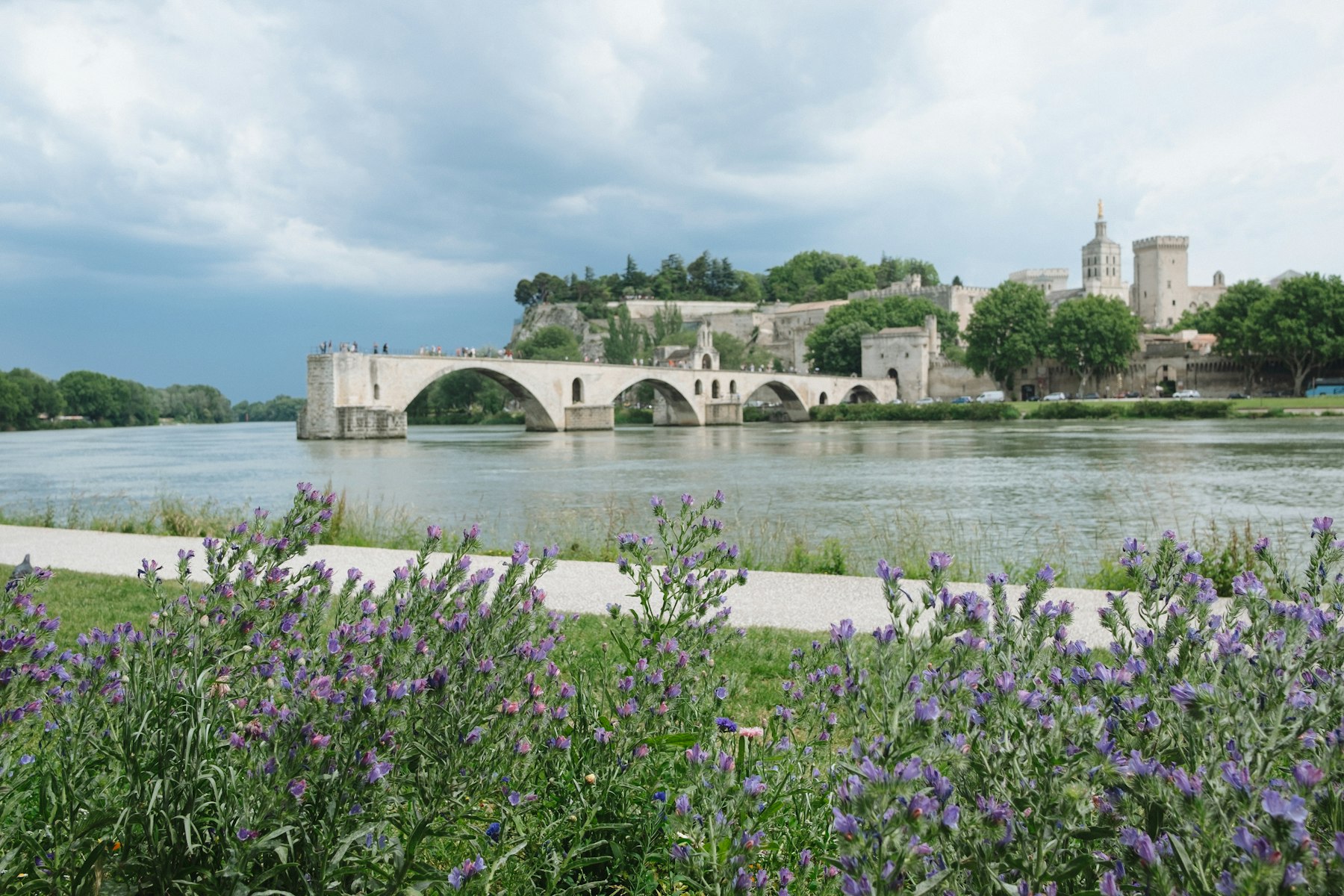
The Papal Palace at Avignon, UNESCO notes, was described by the chronicler Froissart as “the most well-fortified house in the world.”
Why the Rhone River gets skipped
Three reasons, and only one of them is fair. The first is arithmetic: the Danube and the Rhine cross borders and stack up capitals, and a river that stays inside one country reads as a smaller prize. The second is branding. There is no Rhone equivalent of the Lorelei or the Blue Danube waltz, no single image that sells the trip in one frame.
The third reason is the honest one. The Rhone River is genuinely harder to run. It is classified as a Class V waterway from the mouth of the Saone at Lyon down to the sea at Port-Saint-Louis-du-Rhone, and that run carries twelve locks, some of them up to 23 metres deep, all of them controlled remotely from a single centre at Chateauneuf.
The current is the other half of it. The Rhone can reach speeds of around 10 kilometres an hour when it is carrying water, particularly below the last lock at Vallabregues and in the narrow diversion canal south of Lyon. Downstream sailings move quickly and upstream ones do not, which is why two itineraries with identical port lists can feel like different holidays depending on which way round you book them.
None of this is a warning. It is the reason the boats that work this river are purpose-built rather than reassigned from somewhere else, and it is the reason a Rhone River week feels less like a coach tour afloat than the big two do.
1. Lyon, where the trip actually starts
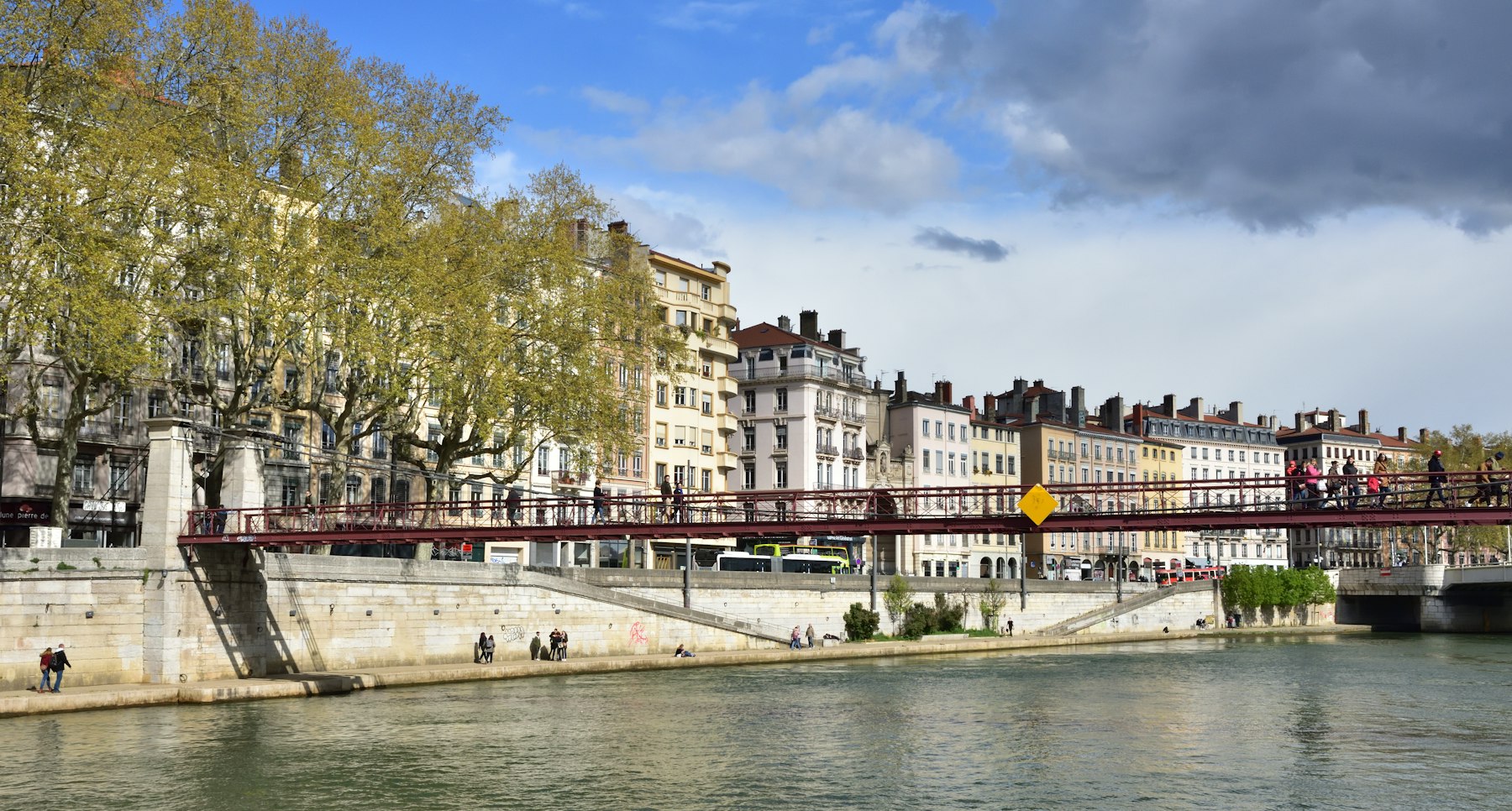
Lyon sits at the confluence of the Saone and the Rhone, and UNESCO’s inscription for the Historic Site of Lyon makes the case better than any operator page: people have built here for more than two thousand years, and every stage of it is still legible in the street plan. Roman Lugdunum, the medieval slopes of Fourviere, the Renaissance courtyards of Vieux-Lyon.
Give it a day at the front of the trip rather than an afternoon at the end. Most boats turn round here, and the city is the one stop on the Rhone River that genuinely needs its own morning and its own evening. Eat at Les Halles de Lyon Paul Bocuse if you do nothing else.
Best for: anyone who thinks a river trip means small towns only.
Go when: late April into June, or September. Our judgment, not a published figure: August in Lyon is hot and half the good kitchens are shut.
2. The Saone detour, and the Beaujolais
Several itineraries run north out of Lyon up the canalised Saone before turning south, which is how Macon and the Beaujolais end up on a Rhone River sailing at all. Purists grumble. They are wrong, because the Saone is slow, green and completely unlike the main river, and the contrast is the best thing about the first two days.
CroisiEurope’s seven-night wine sailing is the clearest example of the shape. It is round-trip from Lyon and it calls at Macon, Vienne, Avignon, Arles, the Camargue and Tournon, pairing the Beaujolais with Condrieu, Cote-Rotie, Tain l’Hermitage and Saint-Remy-de-Provence.
Best for: drinkers who want range rather than one appellation done to death.
Go when: September, for harvest. Judgment again, but the cellars are livelier and nobody is pretending.
3. Vienne and the Cote-Rotie terraces
Vienne is where the Rhone River stops being a city river and starts being a gorge. The valley narrows, the slopes steepen, and the vineyards above Ampuis are planted on terraces so severe they have to be worked by hand. Condrieu and Cote-Rotie both sit on this stretch, and both are on the CroisiEurope wine route.
Vienne itself carries a Roman theatre and a temple in the middle of an ordinary working town, which is the first hint of what the lower river is about to do repeatedly.
Best for: people who would rather stand in a vineyard than a gift shop.
Go when: May or September. The terraces are punishing in full July sun and the tastings suffer for it. Our judgment.
4. Tournon and Tain l’Hermitage
Two towns facing each other across the water, one hill between them, and one of the most famous slopes in France on top of it. This is the tightest, most walkable stop on the whole Rhone River, and the only one where the vineyard is close enough that you can climb into it and be back aboard before dinner.
It is also the stop most often used for the steam train through the Doux gorges, which is genuinely good and genuinely a train ride, so book it or skip it honestly rather than because it is included.
Best for: a half-day that does not need a coach.
Go when: any shoulder month. Judgment: this stop is pleasant in weather that would ruin a longer excursion.
5. Viviers, and the Ardeche behind it
Viviers is a medieval village with France’s smallest cathedral in it, and it is the stop that tells you whether you are on the right sort of boat. A large ship cannot really use it. A small one ties up and you walk off into a village of four hundred people.
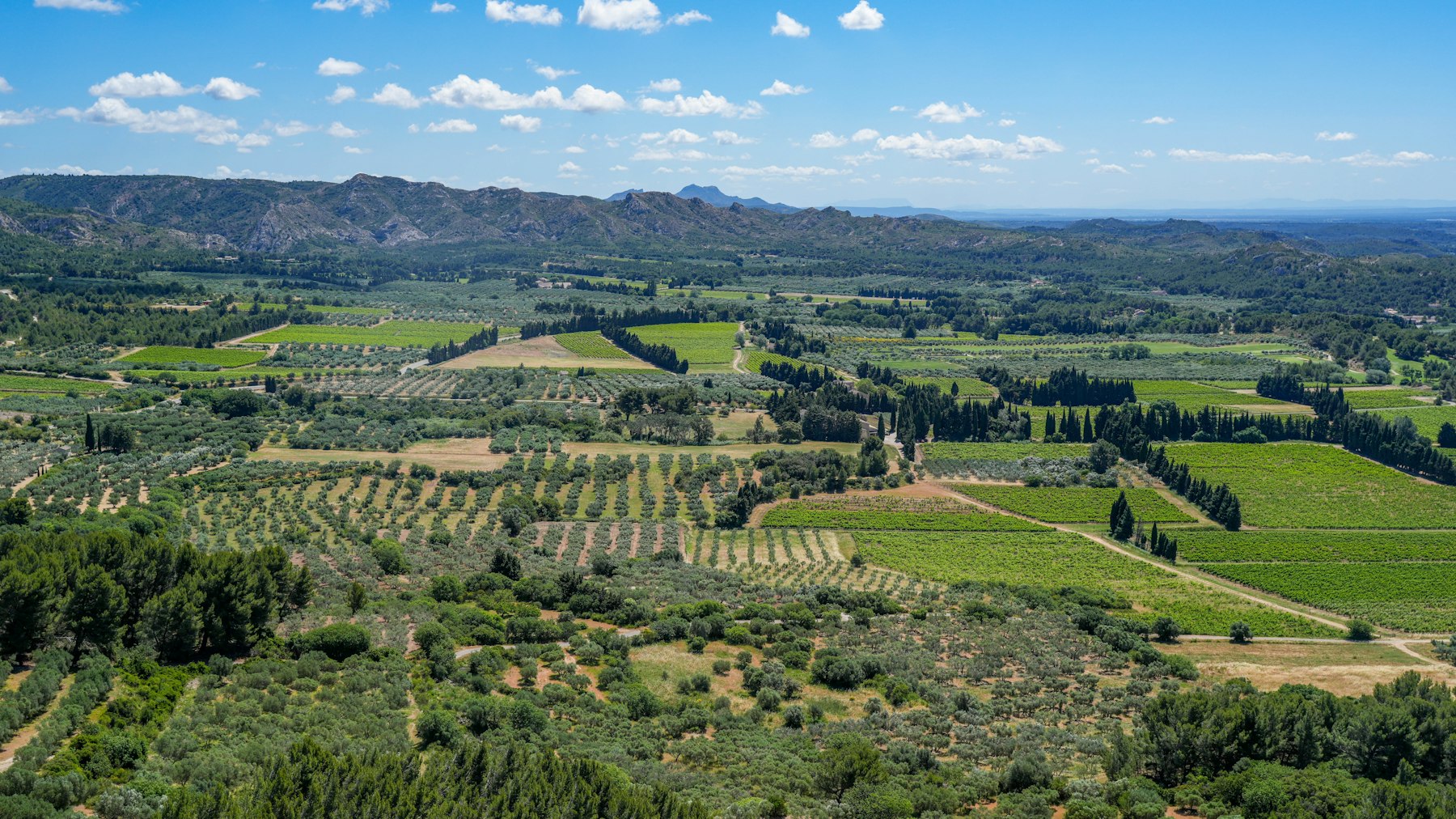
Behind it is the Ardeche, and with it the Decorated Cave of Pont d’Arc, better known as Grotte Chauvet, which UNESCO inscribed on the World Heritage List. The original is closed to visitors and the replica is the thing you actually see, which is worth knowing before you pay for the excursion.
Best for: the traveller who measures a trip by the smallest place on it.
Go when: spring. Judgment: the Ardeche road is unpleasant in high summer traffic.
6. Avignon and the Papal Palace
For a century the papacy left Rome and sat here, and the city has never quite got over it. UNESCO’s inscription covers the Papal Palace, the episcopal ensemble and the bridge, and describes the whole as an outstanding example of medieval architecture that spread a particular culture across a large part of Europe.
Avignon is the busiest stop on the Rhone River and the one most worth an early start. Go to the palace at opening. Then walk out onto the bridge, which stops halfway across the water and has done for centuries.
Within an easy reach of the same mooring: the Roman theatre at Orange, whose stage wall runs 103 metres long and 37 metres high, and the Pont du Gard, a three-storey aqueduct bridge rising nearly 49 metres, part of a 50-kilometre channel built to water Roman Nimes.
Best for: the one stop you would keep if you could only keep one.
Go when: avoid the first three weeks of July, when the festival fills every room in the city. That one is not judgment, it is a calendar.
7. Arles, the Camargue and the delta
Arles is the best-value stop on the river and the one people underrate because they arrive tired. UNESCO calls it a remarkable example of an ancient city adapting to medieval Europe: the arena, the Roman theatre and the cryptoporticus all date to the first century BC or the first century AD, and Saint-Trophime and its cloister are among the major Romanesque monuments of Provence.
Van Gogh worked here, and at Saint-Paul de Mausole outside Saint-Remy he produced more than 250 works in a single year. Below Arles the Rhone River splits and flattens into the Camargue, which is flat, salt, pink with flamingos and unlike anywhere else in France.
Best for: Rome and Van Gogh in one walkable afternoon.
Go when: April to early June. Our judgment: the Camargue is best before the mosquitoes and the heat arrive together.
More from Dorian: the same small-ship argument, made on a harder river — Douro River Cruise: Why the Smallest Ships Win.
Six World Heritage sites, one week on the Rhone River
France has 56 properties on the World Heritage List. Six of them sit on or within reach of this one short run of water, which is the statistic that ought to sell the trip and never does.
| Site | Where | What UNESCO singles out | Reached from |
|---|---|---|---|
| Historic Site of Lyon | Lyon | Two thousand years of urban development still legible in the street plan | Lyon |
| Decorated Cave of Pont d’Arc (Grotte Chauvet) | Ardeche | Palaeolithic cave art; visitors see the replica, not the original | Viviers |
| Roman Theatre and Triumphal Arch of Orange | Orange | A stage wall 103m long and 37m high, among the best preserved anywhere | Avignon |
| Historic Centre of Avignon | Avignon | Papal Palace, episcopal ensemble and the bridge over the river | Avignon |
| Pont du Gard | Gard | A three-storey aqueduct bridge rising nearly 49m, on a 50km Roman channel | Avignon or Arles |
| Arles, Roman and Romanesque Monuments | Arles | Arena, theatre and cryptoporticus from the 1st century BC and AD | Arles |
No single itinerary calls at all six, and which excursions are included varies by operator, ship and departure date. Check the specific sailing rather than the brochure spread.
How to plan a Rhone River trip properly
Pick the direction before you pick the ship
Because of the current, downstream and upstream weeks are not mirror images. Downstream gives you more time ashore in Provence and a rushed top end. Upstream does the reverse. Neither is better; they suit different travellers, and almost nobody is told which one they have booked.
Small is not a marketing word here
Tauck’s new Harmonie, announced in August 2026 and due in 2028, is being custom-built for this river and carries just 130 guests. It is the sister ship to the Lumiere and will double the company’s Rhone capacity. That is an operator committing capital to a river most Americans cannot place on a map, which tells you more than any review.
Book further out than you think
Cruise Industry News reports five new Tauck riverboats arriving between 2026 and 2028 and river capacity growing by more than half over that span. Capacity is being added, but it is being added slowly and in small hulls. On a river with this few berths, the good cabins on the good weeks go early.
Know what a fare actually covers
CroisiEurope’s seven-night wine sailing departing 21 October 2026 aboard the MS Rhone Princess is published from USD 2,773 per person, including all meals and drinks, excursions, WiFi, port fees and repatriation insurance. That is a real published number from the operator’s own announcement, and it is a useful floor to measure everything else against.
Compare Rhone River sailings with us
Frequently Asked Questions
Is a Rhone River cruise worth it?
It is worth it if you want depth rather than distance. The navigable run is only 325 kilometres, so the boat spends less time steaming and more time tied up, and six World Heritage sites sit within reach of it. If you want borders, capitals and castles, the Danube suits you better.
How long is the Rhone River?
The Rhone runs 813 kilometres, or about 506 miles, from the Rhone Glacier at Obergoms in the Swiss canton of Valais to the Mediterranean at the Gulf of Lion. Only the 325-kilometre stretch from Lyon to the sea carries passenger vessels, and that is the part any cruise means.
What is the best time to cruise the Rhone River?
Our judgment, not published data: late April to mid-June, or the first three weeks of September. Spring gives you the Camargue before the heat and the mosquitoes; September gives you harvest in the Beaujolais and on the terraces. July and August are hot, busy and worst in Avignon during the festival.
Which is better, the Rhone River or the Rhine?
Different products. The Rhine is a corridor and gives you four countries, castles and scale. The Rhone stays in France and gives you Roman ruins, Provence and serious wine in a tighter loop. First-time river cruisers usually prefer the Rhine. People on their second or third river usually prefer this one.
Do Rhone River cruises go to Paris?
Not by water. Paris sits on the Seine and there is no through route. Some packages, including Tauck’s Savoring France, bundle a Paris land stay either side of the sailing, which is a hotel programme rather than part of the cruise. Read the itinerary carefully before assuming it is included.
Are there family Rhone River cruises?
Yes, and it is a narrow field. Adventures by Disney runs family departures on the Rhone aboard the AmaKristina with Disney-trained guides, which we covered in our guide to family friendly cruise lines. Most other operators on this river are adult in character even when they carry no formal age floor.
The Dorian Destinations Verdict
Here is the part the brochures will not say. If what you actually want is Provence, do not book a boat at all. Avignon, Arles, Orange, the Pont du Gard and Saint-Remy sit within an hour of each other. Base yourself in one of them for a week, hire a car, and you will see more of that country, more slowly, for less money than a cabin costs.
The Rhone River earns its fare in exactly one situation: when you want Lyon and Provence in the same week and you do not want to pack twice. That is a real problem and the river solves it elegantly. It is not, however, the same thing as wanting a river cruise, and the two get confused constantly at the point of sale.
So our position is narrower than the category deserves and more useful for it. Take the Rhone River as your second or third river rather than your first. Take it small, take it in May or September, and take the direction that puts your time where you want it. If after all that you would rather have the villa in the Alpilles, tell us, and we will book the villa. We would rather lose the cabin than sell you the wrong week.
Talk to a Dorian travel advisor
Sources, checked 16 September 2026: UNESCO World Heritage Centre, France and its inscriptions for Lyon, Avignon, Arles, Orange and the Pont du Gard; Cruise Industry News on the Tauck Harmonie and on CroisiEurope’s Rhone and Saone wine cruise; navigation and river measurements from the published record of the Rhone. Seasonality and pacing advice is our own judgment and is labelled as such throughout. We are not a river cruise wholesaler and hold no cabin allocation.
River Cruises · France · Europe · Food and Wine