

The Perfect Itinerary
How Dorian Would Do It
Romania Itinerary: Drive the Eleven Sites, Skip the Castles

Co-Founder & Travel Advisor, Dorian Destinations · Published October 20, 2026 · ET
Plan a Romania itinerary around the eleven, not the castle →
Romania sells itself on a castle it does not own the heritage claim to. The eleven properties UNESCO has actually inscribed are scattered from the Black Sea to the Hungarian border, and not one of them is Bran.
So this Romania itinerary is built the other way round: start from the register, then work out the driving.
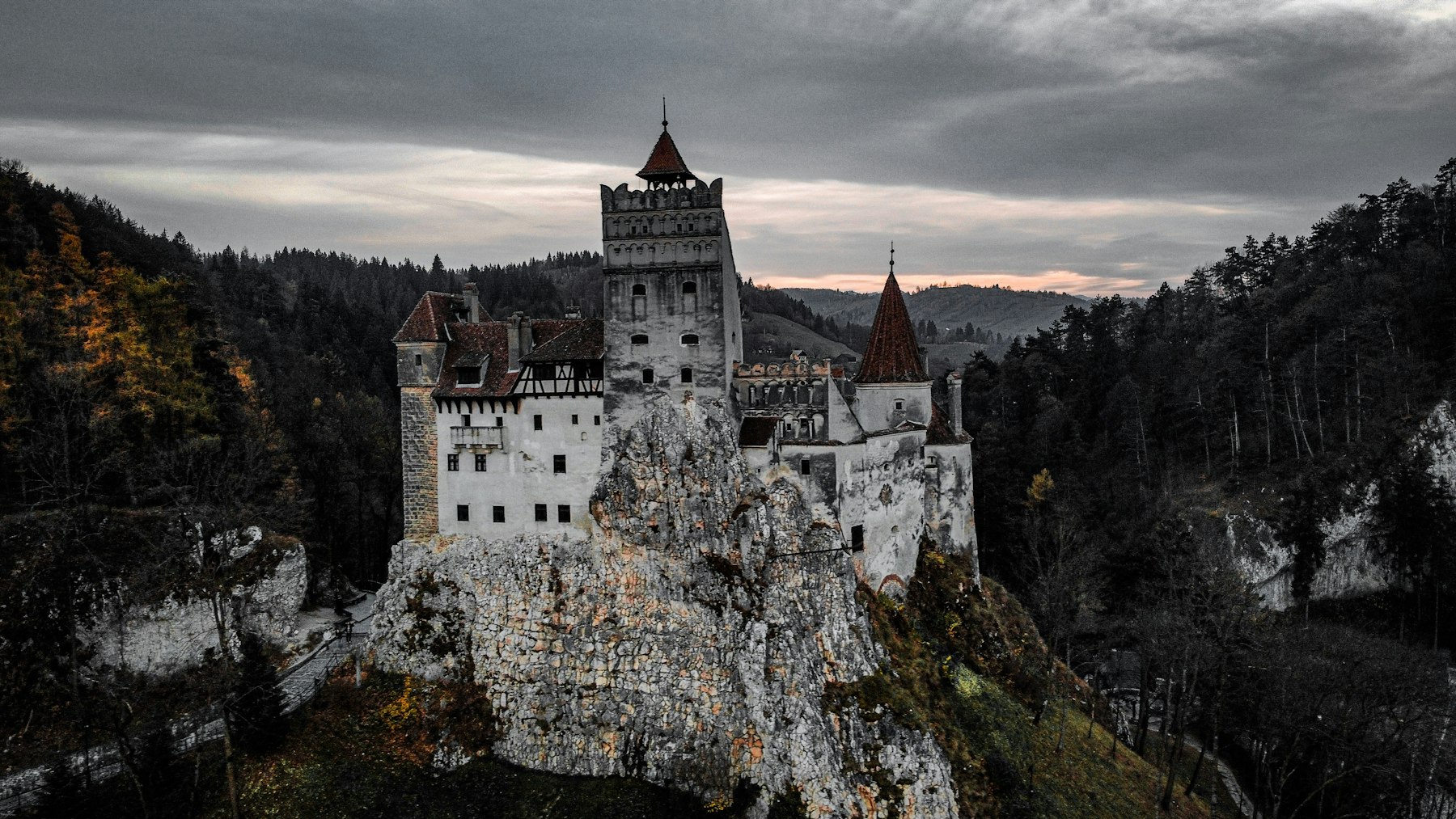
Every year we get the same enquiry, and it always arrives with the same photograph attached — a turreted silhouette on a rock, autumn trees, low cloud. Bran. We never talk anybody out of it, because it is twenty minutes off the road we were going to drive anyway. But it does mean the first conversation is usually a correction rather than a plan. Romania has eleven inscribed World Heritage properties, UNESCO files nine of them as cultural and two as natural, and the register is a far better route-planner than the postcard rack is.
Everything factual below comes from one place: the UNESCO World Heritage Centre’s own records for Romania. The country accepted the Convention on Wednesday, 16 May 1990, and the Centre now lists eleven inscribed properties against its name, along with thirty-three State of Conservation reports and seven approved international assistance requests totalling USD 76,600.
What the register does not contain is a route. UNESCO publishes what a property is, when it was inscribed and why it qualified; it publishes nothing about which road to take between two of them, how many nights a place deserves, or what a drive feels like in February. Every night count, every ordering decision and every seasonal call below is ours, and we have said so at the point it happens rather than burying it here.
We have also left the figures alone where we could not source them. There are no admission prices in this piece, no drive times quoted to the minute and no visitor numbers, because the register carries none of those and we would rather have a thinner article than an invented one.
“The most significant, extensive and technically diverse underground Roman gold mining complex known at the time of inscription.”
— UNESCO World Heritage Centre, on Roșia Montană Mining Landscape
The Route · In travel order, south-west to north-east · Tap a stop
- Hurezi Monastery, Oltenia — 1 night
- Târgu Jiu and the Brâncuși ensemble — 1 night
- The Orăștie Mountains and the Dacian Limes — 2 nights
- Roșia Montană and Alba Iulia — 1 night
- Sighișoara citadel — 2 nights
- The Saxon villages, Biertan first — 2 nights
- Maramureș timber and the painted walls of Moldavia — 4 nights
What Belongs on a Romania Itinerary — and What Does Not
Nine of Romania’s eleven inscribed properties can be strung into one drive. The other two cannot, and it is worth saying why before anybody books. The Danube Delta sits at the far eastern edge of the country where the river reaches the Black Sea, and UNESCO calls it the largest and best preserved of Europe’s deltas — it deserves its own week and a boat, not a detour. The Ancient and Primeval Beech Forests are a transnational property of ninety-three component parts spread across eighteen countries, so the Romanian fragments are a woodland visit rather than a destination.
That leaves nine, and they fall into a shape. Two sit in Oltenia in the south-west. Two more cluster in the Orăștie Mountains. One is in the Apuseni. Four are Transylvanian or northern. Driven in that order, a Romania itinerary runs south-west to north-east and never doubles back.
1. Hurezi Monastery: Where the Brancovan Style Was Invented
Start at Hurezi, out west from Bucharest, on roads that get prettier the further you go. UNESCO dates the foundation to 1690 and names Prince Constantine Brancovan, and the record is unusually specific about why it matters: architectural purity and balance, richness of sculptural detail, votive portraits. It also notes that the school of mural and icon painting set up here in the eighteenth century became famous throughout the Balkan region.
We put it first deliberately. Arrive at Hurezi after a fortnight of frescoes and it reads as one more painted monastery. Arrive on day one of a Romania itinerary and it is the grammar everything else in the south is written in.
Best for: Travellers who want the architecture explained before they see twenty more examples of it.
Go when: Late April to early June, when the courtyard is green and the coach traffic has not started. A Romania itinerary that opens here reads better than one that closes here.
2. Targu Jiu: The Newest Thing on Any Romania Itinerary
West again, and suddenly it is 1937. The Brâncuși Monumental Ensemble was created in 1937 and 1938 by Constantin Brâncuși to commemorate those who died defending the city in the First World War, and UNESCO inscribed it in 2024 — which makes it, along with the Roman frontier, the most recent addition to the country’s list.
The record describes it as austere, contemplative, yet accessible, and spread across two parks joined by the narrow Avenue of Heroes, with the pre-existing Church of the Holy Apostles Peter and Paul sitting on the same axis. In our experience it is the one stop on this Romania itinerary that nobody arrives expecting, and the one most people talk about afterwards. Give it a morning on foot, in that order, along the axis.
Best for: Anyone who thinks a Romania itinerary means castles and monasteries and nothing after 1700.
Go when: Any dry month. The ensemble is outdoors and reads best in flat light rather than hard sun.
3. The Orastie Mountains: Six Fortresses and a Roman Border
North now, into Hunedoara, and the oldest layer. UNESCO describes the Dacian Fortresses of the Orăștie Mountains as six defensive works built in the first centuries BC and AD, the nucleus of the Dacian Kingdom, showing an unusual fusion of military and religious architecture drawn from the classical world and the late European Iron Age. The Romans took them at the beginning of the second century AD.
What arrived afterwards is also inscribed. The Frontiers of the Roman Empire – Dacia property comprises 277 component parts and is, in UNESCO’s words, the longest and most complex land border of a former Roman province in Europe. The Dacian Limes was operational from 106 to 271 CE, and Dacia was the only Roman province lying entirely north of the Danube.
Best for: Travellers who like a site to be a hillside rather than a ticket office, and do not mind a walk in. This is the leg that turns a Romania itinerary into a field trip.
Go when: June to September. These are upland sites and the access tracks are miserable in wet weather, which is the one thing that can derail a Romania itinerary here.
4. Rosia Montana: The Roman Gold Mine a Romania Itinerary Should Not Skip
This is the stop we argue hardest for, and the one clients cut first. Roșia Montană Mining Landscape sits in the Metalliferous range of the Apuseni Mountains, and UNESCO inscribed it in 2021 under criteria two, three and four. The register calls it the most significant, extensive and technically diverse underground Roman gold mining complex known at the time of inscription.
The numbers are what change people’s minds. As Alburnus Maior, the site was worked for over 166 years starting in 106 CE, and the Romans took some 500 tonnes of gold out of it. They cut different types of galleries totalling seven kilometres, and installed waterwheels in four underground localities chosen for their high-grade ore.
Then there is the paperwork, which is the part we find genuinely remarkable. Wax-coated wooden writing tablets recovered here have supplied detailed legal, socio-economic, demographic and linguistic information about Roman mining — not only at Alburnus Maior but across the wider Dacian province. A gold mine that also happens to be an archive of how the province was governed is not a thing most countries have.
Note where this sits on the route graphic. Stops two and four are the two spikes, and that is not decoration: Brâncuși went on the list in 2024 and Roșia Montană in 2021, which makes the two newest properties in Romania the two in the middle of this drive. Both are also the two most often dropped when a trip gets shortened. We would cut a night in Sighișoara before we cut either of them.
Practically, we base a Romania itinerary in Alba Iulia and drive up. That is our call rather than the register’s — UNESCO publishes the property, not the logistics.
Best for: Anyone who wants one stop on their Romania itinerary that their friends have not already done.
Go when: May to October. The mining landscape is high, exposed and genuinely unpleasant in winter, which takes this leg off a Romania itinerary altogether.
5. Sighisoara: The Citadel People Still Live In
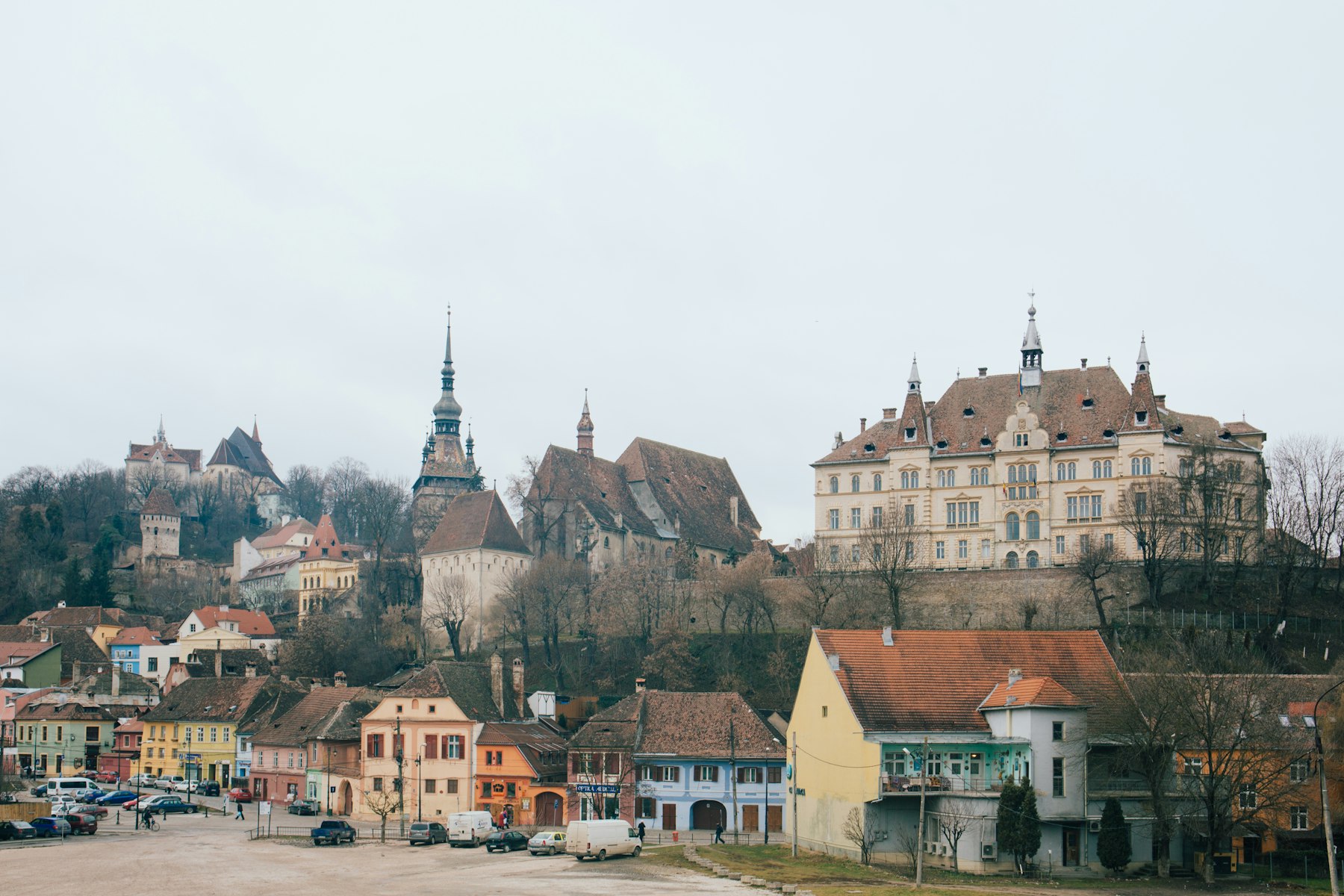
UNESCO is careful with its wording here, and the wording is the reason this stop earns two nights rather than a lunch stop. The Historic Centre of Sighișoara was founded by German craftsmen and merchants known as the Saxons of Transylvania, and the record calls it a fine example of a small, fortified medieval town which played an important strategic and commercial role on the fringes of central Europe for several centuries.
A town, note. Not a castle and not a museum. The upper citadel is still residential, which means the cobbles get walked on by people going to work, and the place empties out beautifully once the day-trip coaches have left. Stay inside the walls and you get the hour that the day-trippers never see. That hour is the whole reason we give this stop two nights on a Romania itinerary.
Best for: Travellers who would rather sleep inside the monument than photograph it from the car park. It is the one night on a Romania itinerary worth paying up for.
Go when: September. Warm evenings, thinner crowds, and the light on the clock tower is at its best — which is true of a Romania itinerary generally.
6. The Saxon Villages: Biertan First, Then Six More
The Villages with Fortified Churches in Transylvania property is seven villages, not one, and UNESCO’s own notes record that the current listing is an extension of an earlier inscription called “Biertan and its Fortified Church” — which is why Biertan is where we start. The register describes a cultural landscape of southern Transylvania held together by a specific land-use system, a settlement pattern and a way of organising the family farmstead that has survived since the late Middle Ages, all of it dominated by churches built between the thirteenth and sixteenth centuries.
UNESCO does not publish a driving order between the seven, and we would not pretend one exists. Pick two or three for the Romania itinerary, drive them slowly, and treat the fields between them as part of the property, because the register plainly does.
Best for: Anyone whose idea of a good day is three churches, two villages and no queue at any of them. A Romania itinerary earns its keep on days like this one.
Go when: Late spring or early autumn. Time a Romania itinerary to the farming year and leg six changes character entirely, because the fields UNESCO counts as part of the property actually look like farmland.
7. North and East: Maramures Timber, Then the Painted Walls
Two properties, four nights, and the best driving a Romania itinerary offers anywhere in the country. The Wooden Churches of Maramureș are eight buildings that UNESCO rates as outstanding examples of a range of architectural solutions from different periods and areas — narrow, high timber constructions with tall, slim clock towers at the western end, single- or double-roofed, covered in shingles, and read by the register as a vernacular expression of the cultural landscape of northern Romania.
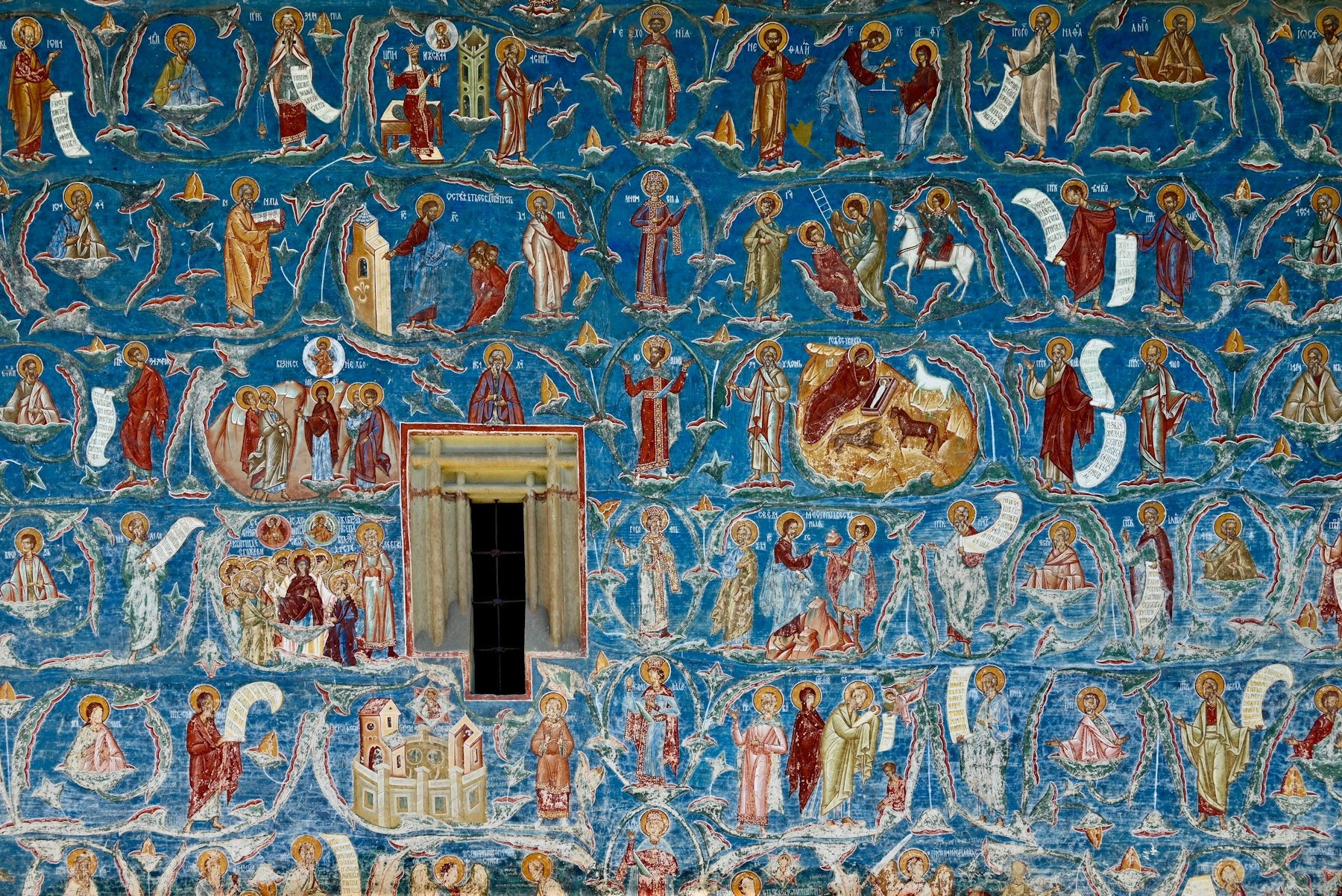
Then east to Bucovina for the Churches of Moldavia: eight churches built between the late fifteenth and late sixteenth centuries, their external walls covered in fresco paintings, which UNESCO calls masterpieces inspired by Byzantine art. The line worth carrying with you is that the paintings are “far from being mere wall decorations” and instead form a systematic covering on every facade, running complete cycles of religious themes. The record singles out Sucevița, whose interior and exterior walls are both entirely decorated with sixteenth-century murals.
Best for: Travellers who want the end of a Romania itinerary to be the best part of it rather than the airport run.
Go when: June to September. These are painted exteriors, and rain is the enemy of both the frescoes and the photographs at the far end of a Romania itinerary.
More from Dorian Destinations
The Dacian Limes is one of four inscribed stretches of the same border. We walked another of them: Hadrian’s Wall and the Roman Frontier.
| Property | Inscribed | Type | On this drive? |
|---|---|---|---|
| Hurezi Monastery | 1993 | Cultural | Yes — leg 1 |
| Brâncuși Ensemble, Târgu Jiu | 2024 | Cultural | Yes — leg 2 |
| Dacian Fortresses, Orăștie Mts | 1999 | Cultural | Yes — leg 3 |
| Frontiers of the Roman Empire – Dacia | 2024 | Cultural | Yes — leg 3 |
| Roșia Montană Mining Landscape | 2021 | Cultural | Yes — leg 4 |
| Historic Centre of Sighișoara | 1999 | Cultural | Yes — leg 5 |
| Villages with Fortified Churches | 1993, 1999 | Cultural | Yes — leg 6 |
| Wooden Churches of Maramureș | 1999 | Cultural | Yes — leg 7 |
| Churches of Moldavia | 1993, 2010 | Cultural | Yes — leg 7 |
| Danube Delta | 1991 | Natural | No — its own trip |
| Ancient and Primeval Beech Forests | 2007, 2011, 2017, 2021 | Natural | No — 93 parts, 18 countries |
All eleven properties, with the names, inscription years and cultural or natural classification exactly as the UNESCO World Heritage Centre publishes them. The leg numbers in the last column are ours, not UNESCO’s.
Planning a Romania Itinerary: Nights, Drives and Seasons
Thirteen nights is what a Romania itinerary comes to when we build it properly: one, one, two, one, two, two and four. You can compress it to ten by giving Transylvania a single base, and you will feel the loss in leg six rather than anywhere else.
Drive it, do not train it
Most of the nine properties on this route are rural, two are upland, and one is a mining landscape on a hillside. A hire car is not a preference here, it is the Romania itinerary. We say this knowing it rules the trip out for some travellers, and we would rather say it than quietly book a route that does not work.
Build the trip around the two newest inscriptions
If something has to go, protect legs two and four. Brâncuși and Roșia Montană are the two properties UNESCO has added most recently, they are the two fewest visitors have planned for, and they are the two that make a Romania itinerary feel like yours rather than a coach route.
Season is a real constraint, not a preference
Late May to early October is the honest window for a Romania itinerary. The painted exteriors in Bucovina and the upland access tracks in Hunedoara are both weather-dependent, and that is our judgment from building these trips rather than anything the register states.
See how we build an itinerary like this one →
Frequently Asked Questions
How many days do you need for a Romania itinerary?
Thirteen nights covers all nine inscribed properties on the overland Romania itinerary without rushing any of them. Ten nights works if you give Transylvania one base instead of two. Under a week, pick either the south-west pair or the northern pair and do it properly rather than driving past everything.
Is Bran Castle a UNESCO World Heritage Site?
No. UNESCO lists eleven inscribed properties for Romania and Bran is not among them. It is a short detour from the Transylvanian legs and perfectly enjoyable, but it should be treated as an extra rather than as the spine of the trip.
What is the best time of year for a Romania itinerary?
Late May to early October, in our experience of running a Romania itinerary. The upland Dacian sites and the Roșia Montană mining landscape need dry access, and Bucovina’s painted exteriors are at their best in settled weather. UNESCO publishes no seasonal guidance, so this is our judgment rather than the register’s.
Do you need a car to travel around Romania?
For this route, yes. Most of the properties on a Romania itinerary like this one are rural and two require upland access, so public transport would turn a thirteen-night trip into something much longer. We build these trips around a hire car and say so at the quoting stage.
Which UNESCO sites in Romania are worth prioritising?
Roșia Montană and the Brâncuși ensemble at Târgu Jiu, because they are the two most recent inscriptions and the two least visited. After those, Sighișoara for the living citadel and the Churches of Moldavia for the frescoes.
The Dorian Destinations Verdict
Romania is one of the few countries in Europe where the World Heritage list is genuinely a better route-planner than the guidebook. Eleven properties, nine of them on one unbroken south-west to north-east drive, and — in our experience of building these trips — most of them well off the usual coach route.
The country accepted the Convention in May 1990 and has been adding to its list ever since — two properties in 2024 alone. That is a register still being added to, and a Romania itinerary written today is not the one we would have written five years ago.
Our position, plainly: build the Romania itinerary around Roșia Montană and Târgu Jiu and let the castles be the detour. The thing that will stay with you is the gold mine with the wax tablets, not the turret.
Talk to an advisor who has built this route →
Sources: UNESCO World Heritage Centre — Romania state party record, Hurezi Monastery, Brâncuși Monumental Ensemble of Târgu Jiu, Dacian Fortresses of the Orastie Mountains, Frontiers of the Roman Empire – Dacia, Roșia Montană Mining Landscape, Historic Centre of Sighișoara, Villages with Fortified Churches in Transylvania, Wooden Churches of Maramureș, Churches of Moldavia, Danube Delta, Ancient and Primeval Beech Forests of the Carpathians. Photographs via Unsplash. Night counts, leg order and seasonal advice are Dorian Destinations’ own judgment.
Itineraries · Romania · Europe · Cultural Travel