

Arctic Cruising: Ask the Passenger Count Before the Itinerary

Co-Founder & Travel Advisor, Dorian Destinations · Published November 23, 2026 · ET

There is one number in Arctic cruising you can actually hold an operator to, and it is not the one anybody leads with.
On Friday, Skift published a profile of Selar, a French-Swedish expedition company whose first vessel carries 36 passengers. The piece is built around a simple claim from its captain and chief executive: a small ship is not a luxury feature, it is the thing that decides what happens when you step onto the shore. That claim is worth testing, because the entire marketing vocabulary of Arctic cruising rests on a word nobody has to define.
Here is what we could verify and where it came from. The Selar reporting is Colin Nagy’s, published by Skift on 20 November 2026 under its On Experience column. We read it directly rather than working from a headline. Several figures that circulate with that story sit only in Skift’s own auto-generated key-points box and not in the reported prose, and this piece labels every one of those as second-hand rather than passing them off as reporting.
The regulatory material comes from the two polar operator associations themselves — IAATO for Antarctica and AECO for the Arctic. We read their public pages. Where those pages do not state something, we say so instead of filling the gap from memory, and there is a good deal they do not state.
What we cannot do is tell you what Selar charges. No fare in any currency appears in the reporting we could reach.
You cannot have real exchange and real contact if you suddenly come with a crowd.
Why the ship size question keeps coming back in Arctic cruising
Every expedition brochure on earth uses the word “small.” Almost none of them tell you what it is small relative to, and Arctic cruising now runs from vessels of a dozen passengers — the size at which AECO lets an operator opt for a dockside inspection — to converted ocean liners carrying several hundred people, all of them described in the same adjective. The gap between those two ends is not a matter of comfort. It is the difference between a landing where everybody goes ashore and a landing where you wait your turn on the ship.
That is the argument Selar is making commercially, and it is the one we have been making to Arctic cruising clients for a while now.
1. The ship at the centre of the story is one we already know
Best for: Travellers who want the smallest credible vessel in Arctic cruising rather than the newest.
What Skift reports: The Arctic cruising vessel Captain Arctic is designed for 36 passengers and 24 crew, with retractable solar-covered sails, and its first expeditions are scheduled for early 2027.
Readers who have been with us a while will recognise the name. We wrote up a ten-day Svalbard itinerary on this exact ship back in September, before it had a Skift profile attached to it. The ratio is the thing worth sitting with. Twenty-four crew for 36 guests is three guests for every two crew, which is a staffing level you normally see on a private charter rather than on a scheduled Arctic cruising departure.
2. Sophie Galvagnon’s argument starts on shore, not at sea
Best for: Anyone deciding between a 36-berth Arctic cruising ship and a 200-berth one.
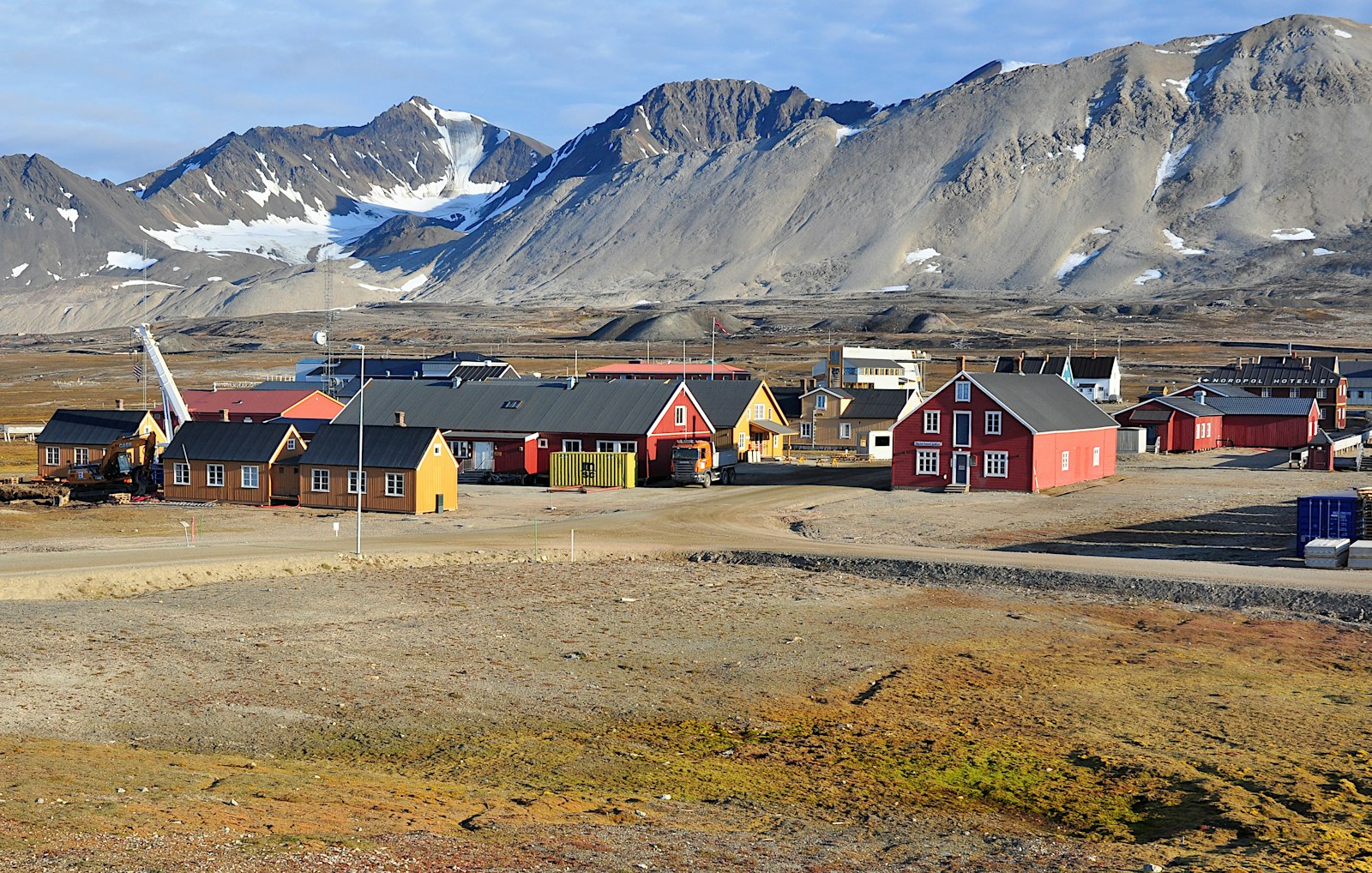
Galvagnon is a French-Swedish captain and Selar’s co-founder and chief executive. Her case, as Skift reports it, is that when hundreds of visitors land in a small Arctic community the encounter changes from the start — the chance to understand a place gets overtaken by the logistics of moving a large group through it.
“You cannot have real exchange and real contact if you suddenly come with a crowd,” she told Nagy. It is the only direct quote in the portion of the article we could read, and it is the hinge of the whole piece.
3. What the reporting says, and what only the summary box says
Best for: Readers who want to know which Arctic cruising figures to repeat and which to hedge.
This is the uncomfortable part, and we would rather print it than quietly launder it. Skift’s article page carries an auto-generated key-points and summary block alongside the reporting. Several of the most quotable Selar numbers in circulation appear only in that block: five rigid retractable sails, roughly 2,000 square metres of solar panels, an emissions target of up to 90% below a conventional expedition ship, a first operating year around 80% booked, about 40 planned annual departures, and a possible fare premium of 15% or more in later seasons.
Those may all be perfectly accurate. They are not, however, in the prose we read, and the box itself describes the 90% figure as a design target rather than a measured result. The table further down marks the provenance of each.
4. Antarctica publishes what Arctic cruising does not
Best for: Anyone comparing Antarctic sailing with Arctic cruising.
We made the southern version of this argument in September, in a piece whose title was the whole thesis: the ship decides if you land. In Antarctica the constraint is external and well known, and a buyer can lean on it in a way Arctic cruising does not allow.
IAATO publishes its 2025–26 numbers openly: 27,217 cruise-only visitors, 85,195 landed visits and 1,106 deep-field visitors. Read those labels carefully, because IAATO does not define them on that page and does not publish a total — “landed visits” counts visits rather than people, so adding the three figures together would be our arithmetic, not IAATO’s, and we are not going to do it.
5. In Arctic cruising, nobody publishes the number
Best for: Every single person booking an Arctic cruising trip for 2027.
Here is the finding, and it surprised us. We went looking for the Arctic cruising equivalent of a hard passengers-ashore cap and could not find one published on the pages we read. AECO, the Association of Arctic Expedition Cruise Operators, maintains a Field Code of Conduct approved at its 2026 AGM, a set of community and research-station guidelines, and site-specific guidance for roughly twenty Svalbard locations. It also publishes community-specific guidelines for places including Longyearbyen, Ittoqqortoormiit, Ilulissat and Nuuk.
What those pages give is conduct. AECO describes its community guidance as “useful dos and don’ts when visiting Arctic communities,” developed “with the input of local stakeholders.” What they do not give, anywhere we could read, is a number — no maximum group ashore, no guide-to-guest ratio, no cap by settlement.
IAATO’s public guidance page is no more specific in that respect. It asks organisers to “ensure that visitors are supervised by a sufficient number of guides who have adequate experience and training in Antarctic conditions,” and states no ratio at all. Both associations very likely hold detailed numbers in member handbooks, site guidelines and treaty papers we did not open, and we are not claiming the Arctic cruising rules do not exist.
We are claiming something narrower and more useful: you, sitting at a laptop choosing between two Arctic cruising departures, cannot look the number up. Which means the comparison has to be made on something you can see.
6. AECO prices its own membership by the berth
Best for: Travellers who want to know what the Arctic cruising industry itself counts.
There is one place the Arctic cruising system does put a number on passengers, and it is the invoice. AECO’s published dues are NOK 350 per berth available for sale plus NOK 100 per passenger for 2025/2026, rising to NOK 400 per berth on its 2026–27 table. Associate membership is listed at NOK 21,000 for the same 2025/2026 year.
Membership is by application rather than automatic. Full members, AECO says, “must undergo observation every five years, while companies operating vessels with 12 passengers or fewer can opt for a dockside observation,” and provisional members have to host an observer on board before qualifying. Whether a non-member Arctic operator is bound by any of it is not stated on the page.
So the berth is the unit the association itself bills against, inspects against and sets its thresholds against. If that is the number the industry counts when money and oversight are at stake, it is a reasonable number for a traveller to count too.
7. What to ask before you book Arctic cruising for 2027
Best for: The conversation you have with whoever is selling you the Arctic cruising trip.
Ask for the berth count, not the ship’s gross tonnage. Ask how many guests go ashore in one movement and whether there is a rotation. Ask the guide-to-guest ratio as a number. Ask whether the operator is an AECO member and whether it has been observed. None of those questions requires you to understand polar regulation, and all four are answerable in a sentence by anybody who actually knows the product.
An operator who answers all four quickly is telling you something. So is one who does not.
Captain Arctic by the numbers, and where each one comes from
| Figure | Value | Where it comes from |
|---|---|---|
| Passengers | 36 | Skift reported prose |
| Crew | 24 | Skift reported prose |
| First expeditions | Early 2027 | Skift reported prose |
| Sails | Retractable, solar-covered | Skift reported prose |
| Number of sails | Five, rigid | Skift summary box only |
| Solar panel area | About 2,000 sq m | Skift summary box only |
| Emissions | Up to 90% lower | Skift summary box only — stated as a design target |
| First year booked | About 80% | Skift summary box only |
| Annual departures | About 40 | Skift summary box only |
| Fare | Not stated in any currency | Absent from the reporting we could reach |
Provenance classes: “reported prose” means the figure appears in Colin Nagy’s article text as we read it on 23 November 2026. “Summary box only” means it appears in Skift’s auto-generated key-points block and not in that prose. The Skift article is partly paywalled and cuts off mid-sentence for a non-subscriber, so a figure marked summary-box-only may well appear in the portion we could not read.
How we are handling Arctic cruising enquiries this season
Treat berth count as the first filter, not the last
It is the only specification that is published, consistent and impossible to fudge. Everything else on an Arctic cruising brochure — cabin categories, zodiac fleets, “intimate” and “boutique” — varies with the copywriter.
Separate the emissions claim from the experience claim
Selar is making two arguments at once, and they are not equally testable. The small-group case is visible on any passenger manifest. The 90% emissions figure is a design target on a ship that has not sailed commercially yet, and we will believe an operating number when one exists.
Book a first season with your eyes open
A maiden commercial season on a novel propulsion system carries schedule risk that an established hull does not. That is not an argument against going. It is an argument for flexible air, decent insurance, and a frank conversation about what happens if the launch slips.
Frequently Asked Questions
How many passengers is a small ship in Arctic cruising?
There is no published definition. In practice, operators apply the word to anything from roughly 12 berths to well over 200. Selar’s Captain Arctic is designed for 36 passengers and 24 crew, which sits at the genuinely small end. Because the term is undefined, ask for the berth count rather than the adjective.
Is there a limit on how many people can go ashore in the Arctic?
Not one we could find published. AECO maintains a Field Code of Conduct, community guidelines and site-specific guidance for around twenty Svalbard locations, but states no maximum group size or guide ratio on those public pages. Detailed limits may exist in member documents we did not open.
How is Antarctica different from Arctic cruising?
Antarctica has one dominant operator association, IAATO, publishing season visitor data openly — 27,217 cruise-only visitors and 85,195 landed visits in 2025–26. Governance in Arctic cruising is spread across national authorities and AECO’s guidelines, so there is less in one place for a traveller to check.
When does Captain Arctic start sailing?
Skift reports that Selar’s first expeditions are scheduled for early 2027. No fare in any currency appears in the reporting we could reach, and a first commercial season on a new propulsion system should be treated as carrying more schedule risk than an established ship.
What should I ask an operator before booking?
Four things: the berth count, how many guests land in a single movement, the guide-to-guest ratio as a number, and whether the company is an AECO member that has been observed. Any operator who knows its own product can answer all four in a sentence each.
Dorian Destinations Verdict
The Selar story will be read as a story about sails. It is not. The sails are the photograph; the 36 is the argument, and Galvagnon is right that it decides what the shore feels like.
What makes it worth a Monday is the hole it exposes. We went looking for the number that governs Arctic cruising landings and found conduct guidance, community dos and don’ts, and a membership fee schedule priced by the berth. Antarctica hands a buyer published figures to reason with. The Arctic, on the public record at least, hands them an adjective.
Until that changes, the berth count is doing the work that regulation does in the south. Count it, ask the four questions, and treat anything you read about an Arctic cruising ship that has not sailed yet as a plan rather than a performance.
Sources: Skift, “Selar Wants to Make Arctic Cruising Less Like a Cruise,” Colin Nagy, 20 November 2026; IAATO data and statistics, 2025–26 visitor numbers; IAATO guidance for organizers; AECO community and research station guidelines; AECO membership and dues. All pages read on 23 November 2026.