

Featured Itinerary
Dry Tortugas: the Park Publishes the Fee and Not the Ferry

Co-Founder & Travel Advisor, Dorian Destinations · Published November 28, 2026 · ET
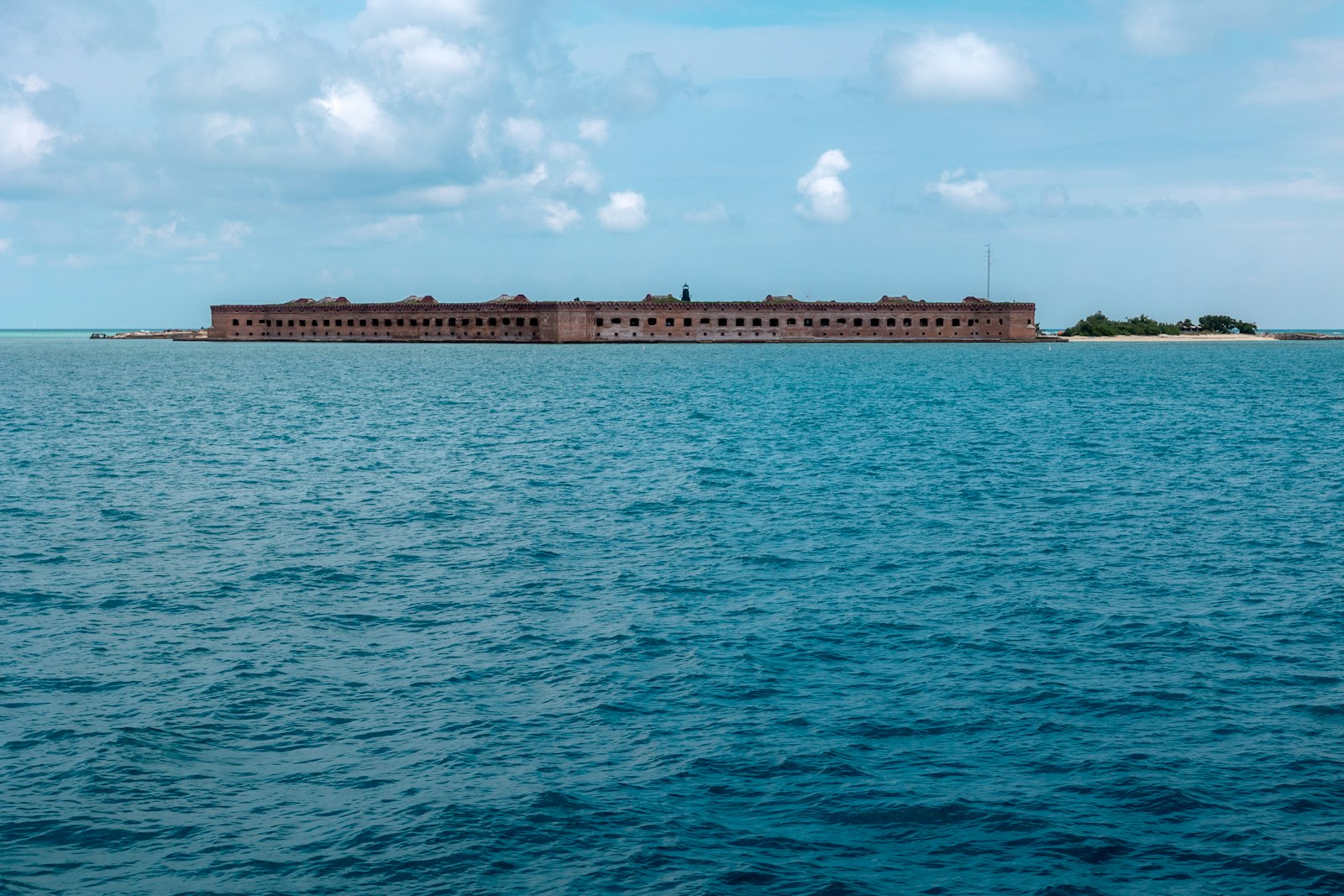
Plan the day around the boat, not the fort →
The National Park Service will tell you that Dry Tortugas costs $15 and that the pass lasts seven consecutive days. It will not tell you what time the boat leaves, how long the crossing takes, or how many hours you get on the island.
I went looking for those three numbers on the park’s own website this morning and came back without any of them. That is not a complaint about the rangers, who are running seven islands and a brick fort seventy miles of open water from their nearest hardware store. It is a warning about how you should plan this particular trip. Dry Tortugas is the one national park where the official record is thinner than the Instagram record, and if you build a day around what the park publishes you will arrive with the wrong assumptions and possibly the wrong form of payment.
So here is the honest version. Everything below is quoted from the National Park Service’s own Dry Tortugas pages, fetched on 28 November 2026. Where a page states a figure, I give it. Where a page states nothing, I say so rather than borrowing a number from a tour operator, and on this subject that gap is wide enough to be the story.
One more thing before the route, because it is the single most practical sentence in this piece. The Dry Tortugas fees page contradicts itself about cash three separate times, on one screen, and I will show you all three.
“Almost 70 miles west of Key West, Florida, lies a cluster of seven islands.” — National Park Service, Dry Tortugas basic information
What Dry Tortugas Actually Costs, and What It Refuses to Say
Start with the figures that are published, because they are clean. Entrance to Dry Tortugas is $15.00 per person, good for seven consecutive days. Anyone 15 years old and under is exempt, including international visitors. An America the Beautiful annual pass covers it: $80 for US residents, $250 for non-residents, $20 for a senior annual and $80 for a senior lifetime.
Camping is $15 per night per individual site and $30 per night for the group site. Children under 16 camp free, and Senior or Access pass holders get 50% off on production of the pass and photo ID. The 2026 fee-free list ran to eight entries, the last of them on 11 November, so none remains this year.
Now the gaps, and they are not small ones. Across the twelve park pages I read, the Service states no ferry fare, no seaplane fare, no crossing time, no flight time, no departure or return times, and no figure for how many hours a visitor gets ashore. The basic information page has a heading reading “Operating Hours & Seasons” with nothing underneath it. Those are the first five questions anybody asks about this park and it answers none of them.
1. Key West: the 70 Miles Dry Tortugas Will Not Price
Every Dry Tortugas trip begins in Key West, and the park is blunt about why that is a commitment rather than a drive. “There are no roads to the park.” “Cars cannot access Dry Tortugas National Park.” The distance is given as about 70 miles, or 113 kilometres, west of Key West, Florida.
Two operators are linked from the park’s own pages: the Yankee Freedom Ferry and Key West Seaplane Charters. The ferry’s number is given as 1-800-634-0939. What the park does not say is whether those two are the only concessioners, and it prices neither.
The one commercial fact the park does publish is worth knowing and is easy to misread: ferry tickets include the cost of park entrance, but not camping fees, while the seaplane charges the entrance fee on arrival. So a ferry passenger has already paid the $15 and a seaplane passenger has not. That is the kind of detail that produces a confused conversation on a dock.
Best for: the night before, because every departure is a morning departure from here.
Book by: months ahead — the park itself says ferry tickets are limited and sell out months in advance.
2. Garden Key: Fourteen Acres Holding the Whole of Dry Tortugas
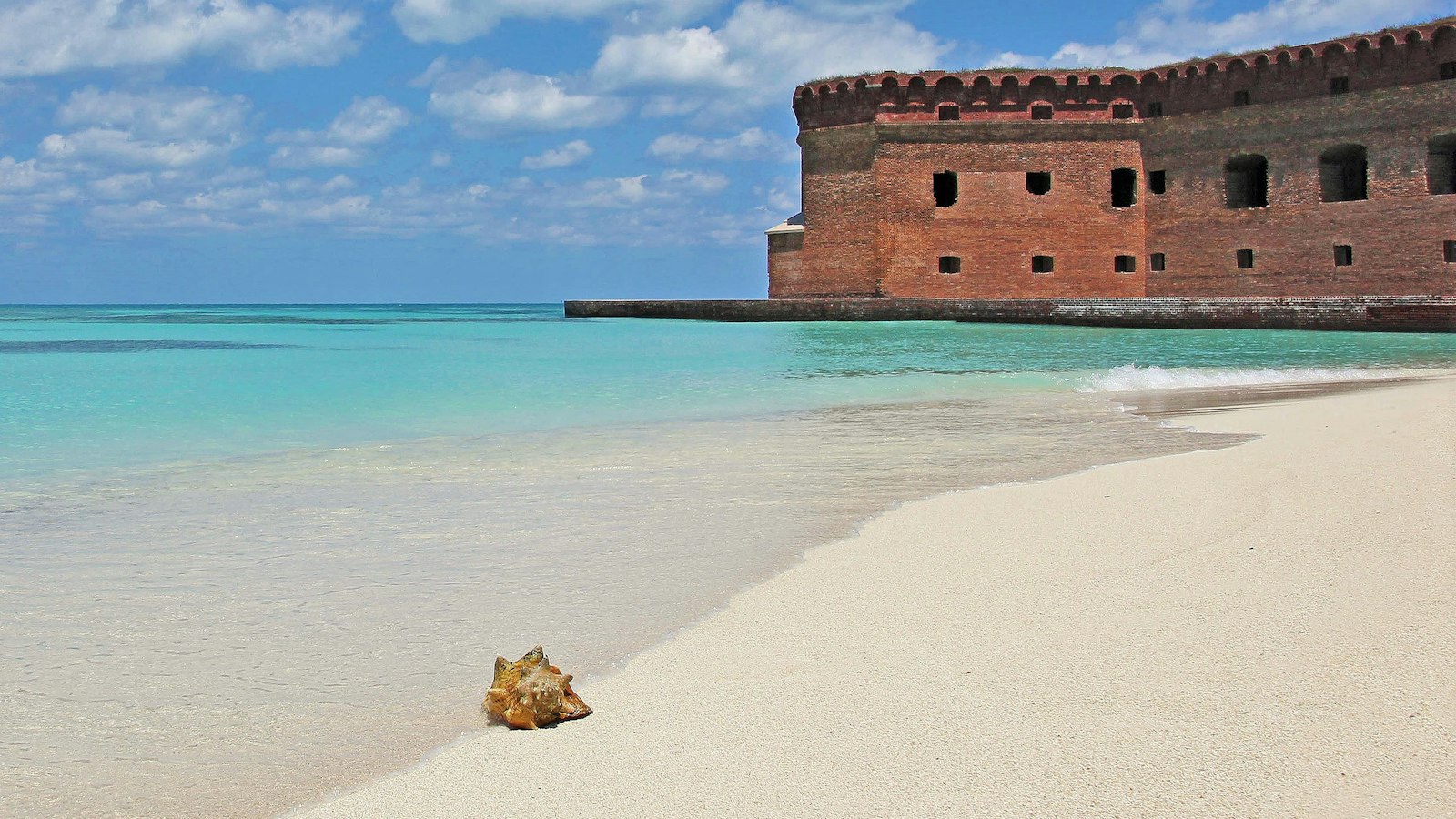
Garden Key is where the ferry and the seaplane land, and it is about 14 acres — the second largest island in Dry Tortugas, not the largest. Everything a day visitor does happens on it: park headquarters, the visitor centre, the campground, the swimming and snorkelling areas, and Fort Jefferson itself.
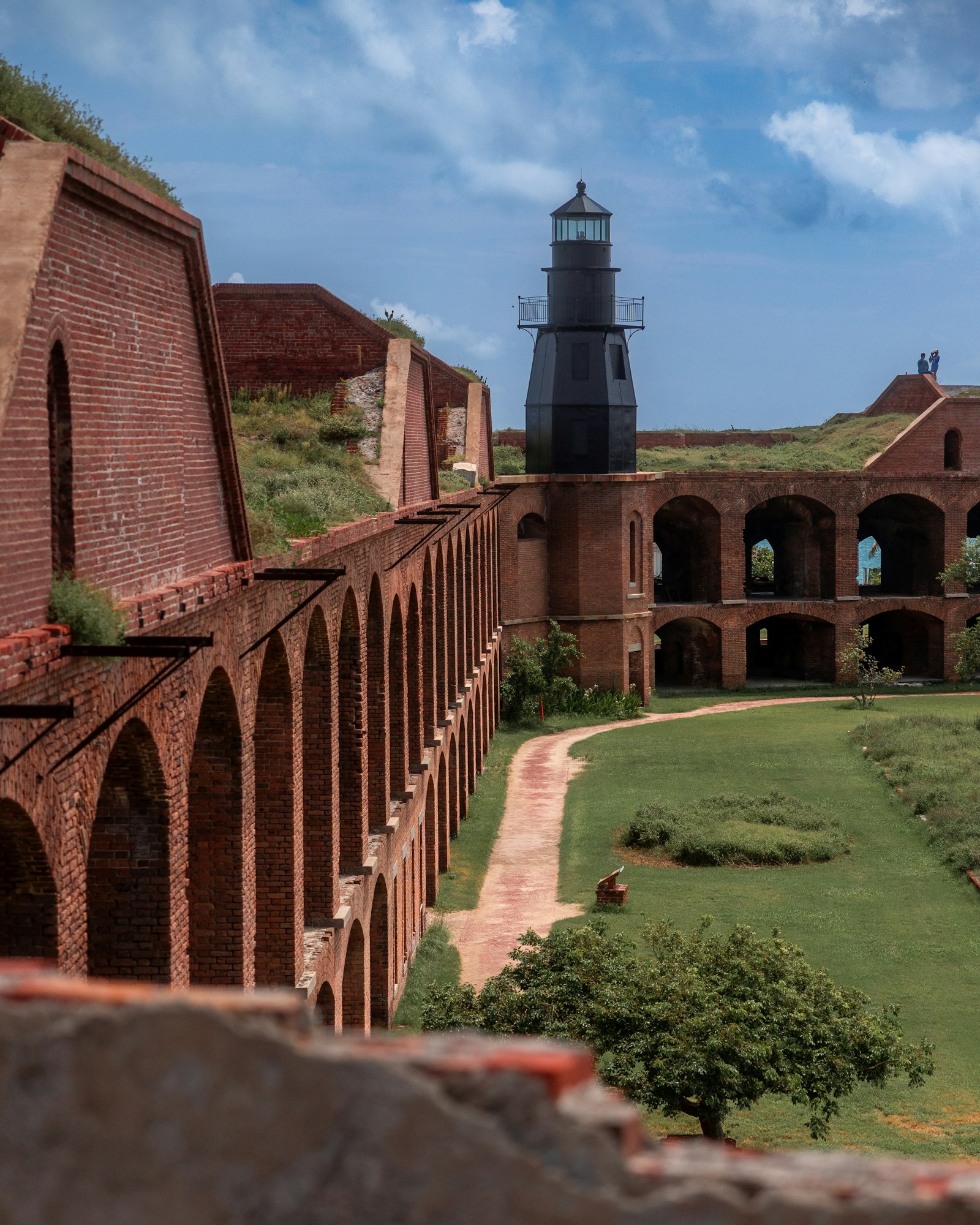
The fort is described as the largest all-masonry fort in the United States, built between 1846 and 1875 and never finished, because the fear was that more bricks and cannon would cause further settling. It has 2,000 arches. Supply problems, subsidence and the Civil War all delayed it. The park does not state a brick count anywhere I could find, and I am not going to repeat the famous sixteen-million figure from a source I have not read.
The dates are firmer. Franklin D. Roosevelt designated Fort Jefferson National Monument under the Antiquities Act on 4 January 1935, covering 47,125 acres. The monument was expanded in 1983 and re-designated Dry Tortugas National Park by act of Congress on 26 October 1992. The Garden Key harbour light dates from 1825 and the brick tower on Loggerhead Key from 1858.
One live restriction affects anyone arriving on their own keel. Hurricane Ian damage has closed the finger piers and slips, the dinghy beach between those piers and the South Coaling Dock, and the South Coaling Dock ruins. The page says space for personal vessels is extremely limited and gives no reopening date.
Best for: the whole of a Dry Tortugas day trip, because there is nowhere else you can reach without your own boat.
Go when: first boat — and note the park publishes no opening or closing hours for the island at all.
3. The Moat Wall: the Dry Tortugas Snorkel Nobody Books
This is the part of the park that most rewards a traveller who has read the small print. Swimming inside the moat is prohibited; swimming around the outside of the moat wall is encouraged. The park names reef squid, nurse sharks and hogfish there, along with cement barrels and anchor chains, which are artifacts rather than scenery.
The historic coaling pier pilings are the other shore-accessible site, and the park lists large grouper, tarpon, barracudas and the occasional shark around them. Both are reachable from the beach, which matters because the ferry and the seaplane are both unable to carry compressed canisters aboard. If you want tanks here you need your own boat or a charter vessel.
The night snorkel is the detail I would actually plan around. The park describes the moat wall at night in water that should not exceed six to eight feet depending on tide, entered from the beach on the west side of the fort, swum to about halfway round and back the same way, and it calls that safe for children who are comfortable in the water. Octopus, basket starfish, lobsters, decorator crabs, arrowhead crabs, coral shrimp and squid are all named.
Two rules apply everywhere in the park and both are easy to breach by accident. You must display an approved dive flag when snorkelling outside the designated snorkel area, and all coral, living and dead, is protected from collection.
Best for: the one experience a camper gets and a day visitor does not — the night swim.
Go when: after a daylight recce of the same stretch, which is the park’s own advice, with a strong dive light.
4. The Campground: Ten Beds a Day on the Whole of Dry Tortugas
Here is the hardest number in this article, and almost nobody planning a Dry Tortugas trip knows it. The ferry is limited to ten camping passengers per day. Ten. For an island 70 miles offshore with no other scheduled transport, because the seaplane does not offer transport for campers at all.
It gets tighter. Reservations are not accepted for the regular six-person campsites — they are first-come, first-served only. The single reservable pitch is the large group site, for 10 to 20 people, at $30 a night, with two grills, two picnic tables and space for 12 to 15 tents. Individual sites take up to three two-person tents each and cost $15 a night.
So the planning shape is unusual and worth stating plainly: you cannot reserve a Dry Tortugas campsite, but you must reserve the only boat that will carry you to one, and that boat takes ten campers. A sold-out ferry is a sold-out Dry Tortugas campground by proxy.
What you carry matters too. There are no rentals or supplies for sale once you arrive, no public trash or recycling anywhere in the park, and you pack out everything. Charcoal briquettes in the campsite grills are the only fires allowed; the park permits gas stoves but the commercial ferries do not allow them on board. Camping fees are paid on Garden Key through Recreation.gov Scan & Pay, and the park warns that service may be limited or unavailable.
Best for: the only way to see Dry Tortugas without a departure time hanging over the afternoon.
Book by: whenever the ferry opens its camper allocation — the campsite itself cannot be booked at all.
5. Loggerhead Key: Three Miles Nobody Can Take You
Loggerhead Key is the largest island in Dry Tortugas and sits three miles from Garden Key, and the park is unambiguous about access: “There is no public transportation to this island.” You reach it by private vessel, or by kayak or canoe brought out on the ferry, which requires advance arrangements because boat capacity is limited.
It is day use only. Visitors must stay on marked paths, and all buildings and boat docks on Loggerhead Key are closed to the public. The island once held the Carnegie Laboratory for Marine Ecology, and it carries the 1858 brick lighthouse.
The reason to make the effort is a mile southwest, where the Windjammer — properly the Avanti — lies in nought to twenty feet of water. She was built in 1875 and wrecked in 1901 on Loggerhead Reef, bound for Montevideo with lumber, and visibility is best on a flood tide. Note the live alert, because it will cost you a morning: the Windjammer mooring ball southwest of Loggerhead Key has been damaged and is off-station, and the park tells you to call on VHF 16 for current availability.
On the island’s north side, Little Africa is the gentler option — shallow, protected and calm, which the park calls good for snorkelers and, under most conditions, for children.
Best for: the half-day that proves you brought your own boat.
Go when: flood tide for the wreck — and after confirming the mooring, which is currently off-station.
MORE: For how the wider system fits together before you pick a park, read our guide to the National Park System.
6. The Outer Reefs: Where Dry Tortugas Stops Being a Day Trip
The last leg is only available to boats, and it is where the hundred square miles of Dry Tortugas start to mean something. Texas Rock sits almost due north of Garden Key in about 55 feet of water, a mound rising from 55 to 60 feet to a depth of roughly 35 feet, with coral, sea fans and rare black coral.
Pulaski Shoals, on the eastern boundary, has shallow coral heads and shipwreck remains, and beyond the boundary buoys the water drops to about 75 to 80 feet. The park names black tips, hammerheads, bull and nurse sharks, turtles and eagle rays there, and says the dive is not for the timid or the novice diver. That is a national park warning you off, which is rare enough to take seriously.
Anchoring here is tightly drawn and the rules repay reading twice. Overnight anchoring is permitted only in sandy-bottom areas within one nautical mile of the Garden Key lighthouse, excluding Special Protection Zones, marked channels and the Garden Key Harbor Channel. The camping page describes the same circle as one nautical mile from the Fort Jefferson harbour light, over sand and rubble bottom, which is either two names for one landmark or two slightly different circles. Anchoring is prohibited throughout the Research Natural Area, where mooring buoys are daytime use only for a maximum of two hours. Anchored vessels may not be left unattended for more than four hours.
The dock rules bite on a day trip. The eastern half of the Garden Key dock is reserved for the concession ferry from 10am to 3pm, maximum cumulative use is two hours per vessel per day, and docking is prohibited from sunset to sunrise. Seaplane Beach is closed to all vessels from 8am to 6pm. Carry NOAA charts 11438 and 11434, and plan for two gallons of water per person per day.
Best for: the version of Dry Tortugas that the 100-square-mile figure is actually describing.
Go when: you have a boat, a dive flag and a spare day of food and water aboard, which the park explicitly asks for.
| What you want to know | What the park states | Provenance | Source page last updated |
|---|---|---|---|
| Entrance fee | $15.00 per person, 7 consecutive days | Stated outright | 26 May 2026 |
| Camping fee | $15 per night individual, $30 group | Stated outright | 17 July 2026 |
| Campers per ferry per day | 10 | Stated outright | 17 July 2026 |
| Distance from Key West | About 70 miles (113 km) west | Stated on three pages, consistent | 25 September 2026 |
| Ferry fare and crossing time | Neither stated anywhere | Silence | 25 September 2026 |
| Island opening hours | Heading present, no content beneath it | Silence | 19 August 2026 |
| Bush Key closure dates | “Seasonal closures apply” — no dates given | Silence | 5 October 2026 |
| Whether cash is accepted | Three mutually exclusive answers | Self-contradiction | 26 May 2026 |
Every row above is taken from the National Park Service’s own page for that subject. The provenance column separates three different classes of fact: something the park states, something it does not state at all, and something it states more than one way. The last column exists because the twelve pages behind this article were last updated between 8 January 2021 and 5 October 2026 — a spread of nearly six years on one park’s website.
How to Book Dry Tortugas Around What the Park Will Not Tell You
The cash question, and all three answers
This is the contradiction I promised. On one fees page you will read “Plan to go cashless. This park does not accept cash,” and also “Plan to bring cash for each person aged 16-years of age and older,” and also that private boaters may pay cash or check at the Garden Key main dock — followed a little later by “Note: Cash is not accepted.” The seaplane operator, separately, is said to take cash, card or a pre-purchased pass.
I cannot resolve that and I am not going to pretend otherwise. What I would do is buy the pass in advance on Recreation.gov and carry a printed copy, which the park recommends anyway, because the fees page says there is no cell phone service or wi-fi here while the camping page says wi-fi is limited to the boathouse, and a digital pass you cannot load is not a pass.
Treat the ferry seat as the real Dry Tortugas booking
The campsite cannot be reserved and the boat can, and the boat caps campers at ten a day. So the ferry seat is the scarce thing, not the pitch. Book it the moment the allocation opens and treat everything else as flexible.
Carry the water the park says you will not find
No food, water or fuel is available anywhere in the park, and there are no trash facilities. Two gallons of water per person per day, plus one extra day of food and water in case of delay, is the park’s own figure and not a cautious padding of it.
See how we build a six-stop route →
Dry Tortugas: Frequently Asked Questions
How much does it cost to visit Dry Tortugas National Park?
Entrance to Dry Tortugas National Park is $15.00 per person and is valid for seven consecutive days. Anyone aged 15 and under is exempt, including international visitors. Camping is $15 per night for an individual site and $30 per night for the group site. The National Park Service does not publish the ferry or seaplane fare, so budget those separately with the operator.
Can you camp at Dry Tortugas without a reservation?
Yes, and in fact you cannot reserve an individual site at all. The regular six-person campsites at Dry Tortugas are first-come, first-served only; the single large group site for 10 to 20 people is the one pitch that can be booked in advance. The catch is transport: the ferry is limited to ten camping passengers per day and the seaplane does not carry campers.
How far is Dry Tortugas from Key West?
Dry Tortugas National Park is about 70 miles, or 113 kilometres, west of Key West, Florida. There are no roads to the park and cars cannot reach it, so access is by ferry, seaplane or private vessel only. The park does not state the crossing time for either the ferry or the seaplane.
Does Dry Tortugas take cash?
The park’s own fees page gives three different answers. It says the park does not accept cash, it tells visitors to bring cash for each person aged 16 and over, and it says private boaters may pay by cash or check at the Garden Key dock before stating elsewhere that cash is not accepted. The safe course at Dry Tortugas is to buy a digital pass in advance on Recreation.gov and print it, because there is no reliable mobile service on the island.
Can you get to Loggerhead Key from Garden Key?
Not on any scheduled service. Loggerhead Key is three miles from Garden Key and the National Park Service states there is no public transportation to the island. Access is by private vessel, or by kayak or canoe carried out on the ferry by advance arrangement. It is day use only, all buildings and docks are closed to the public, and visitors must stay on marked paths.
The Dorian Destinations Verdict on Dry Tortugas
Dry Tortugas is worth the effort and it is the worst-documented park I have planned a trip to this year. Both of those are true, and the second is the reason the first keeps catching people out. A visitor who reads the official pages comes away knowing the fee precisely and the logistics not at all.
What I would take from the research is narrower than “check before you go.” It is that the park’s silences are informative in themselves. No published crossing time means the operator sets it and the operator can change it. No published island hours means your day is defined by a boat schedule, not a gate. No published Bush Key closure dates on any page I read means a bird closure can land on your week without warning. Those are planning facts, not missing ones.
And then there is the cash paragraph, which I would frame and hang on a wall. A federal agency telling you on the same page to bring cash and that cash is not accepted is not a scandal; it is just what happens when a site is edited over six years by different hands. But it is a useful reminder that the authoritative source and the current source are not always the same document, at Dry Tortugas or anywhere else.
Go to Dry Tortugas, and go camping if the ferry will take you. Ten seats a day is the scarcest thing in this entire article, and the people who get them have the island to themselves between the afternoon departure and the morning arrival. That is the real Dry Tortugas, and it is not available to anybody who booked a day trip.
Talk to an advisor who reads the fees page →
Sources: the National Park Service on Dry Tortugas fees and passes, basic information, directions and transportation, camping, boating, Garden Key, Loggerhead Key, swimming, snorkeling and diving and history and culture, wildlife viewing, things to do, current conditions and the plan-your-visit index, all fetched 28 November 2026. Figures are quoted as stated; fees, schedules and closures change.
Itineraries · National Parks