

Travel Smart
What The Rules Actually Say
Flight Delay Compensation: The US Rules Are Refunds, Not Cash

Co-Founder & Travel Advisor, Dorian Destinations · Published October 30, 2026 · ET
Have us build a trip with fewer of these days in it →
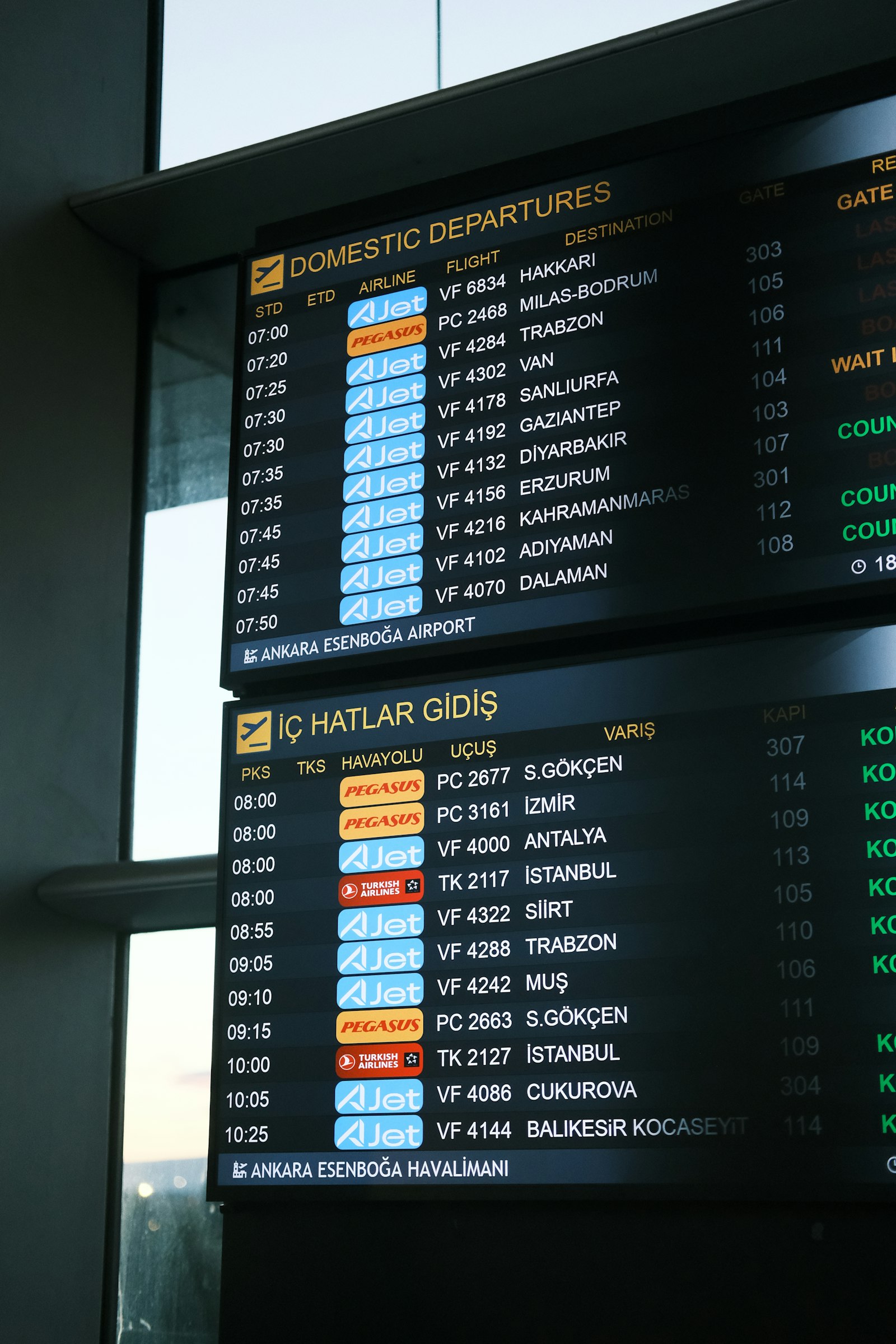
Three hours domestic. Six hours international. Those two numbers are the entire US flight delay compensation system, and almost everyone standing at a rebooking desk has them wrong.
If you have flown in Europe you have been trained to expect cash. A long delay, a form, a few hundred euros. The United States does not work that way, and searching for flight delay compensation in an American airport produces a lot of results written for the wrong continent. What the US Department of Transportation actually guarantees is a refund — and, crucially, a refund you do not have to ask for.
That distinction is worth money, because a refund is unconditional and a payout is not. The rules below say nothing about why your flight was late. They do not care whether it was weather, crew or a cabin that needed cleaning. If the trigger is met and you decline the rebooking, the money goes back.
Everything that follows is from the Department of Transportation’s own aviation consumer protection pages, read in October 2026 and linked at the foot of this article. Where we are giving advice rather than reporting a rule, we say so.
One limit worth stating plainly. We are travel advisors, not lawyers, and nothing here is legal advice. We are also not paid by any airline, any card issuer or any claims company — and the claims companies are the reason most of the flight delay compensation content you will find online exists at all.
A refund is owed “regardless of the reason” for the cancellation or significant change. The cause of the delay does not enter into it.
What flight delay compensation means in the United States
Two different things get called flight delay compensation, and separating them is the whole trick.
The refund. Legally required, automatic, and tied to specific thresholds. If the airline cancels or changes your flight significantly and you choose not to travel, you get your money back — the full fare, not a credit.
The care. Meals, hotels, ground transport, rebooking on another carrier. None of this part of flight delay compensation is set by a single federal threshold. It comes from each airline’s own customer service plan, and the DOT’s position is that airlines are required to adhere to the promises they make in those plans. The promise is voluntary; keeping it is not.
So when people ask us about flight delay compensation, the honest answer is: you have a strong, enforceable right to your money, and a much weaker, airline-specific claim on a hotel room. Plan accordingly.
The thresholds that trigger flight delay compensation
The core of US flight delay compensation is simple: a refund is owed if the airline cancels your flight for any reason and you choose not to travel or to accept credits. It is also owed, on the same terms, when the itinerary changes significantly. The DOT lists what counts:
| Trigger | Domestic | International |
|---|---|---|
| Departure moved earlier | 3+ hours | 6+ hours |
| Arrival moved later | 3+ hours | 6+ hours |
| Different origin or destination airport | Any | Any |
| More connections than booked | Any | Any |
| Involuntary downgrade | Fare difference if you fly | Fare difference if you fly |
Thresholds are the US Department of Transportation’s, read October 2026. Column headings are ours.
Two of those flight delay compensation triggers get overlooked constantly. An earlier departure counts — a flight moved three hours forward is as much a trigger as one moved three hours back, and it is the version airlines are most likely to present as a favour. And an added connection counts on its own, with no hours attached. A nonstop quietly rebooked through a hub is grounds for a refund even if you arrive on time.
Passengers with disabilities have two additional flight delay compensation triggers: a changed connecting airport, and a substitute aircraft that lacks the accessibility features of the one booked.
When flight delay compensation is not owed
Three situations, stated plainly by the DOT. You flew the changed or alternative flight. You bought a non-refundable ticket and the flight operated as scheduled. Or you simply had a poor service experience. None of those produce a refund, and no amount of escalation changes that.
The first one is the trap. Accepting the rebooking and flying it extinguishes the claim. If the refund is what you want, you have to decline before you board.
How fast flight delay compensation has to arrive
This is the part of flight delay compensation that airlines are quietest about, because it is the part with a clock on it.
The airline may offer you a rebooking, but it must tell you that you are entitled to a refund if you decline. If you decline or simply do not respond, the refund must be issued automatically — you are not required to fill in a form, call anyone, or ask twice.
For a credit card purchase, that is within 7 business days of your rejecting the offer. For cash or cheque, 20 days.
One honest note on that last figure. The DOT’s own refunds page says “20 calendar days” in the section on alternative flights and “20 business days” in the section on automatic refunds for direct purchases. Those are not the same deadline and we are not going to pretend we know which governs. If you are chasing a cash refund near either boundary, raise it with the airline citing the shorter one.
Airlines are allowed to set a deadline for accepting a rebooking offer, which is the practical reason not to leave the decision sitting in your inbox.
Baggage flight delay compensation: the 12, 15 and 30 hour rules
Checked bag fees have their own flight delay compensation regime, and it is more generous than most travellers realise. If your bag is declared lost or significantly delayed, the fee comes back.
“Significantly delayed” has numbers attached. On a domestic flight, the bag must be delivered within 12 hours of arrival. On an international flight of 12 hours or less, within 15 hours. On an international flight over 12 hours, within 30 hours.
The clock is precisely defined: it starts when you are first allowed to leave the aircraft at your final destination, and it stops when you collect the bag or it is delivered to an agreed location. Not when you reach the carousel, and not when the airline says it was dispatched.
“Lost” is vaguer, because the airlines set it. Most declare a bag lost somewhere between 5 and 14 days after the flight, and it varies by carrier — which is a number worth knowing before you choose who to fly with on a trip where the luggage matters.
The condition everyone misses: you must file a mishandled baggage report with the airline to get the fee refunded. No report, no refund, however late the bag was. Do it at the airport, before you leave.
There are three exceptions. You get nothing if you did not re-check the bag at the first point of entry into the United States, if you failed to pick up a bag that arrived on time, or if you voluntarily agreed to travel without your bag on the same flight.
Optional fees, and the Wi-Fi rule
The same principle runs through the whole flight delay compensation system: if you paid for something and did not get it, the money comes back. The DOT states that a refund is owed for any optional service that was unavailable through no fault of yours — its own examples are broken Wi-Fi, a cancelled flight and involuntary denied boarding.
Seat selection, priority boarding, lounge passes bought with the ticket, paid upgrades: all of it is in scope when the service does not happen. This is the smallest and most reliable form of flight delay compensation available, and almost nobody claims it.

Vouchers, credits and the five-year rule
Airlines are allowed to offer travel credits, vouchers or other compensation in place of a refund. Three conditions apply, and all three are in your favour.
They must tell you that you are entitled to a refund instead. Any credit or voucher must be valid for at least five years. And the airline must disclose any material restrictions, limitations or conditions attached to it.
A five-year validity is long enough that a voucher is occasionally the better deal — if you fly that airline regularly and the voucher is worth more than the fare. Usually it is not. Our advice, not the DOT’s: take the cash unless the premium is both large and in a currency you will actually spend.
The 24-hour rule, which is not about delays at all
Worth knowing because it is the one rule that lets you fix a mistake for free. If you book directly with an airline seven or more days before departure, the airline must either let you cancel for a full refund without penalty within 24 hours, or hold the quoted price for 24 hours without payment.
It does not have to offer both. And it does not apply at all to tickets bought through travel agents or online travel agencies — a real reason to book direct when a fare is one you may need to undo.
Who owes you what: the ticket agent gap
If you bought through an online travel agency or another ticket agent that is the merchant of record, that agent must issue the airfare refund when an airline cancels or significantly changes a flight to, from or within the United States.
But agents are not responsible for ancillary or baggage fee refunds. Those you have to pursue with the airline directly, even though you never paid the airline. It is the single most confusing seam in the whole flight delay compensation system, and it is where claims get dropped.
The dashboard, and what it does not promise
The DOT runs a public cancellation and delay dashboard covering the large US airlines. It records which carriers have committed to which flight delay compensation services when they cause a significant delay — a green check for a commitment made, a red cross for one not made.
Two things to understand before you treat it as a guarantee. The dashboard covers controllable delays and cancellations only: ones caused by the airline, with the DOT’s own examples being maintenance, crew problems, cabin cleaning, baggage loading and fuelling. Weather is not in scope.
And a red cross does not mean you will get nothing. The DOT notes that airlines with a red cross may still provide the service at their discretion. It is a record of promises, not of behaviour.
The dashboard’s carrier list runs to nine airlines — Alaska, Allegiant, American, Delta, Frontier, Hawaiian, JetBlue, Southwest and United — while the DOT’s customer service plan list adds Spirit, which does not appear in the dashboard itself. We have reported that gap rather than tidied it, because it matters if Spirit is the airline you are arguing with.
What we would actually do about flight delay compensation
Four things, in order, and none of them involve a claims company.
Decline the rebooking in writing if you want the money. Flying the alternative ends the claim. Say no, in the app or at the desk, and get it recorded.
File the baggage report before you leave the airport. It is the condition on the whole baggage half of flight delay compensation and it takes ten minutes.
Put the clock in writing. Note the time you were first allowed off the aircraft. That is when the 12, 15 or 30 hour count starts, and it is the figure an airline is most likely to dispute.
Claim the optional fees separately. The seat you paid for, the Wi-Fi that did not work, the bag fee on a flight that never operated. These are small, individually, and they are the ones the airline will not refund unless asked.
And one thing we would not do: we would not hand a percentage to a claims agency for a US itinerary. The flight delay compensation is automatic by law. There is nothing to claim and no reason to pay someone a cut of your own money.
Flight delay compensation FAQ
Do US airlines have to pay cash for a delay?
No. There is no US equivalent of the European fixed cash payout. What the Department of Transportation requires is a refund of the fare when a flight is cancelled or significantly changed and you choose not to travel, plus refunds of baggage and optional fees where the service was not delivered. Meals, hotels and ground transport come from each airline’s own customer service plan rather than from a federal threshold.
What counts as a significant delay?
A departure moved three or more hours earlier, or an arrival three or more hours later, on a domestic itinerary; six hours either way on an international one. A change of origin or destination airport, an added connection, or an involuntary downgrade also count, with no hours attached.
How long does the airline have to refund me?
Seven business days for a credit card purchase, counted from when you reject the rebooking offer. For cash or cheque the DOT states 20 days, though its own page is inconsistent about whether those are calendar or business days.
Can I get my bag fee back if my luggage is late?
Yes, if it is significantly delayed: more than 12 hours domestically, more than 15 hours on an international flight of 12 hours or less, more than 30 hours on a longer one. You must file a mishandled baggage report with the airline, and the clock runs from when you were first allowed off the aircraft.
Is a travel voucher as good as a refund?
Rarely. A voucher must be valid for at least five years and the airline must disclose its restrictions, but you are entitled to the cash instead and the airline must tell you so. Take the voucher only if it is worth meaningfully more than the fare on an airline you fly often.
The verdict
The American flight delay compensation system is narrower than the European one and much more reliable within its limits. It does not pay you for your lost day. It does return every dollar you spent on a journey you did not take, automatically, without a form, whatever caused the problem.
That is worth knowing in the moment it matters, because the airline will offer you a rebooking first and a refund second, and the choice between them is yours to make before you board rather than after. Say no, note the time, file the bag report, and claim the small fees nobody claims.
Done properly, flight delay compensation in the United States is not a fight. It is a deadline.
Three hours domestic, six international. Everything else follows.
Sources: all thresholds, deadlines and conditions are from the US Department of Transportation’s aviation consumer protection pages, specifically refunds, the airline cancellation and delay dashboard and the aviation consumer protection hub, read in October 2026. The DOT’s refunds page is internally inconsistent on whether the cash refund deadline is 20 calendar or 20 business days; we have reported both rather than choosing. Advice marked as ours is ours, and none of it is legal advice. Rules change; confirm with the DOT or the airline before relying on anything here.
Flights · Airfare · Booking · Travel Tips and Hacks · United States