

Adventure & Expedition
The Rules Before the Romance
Camino de Santiago: The 100 km Rule and What Actually Counts

Co-Founder & Travel Advisor, Dorian Destinations · Published October 29, 2026 · ET
Have us plan your walk and the nights around it →
One hundred kilometres on foot. Two hundred by bicycle. Seventy if you started walking outside Spain. Those three numbers decide whether your Camino de Santiago ends with a document or a shrug, and almost nobody checks them before booking flights.
The Camino de Santiago is not one path and it is not a race, but it is governed by a set of written rules, and the Pilgrim’s Reception Office in Santiago applies them. This article is about those rules: who issues what, what distance counts, what the stamps are for, what gets you refused, and which parts of the system are free.
We have deliberately not written another Camino de Santiago route guide. There are hundreds. What there is less of is a plain account of the conditions, and the conditions are where people get caught — usually after the walking is done, standing in a queue in Santiago.
Everything below is from the Pilgrim’s Office’s own English-language pages on the Compostela, the Credencial and the Certificate of Distance, read in October 2026 and linked at the foot of this article. Where we are giving an opinion rather than reporting a rule, we say so.
One limit worth stating. We are travel advisors, not a tour operator and not an agent of the Cathedral. We sell nothing described here, the Compostela is free and always has been, and nobody in this article pays us anything.
“Devotionis affectu, voti vel pietatis.” — the Latin phrase on the Compostela: out of devotion, a vow, or piety
What the Camino de Santiago actually requires
The Compostela is a Latin document issued by the Cathedral of Santiago to people who reach the tomb of the Apostle for Christian purposes. It is not a finisher’s certificate and it is not issued on distance alone. Two conditions apply together.
The motivation condition. The Office states the document is for those who come for religious and/or spiritual reasons. The Credencial pages soften that to pilgrims walking “with a Christian sentiment, even if it is only with an attitude of search” — which is a wider door than most people assume, but it is still a door with a frame.
The distance condition. At least 100 continuous kilometres on foot or horseback along the same recognised route, and the final stage must be the one leading into the Cathedral. By bicycle the figure doubles to 200 kilometres under the same conditions. If you began on foot outside Spain on a recognised route, the distance inside Spain must be no less than 70 kilometres. Other forms of transport are excluded, except for disabled pilgrims.
That last clause matters more than it looks on a Camino de Santiago that crosses a border. The 70 km figure is a concession to people who walked in from France or Portugal, not a shortcut.
The Credencial: the only Camino de Santiago paperwork that matters
The Credencial is the pilgrim accreditation, and it does two jobs on any Camino de Santiago: it gets you into Christian hostels along the route, and it is the evidence the Office reads when you apply for the Compostela. The Office is blunt about what it is not — in its own words, it “does not generate any rights to the pilgrim.”
The Office of Pilgrimages of the Diocese of Santiago distributes the official model. Other bodies the Cathedral authorises can issue it too: parish churches, Associations of Friends of the Way of St. James, pilgrim hostels and confraternities. Some associations in Spain and abroad issue their own versions that reference the Cathedral as the goal.
You can collect one in person at the Pilgrim’s Reception Office at Rúa Carretas 33 in Santiago — which is the wrong end of the walk, so in practice you get it from an association or a hostel at the start. There is also a digital Credencial for the Camino de Santiago, available as an app for Android and iOS, with a Stamp Generator for digitising stamps.
Where the stamps come from
Normally from where you sleep: hostels, mostly. The Office also names parish churches, monasteries, cathedrals, hotels and town halls as places that stamp. On the ordinary Camino de Santiago this is not difficult; the infrastructure exists precisely because the system does.
The rule that catches people is the stage rule. If you are only doing the minimum distance, the Credencial must be stamped at the start and the end of each stage, with the date — and the Office is explicit that the start stamp is required even when the previous stage already ended at that same stamp. Two stamps, same place, different dates. If you are walking the minimum and you skip one, you have a gap you cannot fill afterwards.
Doing the Camino de Santiago in stages
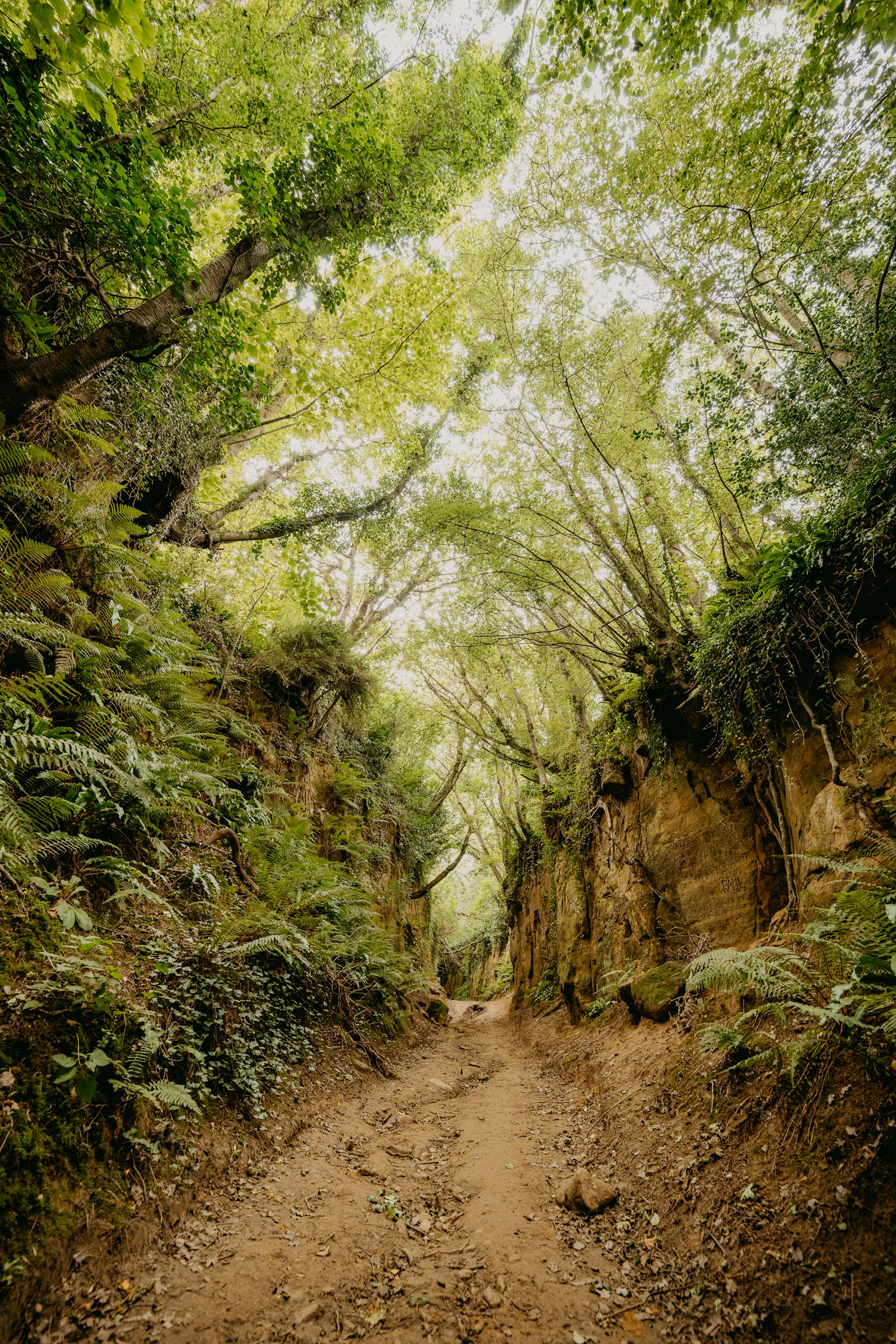
You do not have to walk it in one go. The Office allows the Way to be done in stages, provided they follow chronological and geographical order — so a week this year and a week next year is permitted, as long as you do not walk them out of sequence or out of order along the route.
This is the single most useful rule in the whole system and the one we lean on most when building a Camino de Santiago for people who cannot take a month off. It turns an unreachable trip into three or four reachable ones. The constraint is only that you cannot shuffle the order, and that if you are near the minimum distance the stage-stamping rule above applies at every joint.
Our advice, not the Office’s: if you are splitting it, do not plan to arrive at exactly 100 kilometres. Build in a margin of a stage. A closed hostel, a re-route around roadworks or a missed stamp should not be able to cost you the document.
The Certificate of Distance: three euros, and the better souvenir
The Compostela says you arrived at the end of the Camino de Santiago. It does not say where you started or how far you walked. The Certificate of Distance does: it records the day and starting point of the pilgrimage, the kilometres covered, the day of arrival and the route.
It costs 3 euros. It is slightly larger than the Compostela, printed on parchment paper, decorated with a Latin phrase and a thumbnail from the Codex Calixtinus. You request it by email at the Cathedral’s certificate address, and past pilgrims can request one retrospectively.
Three euros is also the closest thing the system has to a price. The Office states plainly that the Compostela and pilgrim reception are free, and that the certificate’s sales help fund that service. If you want to support the reception office, this is the mechanism — not a donation box, a document.
Collecting the Compostela: the queue nobody warns you about
The last practical obstacle on a Camino de Santiago is not a hill. It is the ticket system in Santiago.
To collect the Compostela you must take a ticket carrying a QR code, and the Office warns in writing that during periods of high demand same-day collection cannot be guaranteed. That is a polite sentence doing a lot of work. In practice it means that if you walk into Santiago in high season on a Friday afternoon with a flight on Saturday morning, you may not get the document at all.
The Office is open every day from 10:00 to 19:00, and closed on 25 December and 1 January.
Our advice, not the Office’s: plan two nights in Santiago, not one. Arrive, take the ticket, and treat collection as the next morning’s job. Every Camino de Santiago we build ends with a spare day in the city, and this is the main reason why.
Who else the Camino de Santiago rules cover
Three groups are handled specifically, and all three come up constantly in planning conversations.
Children. Children walking with parents or in groups may receive the Compostela if they have received Communion or can understand the spiritual or religious meaning of the Way. Younger children receive a special certificate with their names instead, and infants are listed on the accompanying adult’s Compostela. Nobody is turned away; the document simply changes shape.
Disabled pilgrims. The blanket exclusion of other transport does not apply to them. That is the only stated exception to the means-of-travel rule.
Exceptional cases. The Cabildo can grant the Compostela in special and exceptional circumstances, and the International Pilgrim Welcome Center must be contacted in advance. “In advance” is the operative phrase — it is not a conversation to start at the counter.
Hostels, support vehicles and the etiquette the Office puts in writing
Two of the conditions printed alongside the Camino de Santiago Credencial are not really rules at all. They are requests, and they tell you how the system survives.
The first: hostels without subsidies depend on pilgrim contributions to stay open. The second, and the sharper one: groups using a support car, and groups travelling by bicycle, are asked to seek alternative shelter rather than use pilgrim hostels. The beds are finite and they are meant for people carrying their own luggage.
This is worth reading carefully if you are considering a supported walk, which many people do and which we often arrange. A supported Camino de Santiago is entirely legitimate — the distance rule says nothing about who carries the bag — but if your luggage is being driven ahead, the Office would rather you booked a room. We follow that, and we tell clients why.
By carrying the Credencial, the Office notes, the bearer accepts these conditions. It is the only contract on the route.
| What | The rule | Cost |
|---|---|---|
| Compostela, on foot or horseback | 100 km continuous, same recognised route, final stage into the Cathedral | Free |
| Compostela, by bicycle | 200 km, same conditions | Free |
| Started on foot outside Spain | No less than 70 km inside Spain | Free |
| Credencial | Issued by the Office or an authorised body; stamped along the route | Not stated |
| Minimum-distance pilgrims | Stamp at the start and end of every stage, with the date | — |
| Certificate of Distance | Records start point, kilometres, arrival date and route | 3 euros |
All rules and figures are the Pilgrim’s Reception Office’s own, read October 2026. Conditions can change; confirm with the Office before relying on any of them.
What we would actually do on a Camino de Santiago
Three things, in this order, and none of them are about which route to walk.
Get the Credencial before you fly. Order it from an association in your own country rather than hoping to pick one up on day one. It is the one item in the whole Camino de Santiago system you cannot improvise.
Walk more than the minimum. If the document matters to you, do 120 or 130 kilometres rather than exactly 100. The stage-stamping rule only bites at the minimum, and a margin removes the entire category of problem.
Put a spare day in Santiago. The QR ticket queue is real and the Office says so itself. A Camino de Santiago that ends with a dash to the airport ends badly.
And one thing we would not do: we would not choose a tour company from a list of “best Camino de Santiago operators.” Those lists are almost entirely affiliate-funded, the rankings move with commission rather than quality, and the differences that matter — whether the luggage transfer turns up, whether the rooms are in the village or six kilometres outside it — never appear in them. Ask for named accommodation and a written transfer schedule instead. That is the real comparison.
Camino de Santiago FAQ
How far do you have to walk to get the Compostela?
At least 100 continuous kilometres on foot or horseback along a single recognised route, finishing with the stage into the Cathedral. By bicycle it is 200 kilometres. If you started walking outside Spain on a recognised route, the distance inside Spain must be no less than 70 kilometres.
Can you do the Camino de Santiago in sections over several years?
Yes. The Office allows the Way to be done in stages as long as they follow chronological and geographical order. If you are only covering the minimum distance, the Credencial must be stamped at the start and end of each stage, with the date, including a start stamp at a place where a previous stage already ended.
Does the Compostela cost anything?
No. The Office states that the Compostela and pilgrim reception are free. The Certificate of Distance, which records your starting point and kilometres, costs 3 euros, and its sales help fund the reception service.
Do you have to be religious?
The Compostela is issued to those who come for religious and/or spiritual reasons, and the Credencial conditions describe pilgrims walking with a Christian sentiment “even if it is only with an attitude of search.” That is the standard the Office sets. Anyone can walk the route; the document is the part with a condition attached.
Can you collect the Compostela the day you arrive?
Not reliably. Collection requires a ticket with a QR code, and the Office warns that during periods of high demand same-day collection cannot be guaranteed. The Office is open daily from 10:00 to 19:00, closed on 25 December and 1 January. Plan a second night in Santiago.
The verdict
The Camino de Santiago is unusual among long walks in that the ending is administrative. You finish, you queue, you hand over a stamped card, and a person decides whether the thing you just did qualifies. That sounds unromantic and it is exactly why it is worth understanding in advance.
The Camino de Santiago rules themselves are generous. A hundred kilometres is a week. Stages can be spread across years. Children are covered, disabled pilgrims are covered, exceptions exist. Almost nothing in this system is designed to keep people out.
What it is designed to do is reward people who walked. Get the Credencial early, walk a margin over the minimum, collect the stamps the rules ask for, and give yourself a spare morning at the end. Do that and the paperwork disappears into the background, which is where it belongs.
A hundred kilometres is a week. The queue is the hard part.
Sources: all conditions, distances, costs and opening hours are from the Pilgrim’s Reception Office of the Cathedral of Santiago, specifically its pages on the Compostela, the Credencial and the Certificate of Distance, read in October 2026. The Office publishes no route list of its own; for the geography of the routes, the standard open reference is Wikipedia’s overview. Advice marked as ours is ours. Conditions change; confirm with the Office before relying on anything here.
Talk to a Dorian advisor about walking it →
Spain · Europe · Active Travel · Cultural Travel · Bucket List Trips