

Ocean Cruise
Alaska Cruise Itinerary: 18 Days by Sea, Rail and Road

Co-Founder & Travel Advisor, Dorian Destinations · Published September 2, 2026 · ET
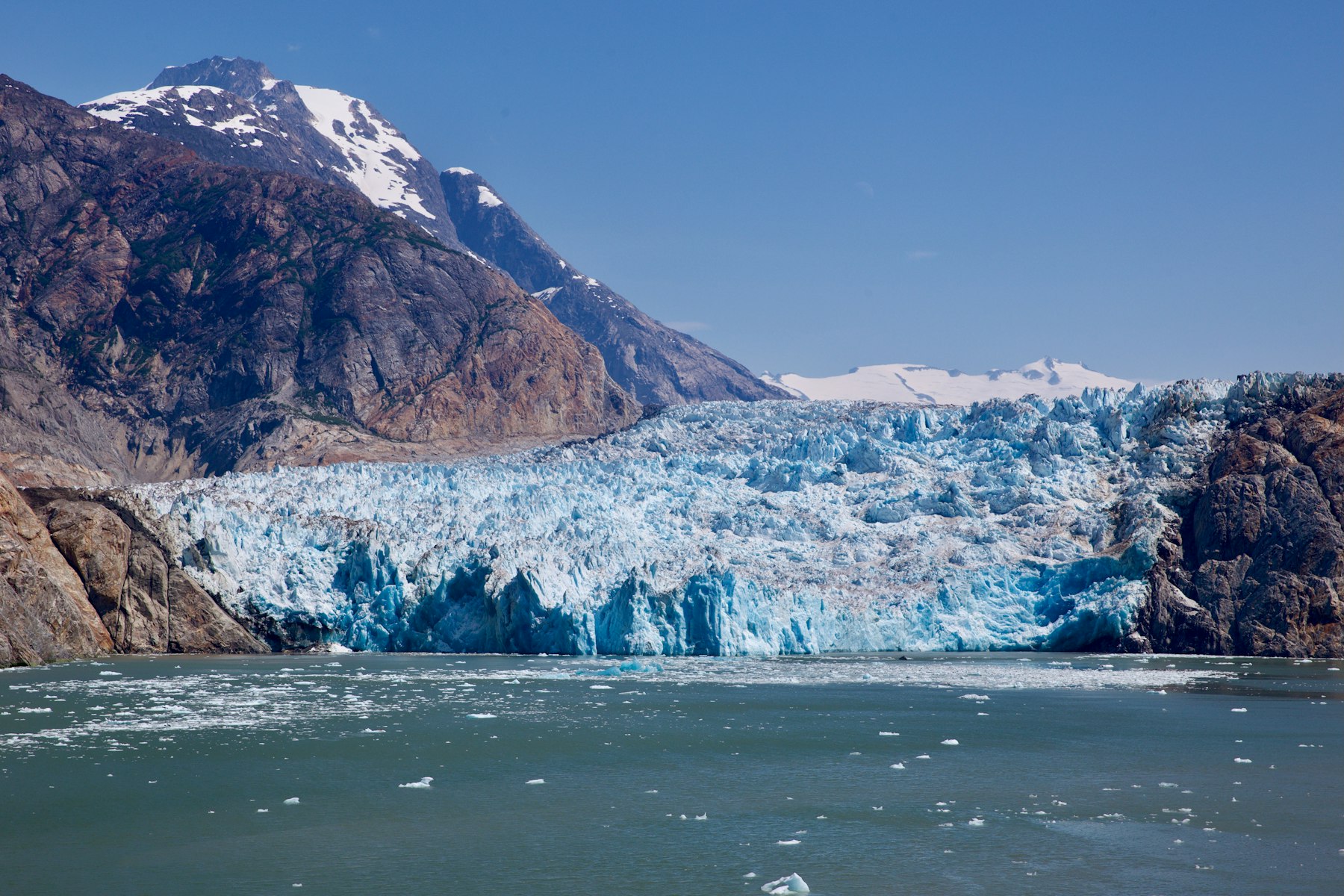
Plan Your Alaska Trip With an Advisor
Here is the thing nobody selling you an Alaska cruise itinerary will say out loud: the seven-night sailing everyone books is the trailer, not the film.
Eighteen days is a strange number to ask for. It is not a week, it is not two, and it does not match a single brochure. That is exactly why I like it. Alaska is a third the size of the Lower 48, and the standard Inside Passage week never leaves its coastline — a gorgeous, glacier-carved, entirely coastal sliver of a state whose interior looks and behaves like a different country. Eighteen days is the shortest trip I have found that lets you see both halves without turning either one into a photo stop.
I built this route the way we build every Alaska trip at Dorian Destinations: cruise first while the glaciers are the draw, then go inland by rail rather than flying over the best part. The dates, ports, rail details and park conditions below come from the National Park Service, the Alaska Railroad, and the 2027 season programs Princess and Holland America have published through Cruise Industry News — all checked the week this went up. Where I am making a judgment call rather than citing a fact, I say so.
Every cruise line in Alaska stops selling at 17 nights. Day 18 is where the trip stops being a cruise and starts being Alaska.
Why 18 days, and why no cruise line sells it
Look at what the two biggest Alaska operators actually put on the shelf for 2027 and the ceiling becomes obvious. Holland America is running 19 Cruisetour options between May and September, ranging from nine to 17 nights, each pairing a three- to seven-night cruise with an overland leg to Denali and the Yukon. Princess is fielding eight ships, 187 departures across 17 itineraries and 28 cruisetour combinations, topping out at a 17-night Denali Escorted Cruisetour. Two different companies, two different philosophies, same wall: 17 nights.
That wall is a packaging decision, not a geographic one. Seventeen nights is what fits neatly around a two-week vacation allowance plus travel days. It has nothing to do with how long Alaska takes. Push to 18 days and you buy back the three things the packages always squeeze: a real acclimatisation day at the start, unhurried nights in Denali instead of a drive-through, and enough slack that one weathered-out flightseeing day does not cost you the whole highlight.
You also, in 2027, get something nobody has had in six years. The Denali Park Road has been severed at Mile 43 since the Pretty Rocks landslide, with buses turning around at the East Fork Bridge and the Eielson Visitor Center closed. The National Park Service confirms that full bus service along the entire length of the park road resumes in 2027. If you have been holding off on Denali, that is the year.
1. Days 1–2: Vancouver, on purpose
Fly in two days before the ship. Not one. Vancouver is where an Alaska trip either starts calm or starts frantic, and a missed connection on the day of embarkation is the single most common way I see a five-figure trip go sideways before it begins.
Use the spare day properly: Stanley Park, Granville Island, an early night. You are about to spend a week on ship time.
Best for: Anyone flying more than four hours to reach the port.
Go when: Any sailing date — this buffer matters more the later in the season you go, when weather delays climb.
2. Days 3–4: North through the Inside Passage
The first full sea day is the one people underrate. The Inside Passage is a protected channel between the mainland and a wall of islands, which means it is usually flat, usually green on both sides, and consistently the best whale-watching you will do without paying for it. Stay outside.
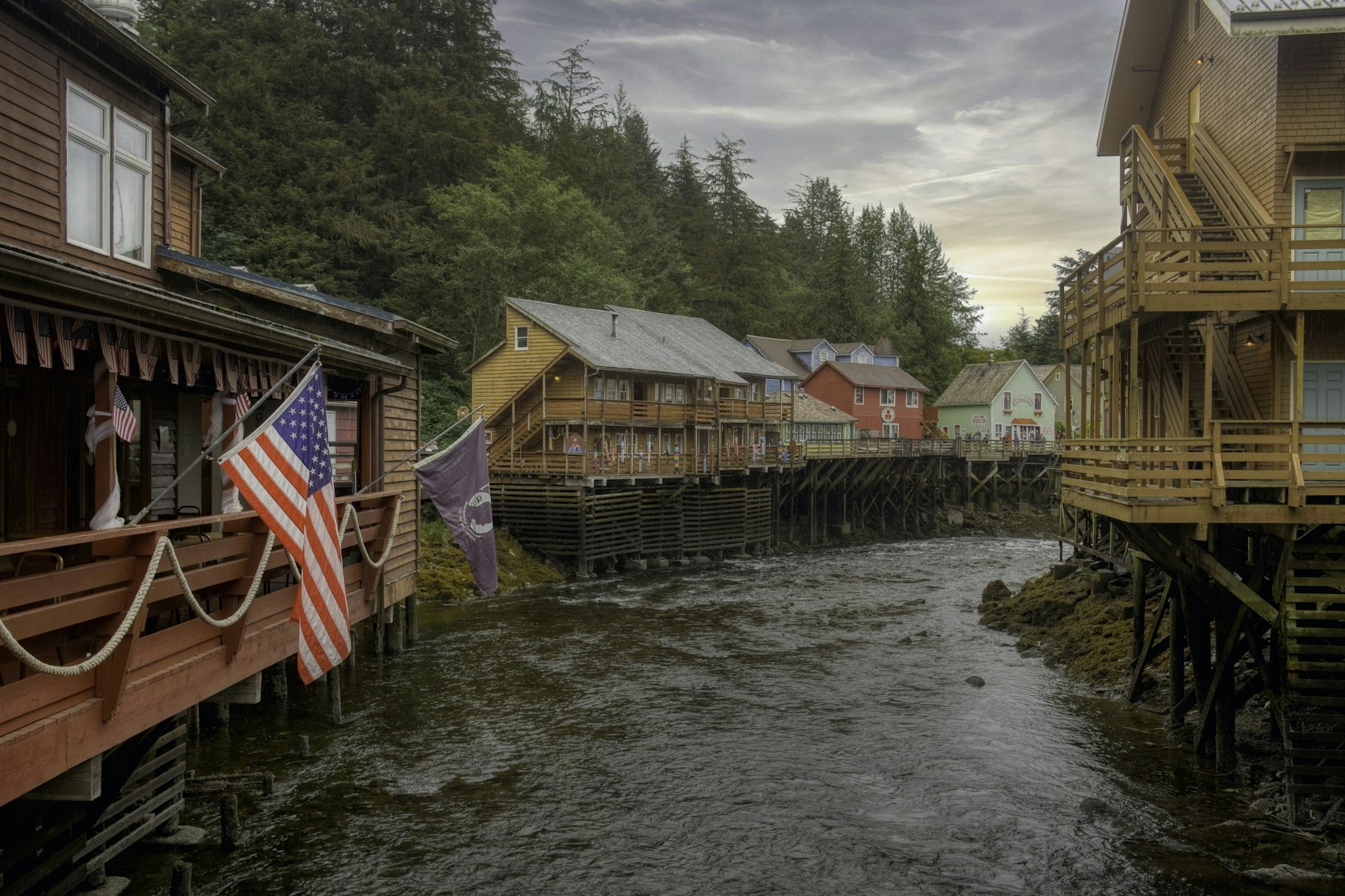
Ketchikan is typically the first port. It is small, wet — genuinely one of the rainiest towns in the United States — and built on pilings over a salmon creek. Creek Street and the totem collections are the draw; do not book a big-ticket excursion here and save your money for Juneau.
Best for: First-timers who want the classic Southeast Alaska picture.
Go when: Late July and August give you the strongest salmon runs through Ketchikan Creek.
3. Day 5: Juneau, and the new maths of a port day
Juneau changed in 2026 and most itinerary write-ups have not caught up. The 2026 season was the first with daily passenger caps actually in force: a maximum of five large ships a day carrying up to 16,000 passengers, with Saturdays capped at 12,000. That came out of a nearly three-decade voluntary programme — Juneau went from about 500,000 cruise passengers in 1997 to 1.67 million in 2025 without the resident backlash that has forced emergency restrictions in Barcelona and Venice.
What it means for you is practical: a Saturday call in Juneau is measurably quieter. If your sailing offers a late stay here, take it. Mendenhall Glacier at 4pm after four ships have sailed is a different place from Mendenhall at 11am.
Best for: The one splurge excursion of the cruise half — helicopter glacier landing or a serious whale-watching boat.
Book by: Three to four months out for helicopter slots in July and August. They sell out first.
4. Day 6: Skagway and the White Pass
Skagway is a gold-rush town of about a thousand people that receives ships far larger than itself. The reason to be here is the White Pass and Yukon Route railway, a narrow-gauge line switchbacked up a wall of granite toward the Canadian border. It is touristy in the way that the Eiffel Tower is touristy: everyone goes, and everyone is right to.
Best for: Anyone who likes trains, history, or terrifying drop-offs viewed from behind glass.
Go when: Any date in season; book the left-hand side northbound for the canyon views.
5. Day 7: Glacier Bay, which you have to actually check for
This is the single most important booking detail in Alaska cruising and it hides in plain sight. The National Park Service says it plainly on its own cruise page: many Alaskan cruise offerings do not visit Glacier Bay National Park. Entries have been capped under a federal permit system since 1985, with the current quotas set by a 2003 Record of Decision, so a line cannot simply add a call because demand is there. Permits are finite and allocated in advance.
Princess, for scale, has 85 Glacier Bay calls scheduled across its entire 2027 Alaska season. That is a lot in absolute terms and very few relative to the number of ships in Alaska. Check the itinerary line by line before you deposit.
What a call actually looks like: ships do not dock anywhere in the park. You spend a full day, typically nine to ten hours, cruising the bay with a stop at a major tidewater glacier, and park rangers board the ship to narrate and run an information desk. Bring binoculars and dress for standing still outdoors for hours, which is colder than walking around in the same weather.
Best for: The reason most people came.
Go when: Late summer sailings can enter Johns Hopkins Inlet, which is closed earlier in the season for harbor seal pupping.
6. Day 8: College Fjord and off at Whittier
A one-way northbound sailing ends in the Gulf of Alaska rather than back where you started, which is what makes the land half possible without backtracking. Princess runs these as Voyage of the Glaciers, seven days between Vancouver and Anchorage / Whittier with two glacier-viewing days, and they can be combined into a 14-day round trip if you would rather stay at sea.
We do not combine them. We get off. College Fjord in the morning — a single fjord lined with more than a dozen glaciers, most named after East Coast colleges by a slightly self-satisfied 1899 expedition — and then disembark at Whittier, which is a tunnel, a harbour, and one building where most of the town lives.
Best for: Trips where the land half is the point.
Cost note: One-way sailings usually need two one-way flights instead of a round trip. Price that in early; it is the most common budget surprise on this route.
7. Days 9–10: Anchorage and a day down to Seward
Anchorage is not a beautiful city and I have never once regretted the night there. It is where you re-provision, do laundry, eat something that is not ship food, and reset before the interior.
Spend the full day between them running down to Seward on the Seward Highway along Turnagain Arm and out into Kenai Fjords National Park by boat. Kenai gives you tidewater glaciers again but at eye level from a small vessel, plus puffins, sea otters and, with luck, orcas. It is the same subject matter as the cruise at a completely different scale, and the contrast is the argument for doing both.
Best for: Travellers who found the ship viewing platforms too distant.
Go when: June and July for peak seabird colonies at the Chiswell Islands.
8. Days 11–12: North on the Denali Star
Fly over this leg and you have missed a third of the trip. The Alaska Railroad’s Denali Star is the flagship: 356 miles and about 12 hours from Anchorage to Fairbanks, calling at Wasilla, Talkeetna and Denali, running every morning through the summer.
The stretch north of Talkeetna is the payoff, where the tracks leave the road system entirely and run through the backcountry Hurricane area, crossing Hurricane Gulch on a 296-foot bridge, then over Broad Pass with the Alaska Range open in every direction, then down through Healy Canyon beside the Nenana River. There is no road equivalent. Book the dome car.
Break the journey at Talkeetna for a night. It is a small, scruffy, genuinely likeable town that happens to be the staging point for Denali climbing expeditions and the best place in the state for a flightseeing trip onto a glacier — and if the mountain is out, you will see it from the riverbank for free.
Best for: Anyone who has ever enjoyed a train.
Go when: Daily summer service; the shoulder weeks in May and September are quieter and the light is better.
9. Days 13–15: Three nights at Denali, not one
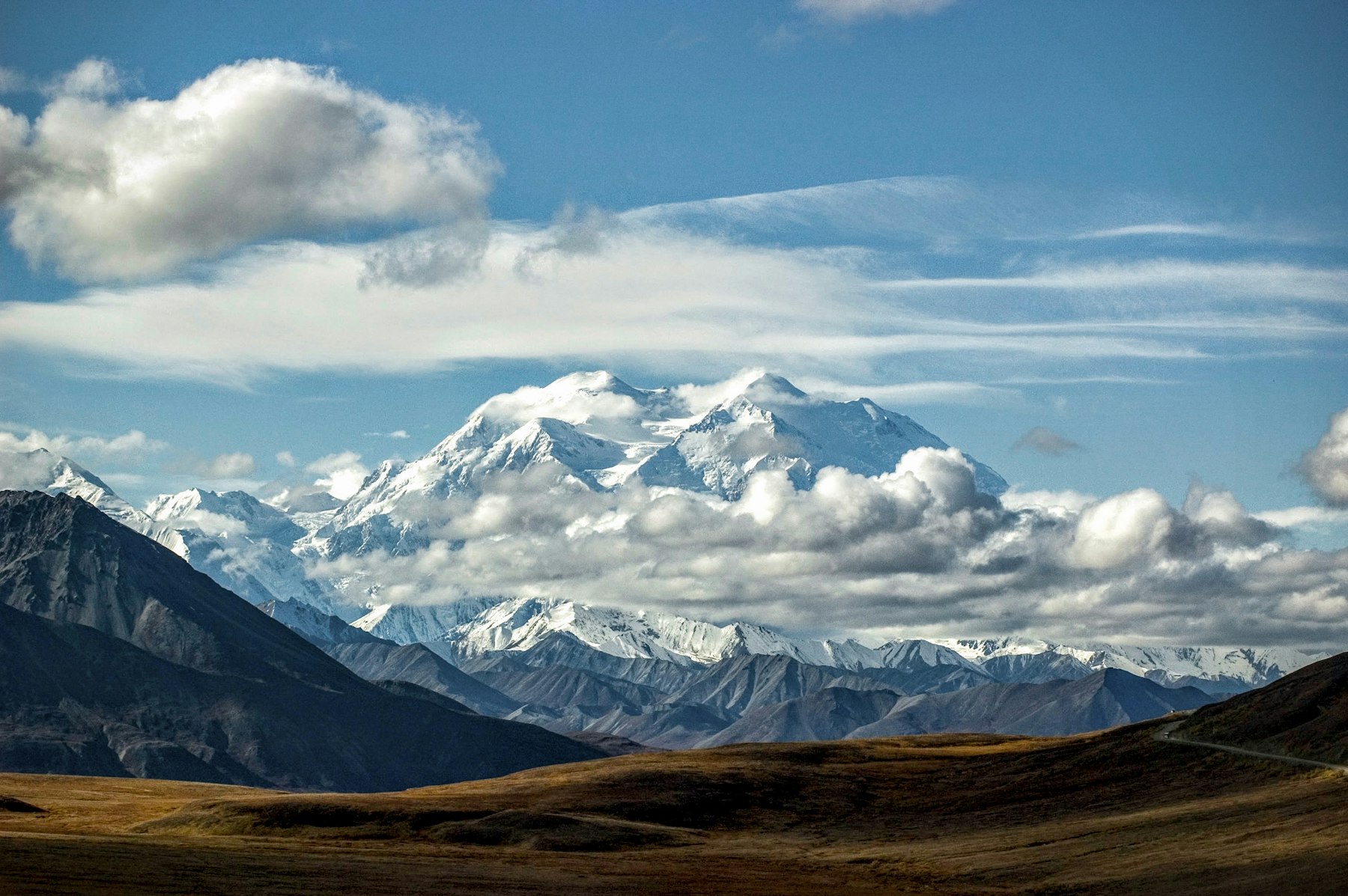
This is where the packages fail and where the extra days go. Denali is roughly the size of Massachusetts with one road into it, and private vehicles are only allowed as far as Mile 15 at Savage River. Everything beyond that is bus territory, and the bus day is long — a genuine full day, not an afternoon.
Three nights means you get two full attempts at the park road plus a day for the things people always run out of time for: the sled dog kennels, a hike from Savage River, the Eielson area once it is back in service. Denali also makes its own weather and hides its own mountain; the commonly cited figure is that only about a third of summer visitors see the peak at all. Two shots at it are meaningfully better than one, and that is arithmetic rather than optimism.
Plan around the current state of the road. Through summer 2026 buses turn at the East Fork Bridge at Mile 43, Eielson Visitor Center is closed, and Wonder Lake Campground is closed. As of late August 2026, hikers and cyclists can cross the new Pretty Rocks bridge, but buses will not until the 2027 season, when the National Park Service says full service along the road resumes.
Best for: The heart of the trip. If you cut anything, do not cut this.
Book by: Bus and lodge reservations are strongly recommended and the good windows go early — six months out for peak July dates is not excessive.
10. Days 16–18: Fairbanks, and how it ends
Fairbanks is the right ending because it is the least scenic and the most interesting. Chena Hot Springs, the Museum of the North, a riverboat afternoon, gold panning that is sillier and more fun than it sounds. It is also the interior, which means genuinely warm summer days in a way coastal Alaska never manages.
Then home from Fairbanks, not back to Anchorage. Two one-way flights, no repeated ground.
One honest note on the northern lights, because it is the most common thing I get asked about a Fairbanks ending: aurora season and cruise season barely overlap. Alaska cruises run roughly May to September, and around the summer solstice Fairbanks has virtually no true darkness. A late-August or September departure gives you a real chance; a July one does not, whatever the marketing photograph suggests.
Best for: Anyone who wants the trip to end on a curiosity rather than a crescendo.
Go when: Early September if the aurora matters to you at all.
How the three Alaska trips actually compare
| 7-night cruise | 12–14 night cruisetour | 18-day sea, rail and road | |
|---|---|---|---|
| What you see | Southeast coastline only | Coast plus a Denali visit | Coast, Kenai, interior, Fairbanks |
| Nights at Denali | None | 1–3, often 1–2 | 3 |
| Glacier days | 1–2 from the ship | 1–2 from the ship | 2 from the ship, 1 by small boat at Kenai |
| Rail | None | Usually a transfer leg | Denali Star as a destination in itself |
| Weather buffer | None | Thin | Two spare half-days |
| Flights | Round trip | Usually two one-ways | Two one-ways, open jaw |
| Sold as a package? | Yes, everywhere | Yes — up to 17 nights | No. Has to be built |
| Best for | First look, tight budget | Most travellers, one trip | People who will only do Alaska once |
Getting the practical parts right
Pick your month before you pick your ship
May and early June are dry, quiet and cheap, with snow still closing higher trails. Late June through July is peak everything — wildlife, salmon, crowds, prices. August brings rain to Southeast and the best bear viewing. September is my own favourite and the hardest sell: fewer ships, autumn colour on the tundra, real darkness returning, and a genuine risk that weather eats a day. Denali’s own summer operating window ran May 20 to September 17 in 2026, which is a fair proxy for the shoulders in any year.
Book the constrained things first
In order: Glacier Bay itinerary, Denali lodging and bus, Juneau helicopter, the dome car, then flights. Everything on that list is capped by something — a federal permit, a road, a helipad, a number of seats. The cruise cabin is the least scarce thing you are buying, which is the opposite of how most people sequence it.
Assume you will be cold while standing still
Nobody packs badly for Alaska because they underestimated the temperature. They pack badly because they underestimated how long they would stand motionless on an open deck in a wind coming off ice. Layers, a real waterproof shell, and gloves in July.
Watch the 2027 pricing signals
Both major lines opened 2027 Alaska early and are leaning on it — Holland America is marking its 80th year in Alaska and finishing a 70 million dollar programme of works at its Denali lodge, including two new guest buildings and a redesigned main lodge. Early-booking bonuses on that scale usually mean capacity ahead of demand, which is good news if you are willing to commit far out.
Get This Route Priced for Your Dates
Frequently Asked Questions
What is the best Alaska cruise itinerary?
For a first trip, a one-way northbound sailing between Vancouver and Whittier that includes Glacier Bay National Park, paired with a land extension to Denali. It covers the Inside Passage, two glacier-viewing days and the interior without repeating ground. Round-trip Seattle sailings are cheaper and more convenient but keep you entirely on the coast.
How many days do you need in Alaska?
Seven days shows you the Southeast coastline. Ten to twelve adds a compressed look at Denali. Eighteen is the point at which nothing is rushed: two glacier days at sea, a small-boat day at Kenai Fjords, the rail journey north and three nights at Denali with a spare day for weather.
Do all Alaska cruises go to Glacier Bay?
No, and this is the most common booking mistake. The National Park Service notes directly that many Alaskan cruise offerings do not visit Glacier Bay. Vessel entries have been capped by federal permit since 1985, so lines hold a fixed allocation of calls. Confirm Glacier Bay appears on the specific itinerary before booking.
What is the best month for an Alaska cruise?
July is best for wildlife, warmth and reliability, and worst for crowds and price. May and early June are the value window. August is the strongest month for bears and the wettest in Southeast. September brings tundra colour and a real chance of aurora further north, at the cost of weather risk.
Is an Alaska cruise and land tour worth it?
If Alaska is a once-in-a-lifetime trip, yes. The cruise and the interior are genuinely different experiences, and the land half is where the scale of the state registers. If you are likely to return, a seven-night cruise is a perfectly good first serving.
Can you see the northern lights on an Alaska cruise?
Realistically, no. Alaska cruise season runs roughly May to September, and the summer months have too little darkness at these latitudes. A late-August or September trip ending in Fairbanks gives you a genuine chance; anything earlier does not, regardless of how the brochure is illustrated.
The Dorian Destinations Verdict
Book the 18 days. I say that knowing it costs more than the trip most people came looking for, and knowing that the last four days are the ones a nervous traveller cuts first.
Here is why I am confident about it. The cruise half of Alaska is excellent and almost impossible to get wrong — the ships are good, the scenery does the work, and the difference between a very good Inside Passage week and a merely good one is smaller than the brochures pretend. The land half is the opposite. It is entirely dependent on having enough time, and it is the part people describe years later. Every hour you add to this trip goes into the half with the higher ceiling.
The one thing I would push back on is doing it in 2026. Denali’s road is still cut at Mile 43, Eielson is closed, and the buses turn around well short of the park’s best country. Full service returns in 2027, both major lines have their largest-ever Alaska programmes on sale for that year, and Holland America’s Denali property comes out of a major rebuild in time for it. If your dates are flexible at all, wait the extra season. Alaska is not going anywhere, and next year it will be more open than it has been since 2021.
Sources: National Park Service — Denali Current Conditions (updated August 27, 2026); National Park Service — Cruise Ships in Glacier Bay and its vessel management record; Alaska Railroad — Denali Star; and Cruise Industry News reporting on the Princess 2027 Alaska season, Holland America’s Denali Lodge programme and Juneau’s passenger caps. Seasonality and sequencing advice is our own planning judgment.
Ocean CruisesAlaskaInside PassageDenaliGlacier BayItineraries