

Itineraries
Japan Itinerary: 2 Weeks on the Route We Actually Book

Co-Founder & Travel Advisor, Dorian Destinations · Published September 1, 2026 · ET
Plan Your Japan Trip With an Advisor
Most people planning a Japan itinerary for 2 weeks are really asking one question: what do the extra four days actually buy?
Ten days gets you Tokyo, Kyoto and a bullet train photo. Fourteen gets you the thing people actually come home talking about: a morning in a mountain town where nobody is filming, an afternoon in a garden that isn’t on anyone’s list, the slow realisation that the country is far stranger and quieter than the Instagram version. The route below is the one we book most often for a first two-week trip, and it deliberately breaks off the Tokyo–Kyoto–Osaka corridor for four of its fourteen days.
I’m publishing it now for a specific reason. On October 1, 2026 the Japan Rail Pass changes price again — but only for people who buy it the way most travellers do. That’s a real, dateable fork in the road for anyone booking a two-week trip this autumn, and it’s buried three clicks deep on a transport page. We built the route first, then re-checked every rail rule, supplement and price in it against japan-guide’s Japan Rail Pass reference and its shinkansen guide before publishing. Where I’m giving you seasonality or pacing judgment rather than a sourced fact, I say so.
Japan punishes over-scheduling more than almost any country we book. The two-week trips that fail are never the ones that saw too little.
What a 2 week Japan itinerary buys you that ten days can’t
Japan’s visitor numbers went from under 10 million a year to over 30 million within a decade, and japan-guide’s own overtourism briefing is blunt about the consequence: congestion at the hot spots is now degrading the experience for the people standing in it. Their advice, more or less verbatim, is to stop confining yourself to the Tokaido Shinkansen and the Golden Route — to take the Hokuriku Shinkansen and regional lines, and to put smaller cities and countryside into the itinerary.
That is not a romantic suggestion. It’s a structural one, and two weeks is the shortest trip that can absorb it without turning into a forced march. Ten days makes you choose between depth and the detour. Fourteen lets you have both: four nights of mountain and craft-town Japan wedged between the two cities everyone comes for, at a pace that still leaves you three unstructured mornings.
The route · tap a stop
- Tokyo — 3 nights
- Hakone — 1 night
- Kanazawa — 2 nights
- Takayama — 1 night
- Kyoto — 4 nights
- Nara — day trip from Kyoto
- Hiroshima & Miyajima — 2 nights
Schematic, not to scale — west is at left, as on a map of Japan.
1. Tokyo — three nights, and don't move hotels
Land, and give the city three full nights before you touch a bullet train. Jet lag out of North America is worst on nights two and three, which is exactly when people schedule their first long transfer and then wonder why the trip felt frantic.
One practical note that saves money on day one: the Japan Rail Pass covers the Tokyo Monorail to and from Haneda Airport, and it covers the Yamanote Line, the loop that strings together most of the neighbourhoods you'll want. Tokyo is one of the few cities where the pass genuinely earns its keep on local transport rather than just long-distance legs.
Best for: your body clock, and for the two or three neighbourhoods you'll wish you'd had longer in.
Go when: arrive on a weekday if you can — our judgment, not a rule, but weekend crowds at the obvious sights compound jet lag badly.
2. Hakone — one night, for the mountain
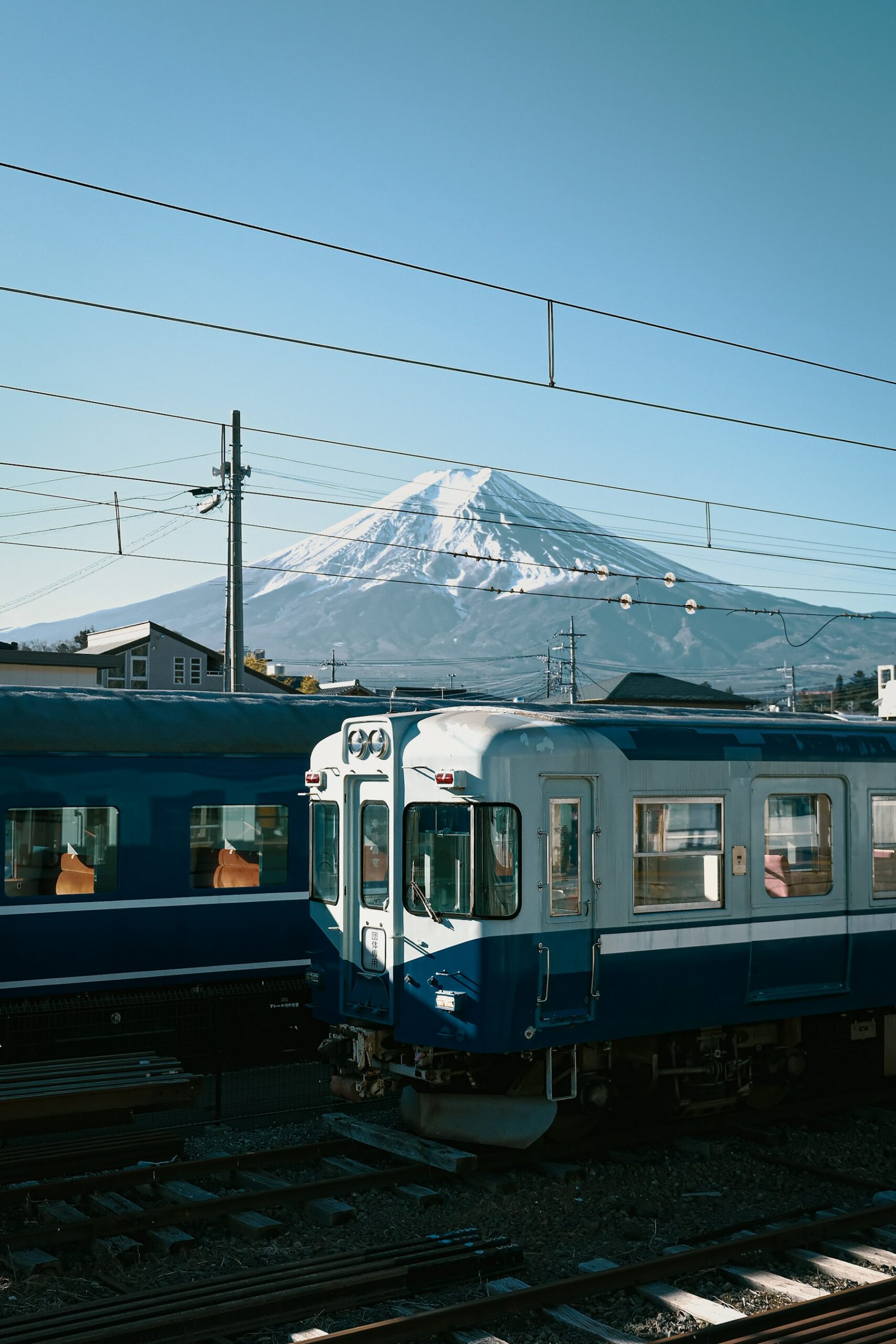
One night out of Tokyo, in an onsen town, with a chance at Fuji. It resets the trip's tempo before the long westward run, and it's the single change I most often have to argue people into keeping when they start cutting.
Budget for local transport your rail pass will not cover. The pass is valid on JR lines, and Japan's regional operators run a great deal of what tourists actually ride — so treat Hakone as a cash day rather than a pass day.
Best for: couples, and anyone who wants one night of ryokan Japan without building the whole trip around it.
Go when: clear, cold mornings give the best odds on the mountain. Judgment: late autumn and winter have treated our clients better than summer haze.
3. Kanazawa — two nights, and the reason this route works
This is where the itinerary stops looking like everyone else's. Kanazawa sits on the Hokuriku Shinkansen, the line japan-guide explicitly points travellers toward when they advise getting off the Golden Route. It's a castle-and-garden city with a gold-leaf and lacquer tradition, and it absorbs visitors far better than Kyoto does.
Two small things worth knowing. The fastest Kagayaki trains on the Hokuriku Shinkansen are entirely reserved seating, so book a seat — free with a pass — rather than turning up. And the JR bus between Kanazawa Station and Kenrokuen is one of the handful of local buses the pass actually covers.
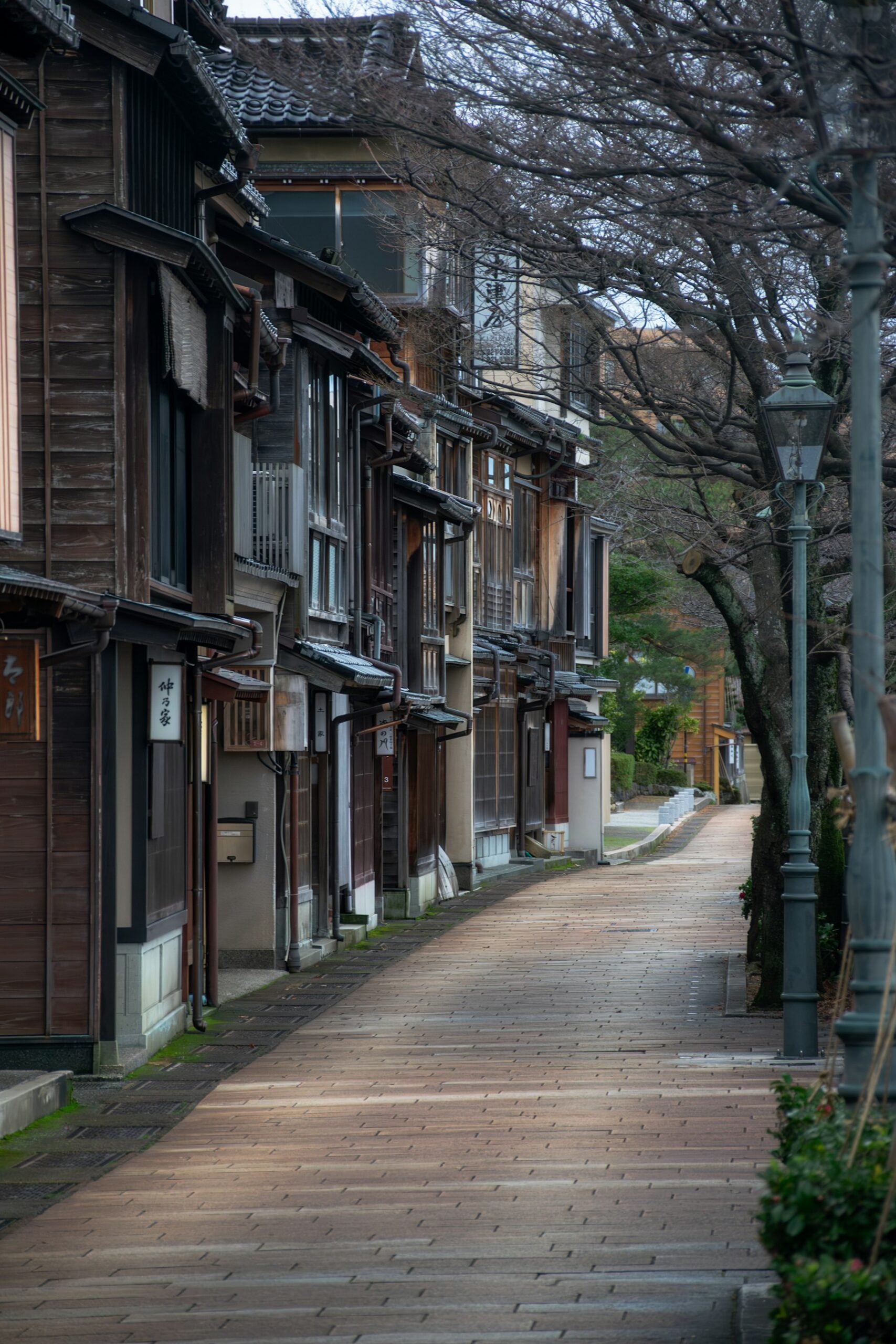
Best for: travellers who've already done Tokyo and Kyoto once, and first-timers who trust us.
Go when: any season. Judgment: it's the one stop on this route we'd happily send someone to in February.
4. Takayama — one night in the Alps
A single night in the mountains between Kanazawa and Kyoto, and the pacing hinge of the whole fortnight. Skip it and you go from one dense city straight into another, which is the mistake that makes people say Japan was exhausting.
Pack for it properly. Japan expects you to carry your own rubbish — public bins are genuinely rare — and japan-guide is direct about not hauling large suitcases onto local buses. Send the big bag ahead by courier and travel this leg with an overnight bag. It is the single highest-leverage habit a first-timer can adopt.
Best for: anyone who wants one authentically quiet morning on the trip.
Go when: shoulder seasons. Judgment: this is a walking stop, and walking stops reward spring and autumn.
5. Kyoto — four nights, spent unfashionably
Four nights, and here is the advice that matters more than any temple list: japan-guide, which has no commercial reason to soften it, says plainly that even inside Kyoto there are many beautiful places that stay relatively free of crowds and offer a more rewarding, more authentic experience than the overcrowded top five that everybody visits.
We build Kyoto around that sentence. Two mornings at the famous sites, early, before the coaches. The rest of the time in the northern and western temples, the neighbourhood the guidebook gives a paragraph to, and one long unplanned afternoon. Also worth knowing before you arrive: in Kyoto your rail pass is close to useless for getting around town — the subway and city buses are run by other operators and aren't covered — so budget cash or an IC card for local transport here.
Best for: everyone, but only if you resist doing it as a checklist.
Go when: avoid Golden Week, Obon and New Year, Japan's three busiest holiday periods. And note that a rare five-day Silver Week runs September 19–23 this year, which will fill trains and hotels.
6. Nara — a day trip, not a base
Nara works beautifully as a day out of Kyoto and disappoints as an overnight, which is the opposite of what most itineraries tell you. Go early, be back for dinner in Kyoto.
Best for: your one flexible day — it's the easiest thing to drop if the trip needs slack.
Cost: minimal on top of a rail pass. Judgment: it's the best value day on the route.
7. Hiroshima and Miyajima — two nights to finish
Ending here rather than looping back to Tokyo is the structural decision that makes this a two-week itinerary rather than a stretched ten-day one. Hiroshima earns a full, unhurried day. Miyajima earns the next.
Two pass details that genuinely help: the JR ferry to Miyajima is covered by the Japan Rail Pass — though the 100 yen visitor tax is not — and so is the JR tourist loop bus in Hiroshima.
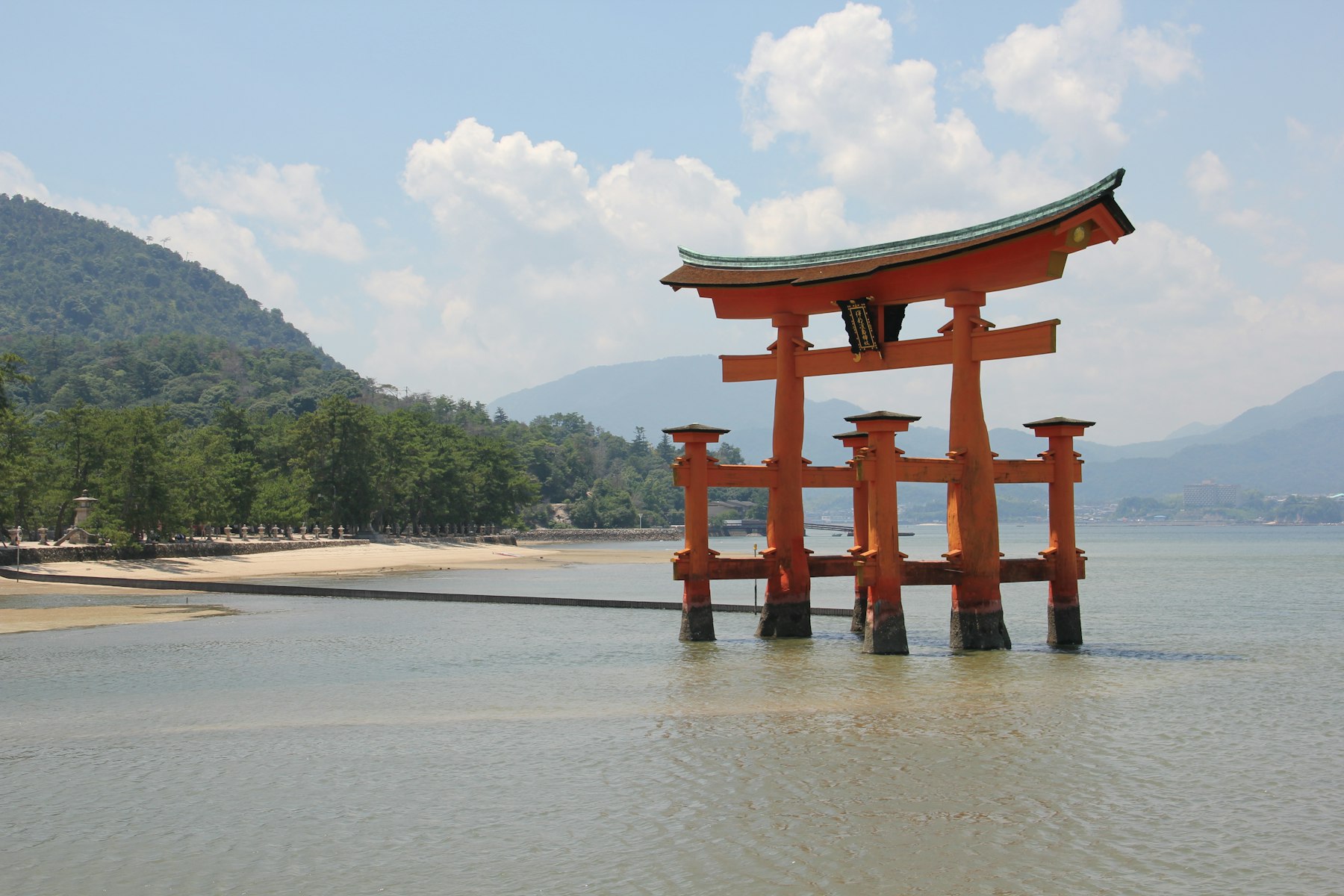
Best for: ending on something that reframes the whole trip.
Book by: as early as you can for Miyajima accommodation. Judgment: the island's inventory is small and it books unlike the mainland.
8. Flying home — book the open jaw
Fly into Tokyo, out of Osaka or Hiroshima. Backtracking to Tokyo to catch a flight costs you the better part of a day and adds nothing. Most airlines price a Tokyo-in, Kansai-out multi-city ticket close to a round trip; when they don't, the difference is usually smaller than a wasted day is worth.
Best for: every version of this route.
Book by: before you lock hotels — the air routing decides which end of the country you finish at.
The route at a glance
| Days | Base | Nights | Why it earns the space | Rail line |
|---|---|---|---|---|
| 1–4 | Tokyo | 3 | Jet lag, and the city rewards depth over sprint | Monorail from Haneda + Yamanote (pass valid) |
| 5 | Hakone | 1 | Onsen night and a shot at Mount Fuji | Largely non-JR — budget cash |
| 6–7 | Kanazawa | 2 | Gardens and craft, off the Golden Route | Hokuriku Shinkansen (Kagayaki fully reserved) |
| 8 | Takayama | 1 | The pacing hinge between two dense cities | Regional lines through the Alps |
| 9–12 | Kyoto | 4 | Depth, if you avoid the top-five checklist | Pass weak in-city — subway/bus not covered |
| 11 | Nara | day trip | Best value day on the route | JR from Kyoto |
| 13–14 | Hiroshima & Miyajima | 2 | The ending that reframes the trip | Sanyo Shinkansen + JR ferry (pass valid) |
Does the Japan Rail Pass still pay off on a 14-day trip?
This is the question every two-week planner gets stuck on, and the honest answer is: less often than it used to, and it depends on your route far more than your trip length.
The numbers, as they stand today
A 14-day ordinary pass is 80,000 yen; the green car version is 110,000. Those are the prices through September 30, 2026. From October 1 the pass rises — but only if you buy it through a travel agency, online or offline, where the 14-day ordinary goes to 84,000 yen and green to 116,000. Bought through the official JR website, the price doesn't change at all. If you're booking a two-week trip this autumn, that fork is worth about 4,000 yen for doing nothing except buying in the right place.
The catch nobody mentions until you're on the platform
The pass isn't valid on Nozomi or Mizuho trains — the fastest services on the Tokaido and Sanyo lines — without paying a supplement. Tokyo to Kyoto on a Nozomi costs a pass holder an extra 4,960 yen. You can ride the slower categories for free, and on this route that's usually fine, but people are routinely caught out by it.
Whether the maths works for this route
The 2023 price increase genuinely changed the calculation. japan-guide's own assessment is that the pass now pays off mainly for people covering very long distances in short windows — their worked example is Tokyo, Kyoto, Hiroshima and Kanazawa inside seven days. Our fourteen-day route covers close to those same legs, but spread over twice the time, which makes the 14-day pass a genuinely close call rather than an obvious yes. Where it still wins is convenience: free seat reservations, no ticket queues, and the freedom to add a side trip on a whim at no extra cost.
Buy it in the right place
Passes are no longer sold at stations inside Japan — that ended in 2023. Buying through the official website lets you reserve seats online before you fly, collect the pass with just your passport, and use ticket machines instead of queueing at a counter. Agency vouchers still have to be exchanged in person. The pass is strictly personal, non-transferable, and runs on calendar days rather than 24-hour periods, so one activated at noon expires at midnight on its final day, not the following noon.
One more thing worth having on your radar if you're travelling from October: private single and double cabins, branded Supreme Class, are appearing on a small number of Tokaido and Sanyo Shinkansen services. Early days and limited availability — but if you're the sort of traveller who would pay for a door, ask us to watch it.
Have Us Price This Route For You
Frequently asked questions
Is 2 weeks enough time in Japan?
Two weeks is the sweet spot for a first trip. It's long enough to pair Tokyo and Kyoto with three or four nights genuinely off the Golden Route, and short enough that you never have to slow the pace just to fill days. Below ten days you're choosing between depth and detour; at fourteen you get both.
Is the Japan Rail Pass worth it for 14 days?
It's a closer call than before the 2023 price rise. A 14-day ordinary pass is 80,000 yen, and it pays off mainly on routes with several long legs. If you're running Tokyo to Kanazawa to Kyoto to Hiroshima, it's worth pricing properly. If you're only doing Tokyo, Kyoto and Osaka, point-to-point tickets usually win.
Can you use the Japan Rail Pass on the Nozomi?
Only if you pay a supplement. Nozomi and Mizuho are excluded from the pass, and riding one means buying a Nozomi Mizuho Ticket at a JR ticket office. Tokyo to Kyoto costs an extra 4,960 yen. The slower Hikari and Kodama services on the same line are fully covered.
How much does a 2 week trip to Japan cost?
We won't publish a single number, because the honest range is enormous — season, city and hotel tier move it far more than flights do. What we can price precisely are the fixed pieces: the rail pass, internal transfers and any ryokan nights, which are the components that catch people out. Ask us and we'll build the real figure for your dates.
When is the best time to visit Japan for two weeks?
Spring and autumn are the classic answers and they earn it, but they're also the busiest. Whenever you go, work around Japan's three peak holiday periods — Golden Week, Obon and New Year — plus the rare five-day Silver Week falling September 19 to 23 this year. Our month-by-month guide to visiting Japan breaks it down properly.
Should I book Japan hotels or flights first?
Flights first, and specifically the open-jaw routing. Flying into Tokyo and out of Osaka or Hiroshima decides which direction the whole itinerary runs, and it's the one choice that's expensive to reverse once hotels are held.
The Dorian Destinations verdict
Run the full route and buy the 14-day pass — from the official JR website rather than an agency, which from October is the only way to hold today's price. On this itinerary the pass is worth it less for the arithmetic than for what it removes: no ticket queues in a language you don't read, free seat reservations, and the ability to change your mind about Nara on the morning of.
But if you shorten this to Tokyo, Kyoto and Osaka — and plenty of people will — skip the pass entirely. Buy tickets as you go and put the difference into two better hotel nights. That's the version of this advice that costs us a booking and is still the right answer.
The part I'd argue hardest for is Kanazawa and Takayama. They're the first things cut when someone wants more Kyoto, and cutting them is exactly how a two-week trip quietly becomes a long ten-day one.
Meet the Advisors Who Build These Routes
Sources: rail pass pricing, validity, supplement fees and the October 1, 2026 change from japan-guide.com's Japan Rail Pass reference; shinkansen classes and the October 2026 Supreme Class rollout from its shinkansen guide; visitor numbers and crowding guidance from its overtourism briefing; holiday dates from its Golden Week and Silver Week page. Pacing, hotel and seasonality calls are our own.
ItinerariesJapanAsiaTokyoKyotoKanazawa