

Developing Story
Latest Travel News
FAA Ground Stop: What We Can Actually Confirm Right Now

Co-Founder & Travel Advisor, Dorian Destinations · Published November 13, 2026 · ET
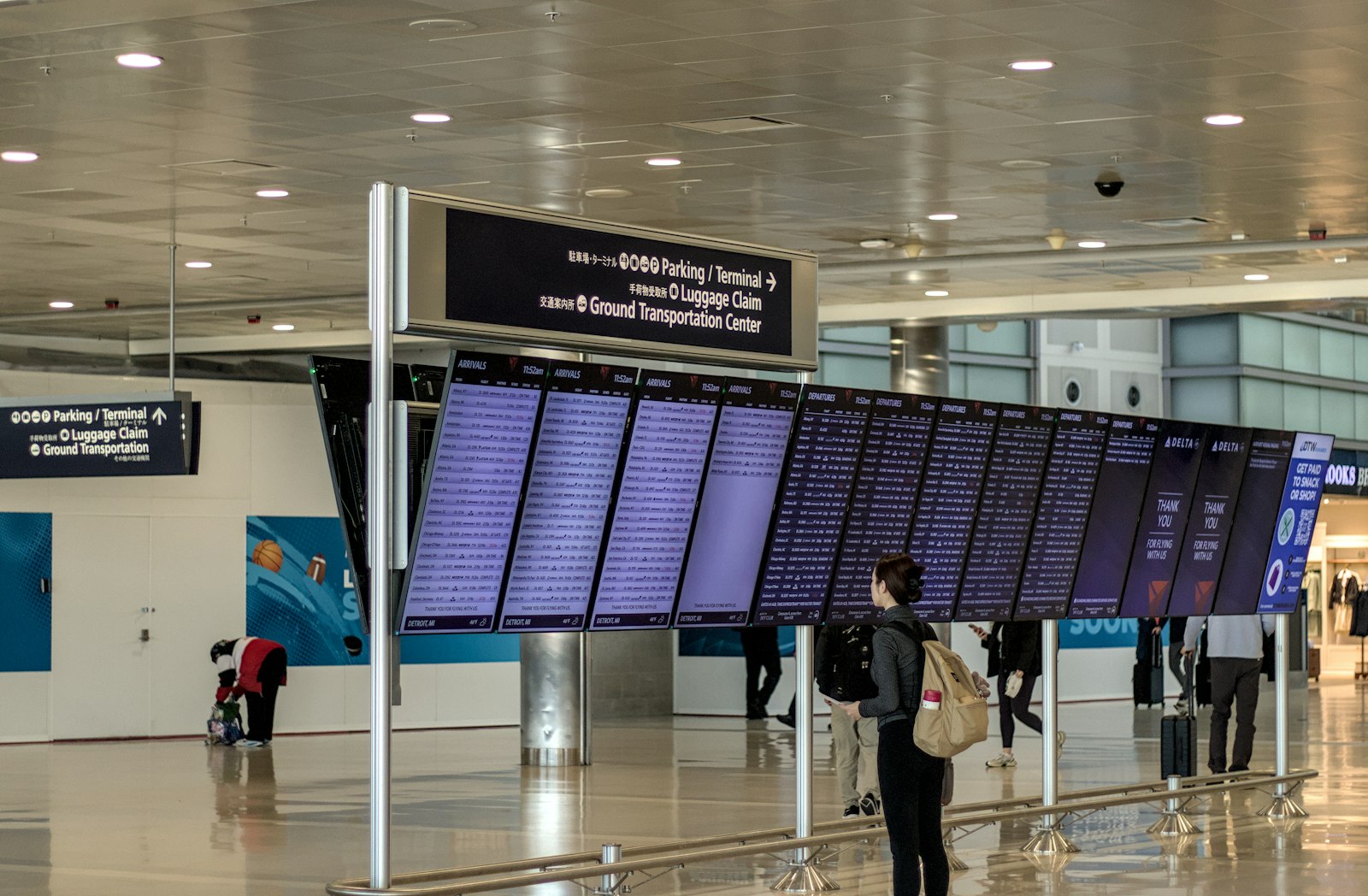
The US Transportation Secretary says the Federal Aviation Administration has issued a nationwide FAA ground stop covering every American airport, after what he described as a communication problem affecting all of the country’s en route air traffic control centres.
The statement came from Secretary Sean Duffy on X at 4:16 PM Eastern on Friday 13 November: “The @FAANews issued a nationwide ground stop for all U.S. airports following a communication issue impacting all Air Route Traffic Control Centers. FAA technicians are investigating the issue. We will provide immediate updates as we have them.”
That is the whole of the official word as this is written. The FAA’s own press account has posted nothing about it, and the agency’s newsroom carried no statement on it at the time of writing. We are not going to pad that out with speculation about the cause, because nobody has published one.
What we can do is read the FAA’s own live operations board, which is a public primary source, and tell you exactly what it showed minutes after the announcement. That is below, with timestamps.
Live updates on the FAA ground stop
Newest first. Each entry says where the information came from and when we read it.
5:28 PM EST — correction: the board has not cleared. It was caught mid-refresh. Seven minutes after the reading below, the FAA’s board shows the disruption still running and in places substantially worse. Newark is at 105 minutes and rising, Houston at 105 and rising, and New York JFK has appeared for the first time at 105 minutes, tagged to an equipment outage. Teterboro still shows 120 minutes on a figure that has not refreshed since 4:57 PM. Our 5:21 PM reading, which found almost every affected airport gone from the list, caught the board between refreshes — Newark’s own figure is stamped 5:20 PM, meaning it was live at the moment we read it as absent. We are leaving that entry below rather than deleting it, with this correction attached to it. What has genuinely cleared: Chicago, Atlanta, Miami, Fort Lauderdale, Phoenix and Las Vegas are all off the outage list. What has not: the New York area and Houston. There is still no all-clear on the FAA ground stop, no statement from the Secretary in over an hour despite the promise of immediate updates, and no published cause.
Superseded — see the correction above. 5:21 PM EST — the FAA’s board appears to have cleared, but nobody has said the FAA ground stop is over. Every one of the nine airports in the table below has dropped off the board’s outage-related list. Atlanta, O’Hare, Newark, Fort Lauderdale, Houston, Miami, Phoenix and Las Vegas now show no equipment- or national-stop-related delay at all. One exception remains: Teterboro still shows 120 minutes and rising, but that figure was last refreshed at 4:57 PM and has not moved since, so it is stale rather than current. The only active ground stop anywhere on the board is at Toronto Pearson, 5:08 to 6:15 PM EST, and the board gives its cause only as “other” — it is not a US airport and we are not going to connect it to this story without something that says so. The delays still showing at Boston, LaGuardia, San Diego and San Francisco are attributed to wind and airport volume, which is ordinary Friday weather. What has not happened: no all-clear, no further word from the Secretary in over an hour despite the promise of immediate updates, nothing at all from the FAA’s own account, and no published cause. The honest reading is that the national FAA ground stop appears to have been lifted, and that nobody has confirmed it.
4:57 PM EST — the FAA’s own board now names the national stop, and the delays are spreading. Three airports that were clear half an hour ago — Atlanta, Miami and Fort Lauderdale — now carry delays the board attributes explicitly to a “national stop” and to “nas gs”, the agency’s own shorthand for a National Airspace System ground stop. That is the first time the FAA’s operations data has corroborated the Secretary’s description of a nationwide FAA ground stop, rather than simply logging an equipment fault. The delays at the original airports are getting worse, not better: O’Hare has gone from 75 minutes to 90, Teterboro from 60 to 90, Newark from 45 to 75 and Houston from 45 to 60, every one of them still rising. Orlando has dropped off the board entirely and Phoenix is now easing. No airport currently has an active ground stop of its own, there is still no all-clear on the national FAA ground stop, no cause has been published, and the FAA’s own press account has still posted nothing — its most recent item is three hours old and concerns paper flight strips.
4:31 PM EST — the Chicago stops have expired, but O’Hare is getting worse. The FAA board no longer lists an active ground stop at either O’Hare or Midway; both carried scheduled end times of 4:30 PM EST and appear to have run their course. O’Hare’s average departure delay, however, has gone from 60 minutes and falling to 75 minutes and rising, still tagged to the agency’s equipment code. Newark, Teterboro, Houston, Orlando, Phoenix and Las Vegas are all unchanged and all still rising. Secretary Duffy has posted no follow-up and no all-clear, so the nationwide measure stands as far as the public record goes.
4:16 PM EST — the nationwide FAA ground stop is announced. Secretary Sean Duffy posts the statement quoted above. It remains, at the time of writing, the only official word on the matter.
What the FAA ground stop actually means for a passenger
An FAA ground stop holds aircraft on the ground at their departure airport. It is not a grounding of planes already flying — aircraft in the air continue to their destinations. If you are sitting at a gate, the practical effect is that your aircraft does not push back until the stop is lifted or amended.
That distinction matters, because “nationwide ground stop” reads like every aircraft in America has been ordered down, and that is not what the term means. It means departures are held.
The second thing worth understanding is that an FAA ground stop does not end cleanly. When a stop lifts, the backlog does not disappear with it — the aircraft, crews and gates are all in the wrong places, and the delays roll forward for hours and often into the following day. The announcement is the beginning of the disruption, not the end of it.
Inside the FAA ground stop: what the agency’s own board showed
We read the FAA’s National Airspace System Status board directly through the afternoon. The table below is the peak reading, taken at 4:57 PM EST, forty minutes after the Secretary’s post and shortly before the board began to clear. The figures below are the FAA’s, copied as the board stated them, not estimates of ours.
| Airport | What the board showed | Stated cause | Trend |
|---|---|---|---|
| Atlanta (ATL) | Departure delay, avg 45 mins | “other: national stop” | Increasing |
| Chicago O’Hare (ORD) | Departure delay, avg 90 mins | eq:faa | Increasing |
| Teterboro (TEB) | Departure delay, avg 90 mins | eq:faa | Increasing |
| Newark (EWR) | Departure delay, avg 75 mins | eq:faa | Increasing |
| Fort Lauderdale (FLL) | Departure delay, avg 60 mins | “stop: nas gs” | Increasing |
| Houston Bush (IAH) | Departure delay, avg 60 mins | “stop: eq” | Increasing |
| Miami (MIA) | Departure delay, avg 45 mins | “stop: nas gs” | Increasing |
| Phoenix (PHX) | Departure delay, avg 45 mins | “other: eq” | Decreasing |
| Las Vegas (LAS) | Departure delay, avg 15 mins | eq:faa | Increasing |
Source: FAA National Airspace System Status board at its peak, read at 4:57 PM EST on 13 November 2026. By 5:28 PM EST Chicago, Atlanta, Miami, Fort Lauderdale, Phoenix and Las Vegas had cleared, while Newark and Houston had climbed to 105 minutes and New York JFK had joined them. Teterboro’s figure stopped updating at 4:57 PM and should not be read as current. “eq” is the FAA’s own cause code for equipment. Separate delays at Boston, LaGuardia and San Diego were attributed by the board to wind and airport volume rather than equipment, and we have left those out because they look unrelated.
Two things in that table are worth drawing out. The first is that the equipment problem shows up at airports in five different time zones, which is consistent with a failure affecting the en route centre network rather than any one facility.
The second is the timing. The Chicago ground stops began at 3:10 PM and 3:17 PM EST — roughly an hour before the Secretary’s announcement. Whatever this is, it was already biting at individual airports before it was described publicly as nationwide.
Earlier readings of the same board, at 4:24 and 4:26 PM EST, showed ground stops running at O’Hare and Midway and a shorter list of affected airports; both of those stops have since expired on schedule. The FAA’s forecast panel also listed possible ground stop or delay programmes at New York JFK, Philadelphia, Seattle, Newark and Las Vegas later in the evening.
What caused the FAA ground stop
The only stated cause is the Secretary’s phrase: a “communication issue impacting all Air Route Traffic Control Centers.” The FAA’s operations board, independently, attributes the Chicago stops to an “equipment outage” and tags the delays at the other airports with its equipment code. Those two descriptions are consistent with each other. Neither one tells you what actually broke.
Air Route Traffic Control Centers are the twenty-odd facilities that handle aircraft between airports, as opposed to the towers that handle take-offs and landings. A communication problem touching all of them at once is a serious category of failure, which is presumably why the response was national rather than local.
What has not been said, and we will not guess at: what the communication issue is, what caused it, whether it is a hardware fault, a software fault or something else, how long it is expected to last, and when the FAA ground stop will be lifted. The Secretary said technicians are investigating. That is the current state of public knowledge.
What to do if you are flying today
Five things, in the order they are worth doing.
Do not leave for the airport without checking your flight status. During an FAA ground stop the airline app is the fastest accurate source for your specific flight. The airport departure board lags it.
If you are already at the airport, stay near your gate. An FAA ground stop lifts with very little notice, and aircraft that are ready go first. People who wandered off are the ones who miss the recovery window.
Get in the rebooking queue early, by phone or app, not just in person. The desk queue at a disrupted airport is the slowest of the three channels, and everyone joins it at once. Work two channels at the same time if you can.
Keep every receipt. US passenger compensation rules turn on whether a cancellation or significant delay is within the airline’s control. An FAA ground stop ordinarily is not, which usually means a refund for a cancelled flight you choose not to take, but not the meal and hotel cover you would get for a mechanical failure. The paperwork is what settles it later.
If you booked through an advisor, call them before you call the airline. That is the entire point of the relationship on a day like this. We are not going to pretend it is a modest advantage — a named person already working your rebooking while you are still in the hold queue is the single biggest practical difference between a managed disruption and an unmanaged one.
FAA ground stop FAQ
Is there an FAA ground stop right now?
Apparently yes, still. Secretary Sean Duffy announced one at 4:16 PM EST on 13 November 2026 and no all-clear has been announced since. The FAA’s board briefly appeared to clear at 5:21 PM EST, but that was a mid-refresh reading: by 5:28 PM Newark, Houston and New York JFK were all showing 105 minutes of equipment-related delay. Chicago, Atlanta, Miami, Fort Lauderdale, Phoenix and Las Vegas have genuinely cleared.
Does a ground stop mean planes in the air have to land?
No. A ground stop holds departures on the ground. Aircraft already airborne continue to their destinations.
What caused this FAA ground stop?
The stated cause is a communication issue affecting all Air Route Traffic Control Centers. The FAA’s own operations board attributes the related Chicago ground stops to an equipment outage. What specifically failed has not been made public.
How long will it last?
Unknown. No end time has been announced for the nationwide FAA ground stop. The individual Chicago ground stops carried end times of 4:30 PM EST, but those are airport-level programmes that are routinely extended, and they are not the same thing as the national measure.
Will I be compensated if my flight is cancelled?
Under US rules you are generally owed a refund for a cancelled flight you choose not to take, whatever the cause. Meal and hotel cover is a different question and usually depends on whether the cause was within the airline’s control, which an FAA ground stop ordinarily is not. Check your airline’s published commitments and keep receipts.
What we are watching next
Three specific things, and we will update this page as each one lands.
Whether the FAA or the Department of Transportation puts out a formal statement with a cause, rather than a social media post. Whether the nationwide FAA ground stop is lifted, narrowed to specific centres, or extended into the evening. And whether the delay figures on the FAA’s board keep climbing after any lift — which is the number that tells you whether tomorrow morning is affected too.
A nationwide stop announced in one sentence, no stated cause, and no end time. The honest summary is that the people who know are still finding out.
Sources: Secretary Sean Duffy, post on X, 4:16 PM EST, 13 November 2026; and the FAA’s National Airspace System Status board, read directly at 4:24, 4:26, 4:31, 4:57, 5:21 and 5:28 PM EST the same afternoon. At the time of writing the FAA’s own press account had posted nothing about the ground stop and the agency newsroom carried no statement on it, which we note as a fact about the available sourcing rather than a criticism. Delay figures, cause codes and times are the FAA’s; the table’s airport groupings and the reading of them are ours. Nothing on this page is inferred from unnamed sources.
Travel News · Flights · Travel Disruption