

Claiming Baggage Losses: The $4,700 Cap With Holes In It

Co-Founder & Travel Advisor, Dorian Destinations · Published November 25, 2026 · ET
Anyone claiming baggage losses from a US airline eventually arrives at the number $4,700. It is the wrong number to fix on, and not for the reason you would expect.
Claiming baggage compensation from a US airline looks, from the outside, like one process with one figure attached to it. It is two processes with two figures, and the smaller figure is in several important respects the better one to be claiming under. The Department of Transportation caps domestic liability at $4,700 per passenger and international liability at 1,519 Special Drawing Rights — by the DOT’s own conversion, about $2,175. Clients almost always assume the international trip is the better protected one. On the money, it plainly is not. On what is actually covered inside the bag, it just as plainly is.
Here is where our claiming baggage figures come from. Every figure, rule and omission below was read directly off the Department of Transportation’s own aviation consumer pages on 25 November 2026, rather than from an airline’s summary or a comparison site. Where the DOT does not state something, we say so rather than filling the gap, and there turned out to be a great deal it does not state.
That silence is the actual finding. The rules on claiming baggage losses are specific about hours and dollars and strikingly vague about everything a passenger has to do, and the DOT page carrying the refund rules contradicts itself on one deadline outright.
Airlines are not allowed to set an arbitrary daily amount for interim expenses.
Why Claiming Baggage Starts With a Ceiling, Not a Payout
The first thing to understand about claiming baggage compensation is that the headline figure is a maximum, not an entitlement. The DOT states it in two consecutive breaths: the limit is “the most that airlines must pay a passenger for a lost, damaged, or delayed bag,” and separately, “Airlines are free to pay more than the limit, but are not required to do so.” Everything that happens at a baggage service desk lives in the gap between those two sentences.
The second thing worth knowing before claiming baggage compensation is depreciation. For a lost bag, the DOT says compensation for the contents is “subject to depreciation and maximum liability limits.” A three-year-old laptop is not claimed at what you paid for it. Airlines “may require receipts or other proof for valuable items,” which is a polite way of saying the burden of proof sits with you.
So claiming baggage losses is not a matter of presenting a number and receiving it. It is a negotiation with a published ceiling, and knowing which ceiling applies to your particular itinerary is where the money is.
1. Claiming Baggage Losses Inside the US: the $4,700 Ceiling
What claiming baggage gets you: up to $4,700 per passenger. The DOT calls it “the maximum liability amount allowed by the regulation.”
The catch: airlines may contractually exclude whole categories of what was inside.
On a domestic itinerary, DOT regulation allows airlines to limit their liability for a lost, damaged or delayed bag, and $4,700 is where that limit sits. It is a per-passenger figure, not per bag, and it covers the case and its contents together.
The gap in it is the contract of carriage. Airlines “often exclude liability for certain categories of items (for example: fragile items, electronics, cash, perishable items, other valuables, etc.),” and on domestic travel the DOT is explicit that “airlines are not required to compensate passengers for items they have excluded in their contracts of carriage.” A $4,700 ceiling over a bag whose electronics are carved out is not a $4,700 ceiling in any sense that matters.
2. Claiming Baggage Losses Abroad: 1,519 SDRs, About $2,175
What claiming baggage gets you: 1,519 Special Drawing Rights per passenger, which the DOT converts to “approximately $2,175.00 US.”
The catch: claiming baggage losses abroad runs on a treaty figure, reviewed on someone else’s schedule.
International journeys to and from the United States fall under the Montreal Convention, and the limit is set in Special Drawing Rights rather than dollars. The DOT says the figure is “reviewed for inflationary adjustment every five years by the International Civil Aviation Organization,” and gives no date for the last review or the next one. In a small number of cases where Montreal does not apply, an older treaty, the Warsaw Convention, “may apply” instead.
In dollar terms the international cap is a little under half the domestic one. If you stopped reading there you would conclude that claiming baggage losses on an international ticket leaves you worse off, and for a very expensive bag of ordinary clothes, it does.

3. The Exclusion Flip That Decides Which Cap Is Better
This is the part almost nobody knows, and it reverses the conclusion above. The DOT states that on international itineraries, airlines are responsible for those excluded categories “if they have accepted them for transportation” — even where the passenger did not declare them at check-in.
Read the two claiming baggage regimes side by side and the trade is clear. Domestically you get a ceiling more than twice as high over a narrower set of contents, with electronics, cash and fragile items liable to be written out by contract. Internationally you get a lower ceiling over everything the airline agreed to carry. For a bag with a camera body and two lenses in it, claiming baggage losses under the smaller international cap can be worth considerably more than claiming under the larger domestic one.
That is our reading of two DOT passages placed next to each other, not a sentence the DOT writes itself. We think it follows plainly from what is on the page, but we are flagging it as our inference rather than their statement.
4. Claiming Baggage Fees Back: the 12, 15 and 30-Hour Windows
Separate from claiming baggage liability, there is a refund of what you paid to check the bag in the first place. A passenger is entitled to that refund if the bag is declared lost, or is “significantly delayed” — and significantly delayed has precise definitions.
On a domestic itinerary the bag counts as significantly delayed if it is “not delivered within 12 hours after your flight has arrived.” On an international itinerary the window is 15 hours where the flight is 12 hours or less, and 30 hours where the flight runs longer than 12 hours. The clock starts when you were given the chance to leave the aircraft at your final destination and stops when the bag reaches you.
One condition does the real work here. To get the fee back on a significantly delayed bag, “you must file a mishandled baggage report with the airline.” No report, no refund — and the DOT sets no deadline for filing it, encouraging you only to do so “as soon as you learn that your bag did not arrive.”
Three situations knock the refund out entirely: a bag you did not pick up after entering a country, a bag you did not collect at your ticketed destination, and a bag you voluntarily agreed to travel without on the same flight.
5. Interim Expenses, and Why “$50 a Day” Is Not a Lawful Answer
While a bag is merely delayed rather than lost, airlines “are required to compensate passengers for reasonable, verifiable, and actual incidental expenses,” within the same maximum limits. The useful sentence is the next one: “Airlines are not allowed to set an arbitrary daily amount for interim expenses.” The DOT gives its own example of what is not permitted — reimbursing only $50 for each day.
In practice a flat daily allowance is the first thing most desks offer anyone claiming baggage costs. It is not what the regulation requires. Keep receipts, claim the actual amounts, and quote that sentence if you have to, because this is the single most commonly conceded point in claiming baggage costs and the one the DOT has written most plainly.
What the DOT does not do is list which categories of expense are reasonable. That judgement is left open, which cuts both ways.
6. Claiming Baggage Damage: Wheels, Handles and the Wear Exception
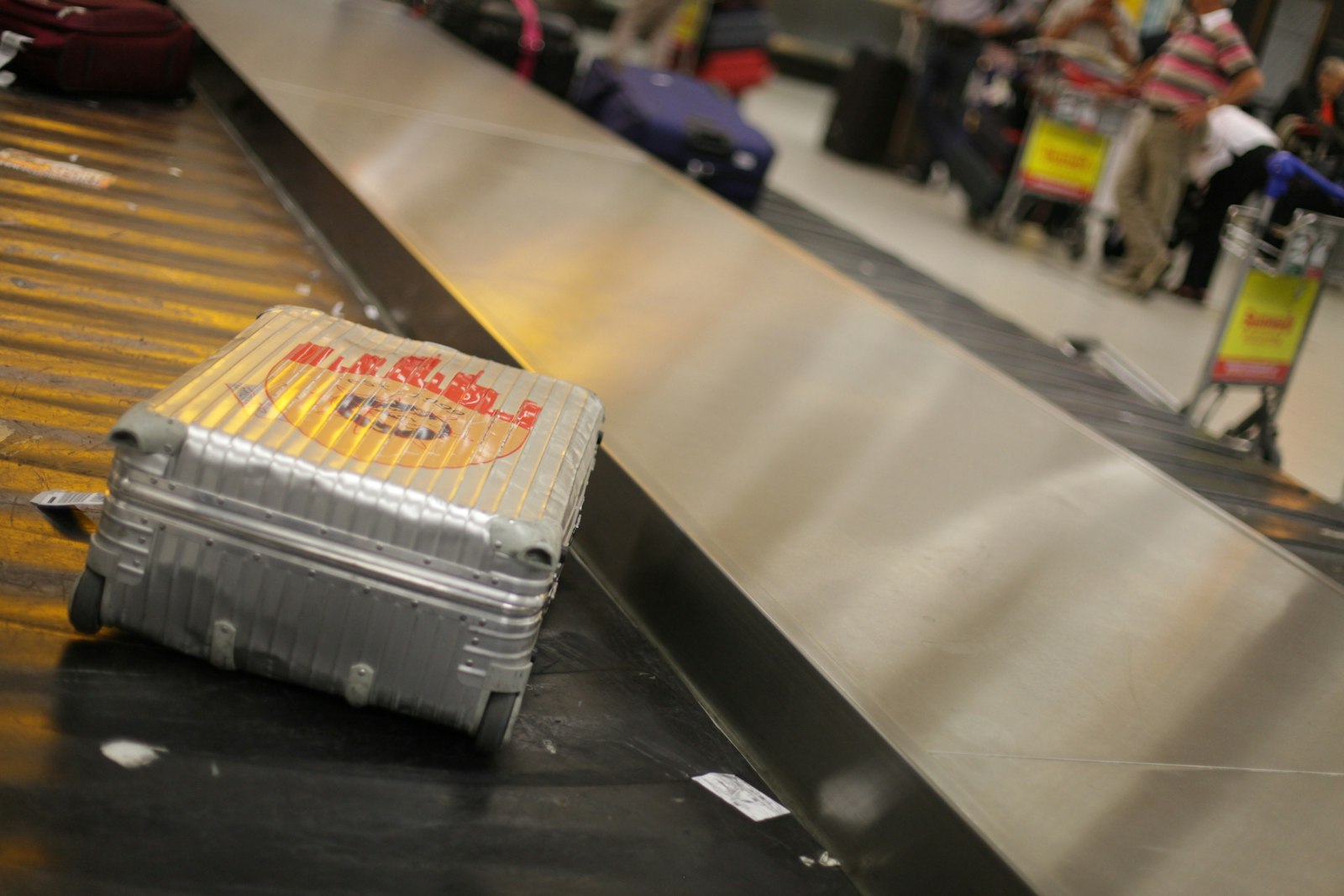
Claiming baggage damage is its own category with its own arithmetic. The airline repairs or reimburses “when the damage occurs while the bag is under the airline’s control,” and where a bag cannot be repaired, “airlines will negotiate a compensation amount based on the value of the bag and its depreciation.” Damage that was already there, or that follows from packing a bag badly, is not covered.
There is one carve-out worth memorising, because it reverses an excuse you will hear. Airlines “cannot exclude liability for damage to wheels, handles, straps, and other components” — the exact parts a desk is most likely to wave away as normal handling. Fair wear and tear still is not covered, but a snapped handle is not wear and tear.
The procedural rule for damage is tighter than anywhere else in claiming baggage losses: report the problem before leaving the airport, and insist that a report is created. Everything downstream depends on that document existing.
Claiming Baggage: What Each Cap Actually Covers
| What applies | Domestic US itinerary | International itinerary | Where this comes from |
|---|---|---|---|
| Maximum liability | $4,700 per passenger | 1,519 SDRs, about $2,175 | DOT lost, delayed or damaged baggage page |
| Is the cap a payout? | No — a ceiling, subject to depreciation | No — a ceiling, subject to depreciation | DOT, stated directly |
| Electronics, cash, fragile items | May be excluded by contract of carriage | Covered if the airline accepted them for carriage | DOT, stated directly — the key asymmetry |
| Wheels, handles, straps | Cannot be excluded | Cannot be excluded | DOT, stated directly |
| Bag fee refunded when delayed | Not delivered within 12 hours | 15 hours, or 30 hours if the flight exceeds 12 hours | DOT refunds page |
| Condition for that refund | Mishandled baggage report required | Mishandled baggage report required | DOT refunds page |
| Deadline to file that report | Not stated — “as soon as” you know | Not stated — “as soon as” you know | Our reading: the DOT sets no deadline |
| When a bag is declared lost | Five to fourteen days, varying by airline | DOT reporting airline practice, not setting a rule | |
| Interim expenses while delayed | Reasonable, verifiable and actual; no arbitrary daily cap | DOT, stated directly | |
| Mobility and assistive devices | Outside the liability limits; original purchase price | Subject to the treaty limit | DOT, stated directly |
| Carry-on bags | Not stated anywhere we read | A silence, not a rule | |
How to read this claiming baggage table. “DOT, stated directly” means the claim appears in those terms on a Department of Transportation page we read on 25 November 2026. “Our reading” means we are drawing a conclusion the DOT does not spell out, and we have said so. “A silence” means we looked for the rule and it is not there — which is not the same as the answer being no.
What the DOT Does Not Say About Claiming Baggage
Four claiming baggage gaps are worth knowing before you need them, because each one is a place where the airline’s own policy becomes the operative rule.
There is no deadline for filing the mishandled baggage report. There is no stated deadline for the airline to respond to a claim, or to pay a bag-fee refund, and no stated form that refund must take — the DOT specifies both for ticket refunds and specifies neither here. The page carrying the $4,700 domestic figure gives no effective date for it. And carry-on bags are not addressed at all; the liability pages discuss checked baggage throughout.
One more gap sits a layer up. The DOT’s own aviation-consumer baggage index, which is where a reasonable person would start, was last updated on 6 October 2021 and contains no dollar figure, no SDR figure and no definition of a mishandled bag. The live numbers live on a different page, updated 29 October 2025. Claiming baggage losses accurately depends on landing on the second page rather than the first, and nothing on the site tells you that.
Where the DOT’s Own Pages Disagree
On the refunds page, the deadline for refunding a passenger who did not pay by credit card appears twice in different sections, and the two do not match: one gives “20 calendar days” and the other “20 business days.” Those are not the same deadline: twenty business days is about twenty-eight calendar days, so the gap is more than a week.
We are printing both rather than picking the one we prefer. It is a ticket-refund provision rather than a baggage one, but it sits on the page a passenger is sent to for bag fees, and it is a fair indication of how carefully these pages are maintained.
Worth noting what nobody else is saying either. The Points Guy published a nine-point guide to navigating flight disruption on 18 November 2026, a week before Thanksgiving, drawing on seven of its own staff. It does not mention bags once. The reporting on disruption is about seats; claiming baggage losses is nobody’s beat.
How We Handle Claiming Baggage for Clients
Establish which cap applies before anything else
Before claiming baggage compensation, the question is not what was in the bag but whether the itinerary was domestic or international, because that single fact changes both the ceiling and what is covered under it. On a mixed itinerary this is worth settling in writing with the airline early, not after a valuation has been proposed.
Get the report created at the airport, every time
For damage the DOT says to report it before leaving the airport and to insist on a report being made. For a delayed bag the fee refund is conditional on a mishandled baggage report existing. Both paths run through a piece of paper created while you are still airside, and claiming baggage costs without one is materially harder.
Refuse the daily allowance and claim the actual figures
A flat $50 a day is the DOT’s own example of what airlines are not allowed to do. Keep receipts, submit real amounts, and treat the offered allowance as an opening position rather than a policy.
Price the gap, then decide about insurance
The DOT suggests passengers “may wish to consider purchasing additional insurance for valuable items.” We would put it more precisely: the thing worth insuring is the excluded category on a domestic ticket, not the headline cap. That is where claiming baggage compensation actually fails.
Frequently Asked Questions
How much can I get for a lost bag on a US domestic flight?
Up to $4,700 per passenger when claiming baggage losses domestically. The Department of Transportation describes this as the maximum liability amount allowed by the regulation, not a guaranteed payout, and compensation for contents is subject to depreciation. Airlines may pay more voluntarily but are not required to. Items excluded in the airline’s contract of carriage, such as electronics or fragile goods, need not be compensated at all on domestic travel.
When does an airline have to refund my checked bag fee?
The bag must be lost, or significantly delayed. Significantly delayed means not delivered within 12 hours of arrival on a domestic itinerary, within 15 hours on an international flight of 12 hours or less, or within 30 hours on an international flight longer than 12 hours. You must file a mishandled baggage report with the airline to receive the refund. Those hours set when the entitlement arises; the Department of Transportation states no deadline for the airline to actually pay it.
Is international baggage compensation better than domestic?
It depends on what was in the bag. The international claiming baggage limit is 1,519 Special Drawing Rights, about $2,175 by the DOT’s own conversion, against $4,700 domestically. But on international travel airlines are responsible for items they accepted for carriage even if those items would be excluded domestically, so a bag containing electronics may be better protected under the lower international cap.
Can an airline refuse to pay for a broken suitcase handle?
No, and this is the strongest position you have when claiming baggage damage. The Department of Transportation states that airlines cannot exclude liability for damage to wheels, handles, straps and other components of checked baggage. Fair wear and tear is not covered, but a component broken in transit is not wear and tear. Report the damage before leaving the airport and insist that a damage report is created.
Is there a deadline for filing a mishandled baggage report?
Not one set by the Department of Transportation. Its pages encourage passengers to file as soon as they learn the bag did not arrive, and to file a baggage claim as soon as possible, but state no number of days. We read that as leaving any deadline to the airline’s own contract of carriage, so file immediately rather than relying on a grace period that may not exist.
When is a delayed bag officially declared lost?
Between five and fourteen days after the flight, depending on the airline. The DOT reports this as a range of industry practice rather than setting a rule, and says it varies by carrier. Until the declaration is made the bag is treated as delayed, which entitles you to reasonable incidental expenses rather than compensation for the contents.
Dorian Destinations Verdict
If you remember one thing about claiming baggage losses, do not let it be $4,700. Let it be that the cap and the coverage move in opposite directions, and that the trip with the smaller number attached to it is often the better protected one.
What struck us assembling this was how lopsided the specificity is. The hours are exact: 12, 15, 30. The dollar figures are exact. Then every obligation that falls on the passenger dissolves into “as soon as possible,” and every obligation that would fall on the airline after you have filed — respond by when, pay how, in what form — simply is not written down. A regulation that times the airline to the hour and times the passenger not at all is a regulation that will be administered by whoever is more organised.
So be the organised party in any claiming baggage conversation. Get the report made before you leave the airport, note the moment you were first able to step off the aircraft because that is when the 12 hours starts, keep every receipt, and know which of the two caps your ticket sits under before you open the conversation. Claiming baggage compensation is not difficult once you know those four things. It is only difficult because almost nobody is told them, and because the agency that wrote the rules keeps the current ones on a page its own baggage index does not link to.
Sources, all read 25 November 2026: the US Department of Transportation on lost, delayed or damaged baggage, which carries the $4,700 and 1,519 SDR figures and was last updated 29 October 2025; the DOT refunds page, last updated 7 November 2025, for the 12, 15 and 30-hour windows and the mishandled baggage report condition; and the DOT aviation consumer baggage index, last updated 6 October 2021, which carries no figures. Complaints go to the DOT’s consumer complaint service. Disruption guidance referenced from The Points Guy, 18 November 2026.