

Curated Travel
The Dorian List
Things to Do in Croatia: Ten Sites, Five Nobody Watches

Co-Founder & Travel Advisor, Dorian Destinations · Published October 12, 2026 · ET
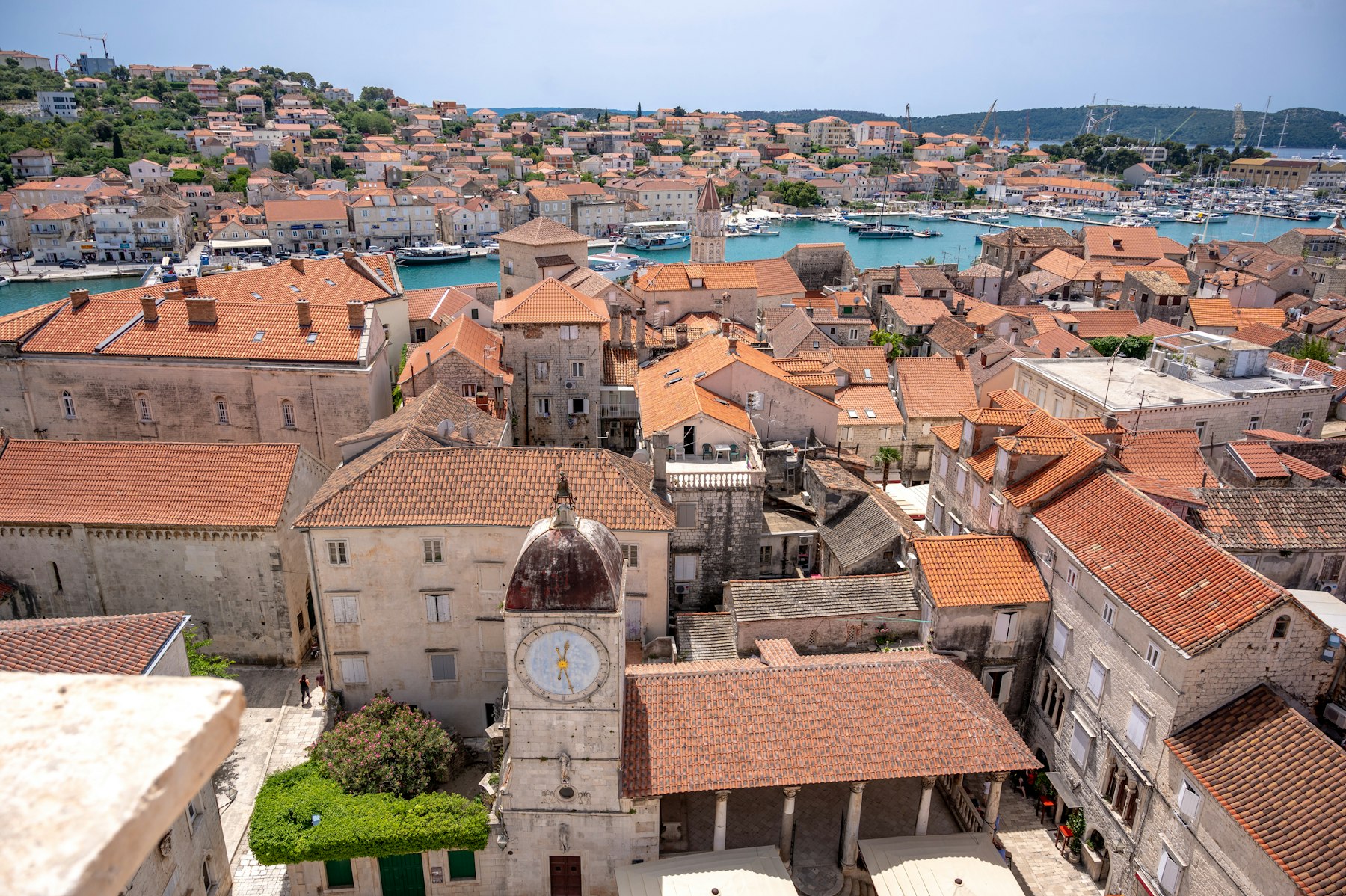
Plan things to do in Croatia around the quiet five →
Croatia holds ten World Heritage properties. Five of them have never had a single conservation report filed against them. Dubrovnik has fourteen.
That is not a ranking anybody publishes, and it is the most useful one I know for sorting the things to do in Croatia. Every guide to this country opens at the same city wall and closes at the same waterfall, and both of those places are genuinely extraordinary — I send people to them. But UNESCO keeps a second register alongside the famous one, and it is a register of trouble.
When a property comes under pressure — from visitor numbers, from development, from a cruise berth in the wrong place — the World Heritage Committee opens a State of Conservation file and keeps opening it, year after year, until the pressure eases.
Read Croatia’s ten properties against that file and the country reorders itself in front of you. The famous things to do in Croatia and the quiet ones swap places.
The two names you already know carry twenty-six reports between them. The five you probably cannot name carry none at all. Sort the things to do in Croatia that way and the week more or less writes itself.
Everything factual here comes from one place: UNESCO’s own World Heritage register, property by property, plus the State of Conservation entries listed on Croatia’s state-party page. Inscription years, property areas and the descriptive language are UNESCO’s. The conservation counts are ours, taken by reading that page’s own list of filed reports.
What is judgment, and labelled as such throughout, is everything about when to go and how to string these things to do in Croatia together. Seasonality on the Dalmatian coast, ferry timing, how long a base is worth holding — that is eighteen years of building trips here, not a sourced number. I have said so at every point where it applies. I have also not tried to read the contents of the conservation reports themselves; I counted them, which is a different and smaller claim.
“Agricultural activity in the chora has been uninterrupted for 24 centuries up to the present day, and is mainly based on grapes and olives.” — UNESCO on Stari Grad Plain, inscribed 2008
Why the Conservation Record Reorders Things to Do in Croatia
A State of Conservation report is not a black mark on a place. It is a signal that somebody is worried, and the worry is almost always the same one: too many people arriving in too small a space. Dubrovnik’s walled city is 96.7 hectares. Trogir’s is 6.4. The Cathedral of St James in Šibenik is inscribed at one tenth of a hectare — a single building and the square it stands in.
Scale matters less than attention. Dubrovnik’s file runs from 1991 to 2025 and never closes for long. Plitvice Lakes has twelve reports, the most recent in 2021. The transnational properties Croatia shares with neighbours carry their own, though those concern whole serial inscriptions spread across other countries rather than Croatia’s share of them.
And then there is the other half of the register. Poreč, Trogir, Split, Šibenik and Stari Grad Plain: ten centuries of architecture between them, two of the finest stone buildings in the Adriatic, and not one filed report. Nobody is worried about them. That is worth knowing before you spend a week ranking the things to do in Croatia.
1. Trogir: The Hellenistic Grid You Can Still Walk
If you take one thing from this list, take Trogir. UNESCO calls the historic city “a remarkable example of urban continuity,” and the phrase is doing more work than it looks. The town was founded as Tragurion in the 3rd century BC by Greek colonists, on an island at the western end of the bay between the mainland and Čiovo. The streets were laid out on a grid. They are still laid out on that grid.
The two ancient main streets, the cardo maximus and the decumanus, are in use today — not marked out for visitors, just used, by people carrying shopping. The residential blocks sit where the Hellenistic surveyors put them, in roughly the dimensions they set. On top of that frame sit Romanesque churches, Venetian-period Renaissance and Baroque houses, and city fortifications, and UNESCO’s record is specific that the fabric survives “with the minimum of modern interventions.”
Six and a half hectares, inscribed in 1997, and zero conservation reports in the twenty-eight years since. The island is small enough to cross in ten minutes and dense enough that you will not. It sits twenty-five minutes from Split airport, which is the detail that makes it work: most people land there and drive straight past it on the way to the better-known things to do in Croatia.
Best for: anyone who wants the things to do in Croatia that still function as towns rather than as exhibits.
Go when: late May, or the second half of September — our judgment, based on heat and on when the Split day-trip coaches thin out, not on a published figure.
2. Split: A Roman Palace People Still Live In
Diocletian built his retirement palace here between the late 3rd and early 4th centuries AD, and the city never bothered to move out of it. UNESCO’s description is almost comic in its flatness: the ruins “can be found throughout the city.” They are the city. Medieval builders reused the mausoleum’s stone for the cathedral. Twelfth- and thirteenth-century Romanesque churches, medieval fortifications, fifteenth-century Gothic palaces and later Renaissance and Baroque ones fill in the rest of the protected area.
The inscribed property is 20.8 hectares, listed in 1979 alongside Dubrovnik and Plitvice — and unlike both of them, it has never generated a conservation report. Split absorbs crowds in a way the walled cities cannot, because it was never a museum to begin with; the substructures hold bars, the peristyle holds a cafe, and the laundry hangs where it has always hung.
Best for: a first base, and the only one of these things to do in Croatia I would happily hand someone for four nights.
Go when: any month outside July and August, which is when most things to do in Croatia stop being restful — judgment, not a sourced figure.
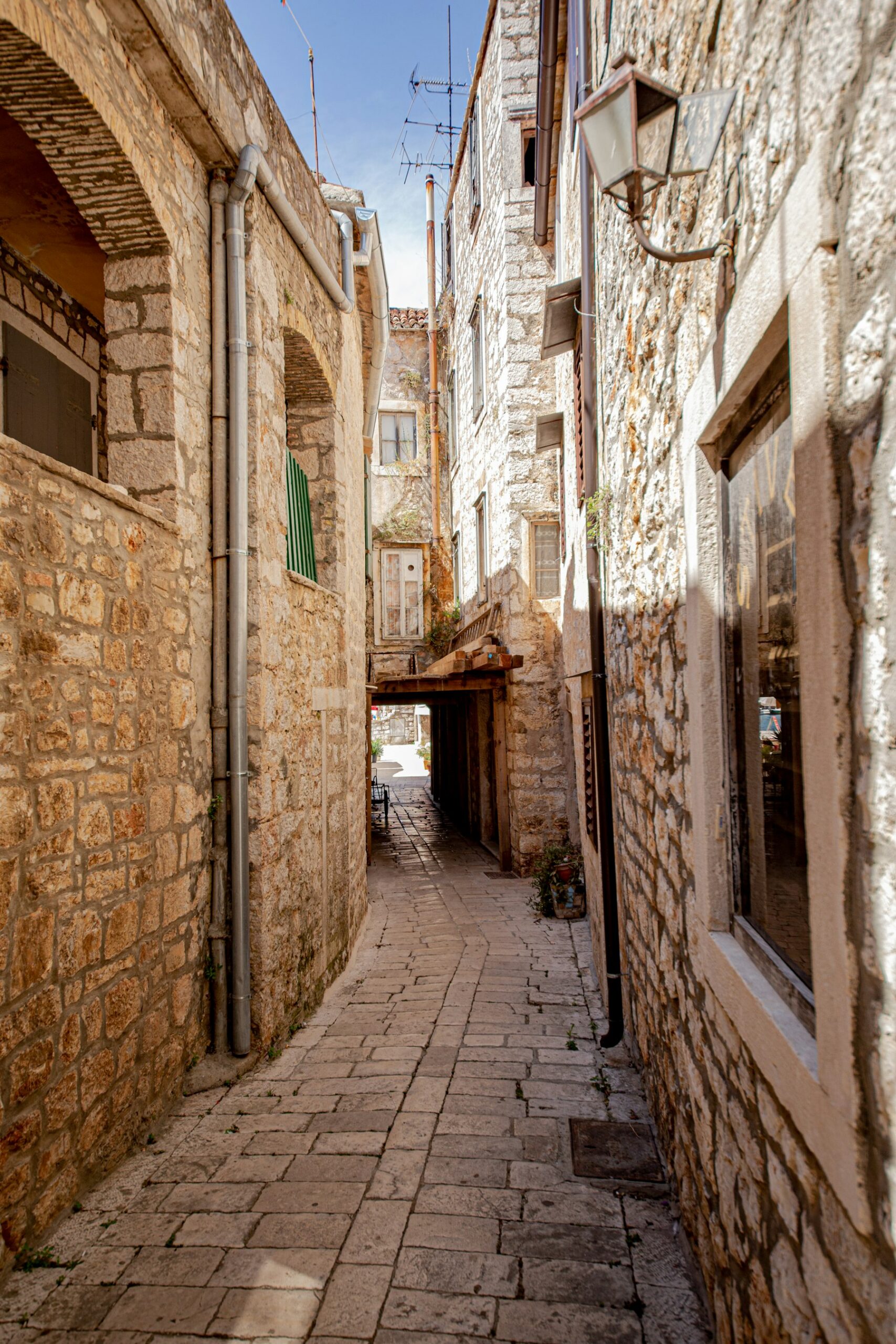
3. Šibenik: One Building, Entirely of Stone
The Cathedral of St James is inscribed at 0.1 hectares, which makes it the smallest World Heritage property in Croatia by a wide margin and one of the smallest in Europe. It stands by the sea in a square that was once the heart of the old town, beside the episcopal palace, in a town founded on the Dalmatian coast in the 10th century and held by Venice from 1412.
What earned the listing is how it was built. Three architects succeeded one another between 1431 and 1505 — Francesco di Giacomo, Georgius Mathei Dalmaticus and Niccolò di Giovanni Fiorentino — and between them produced a structure raised entirely from stone, using vaulting and dome techniques UNESCO describes as unique. No brick, no timber frame, no render. It was consecrated in 1555. The record calls it a monument documenting the transition from Gothic to Renaissance, and evidence of exchange between northern Italy, Dalmatia and Tuscany.
Zero conservation reports since inscription in 2000.
Best for: the most concentrated of the things to do in Croatia — one building, one hour, and worth building the drive around.
Go when: mid-morning, when the light comes off the water into the west front — judgment.
4. Poreč: Sixth-Century Mosaics on the Istrian Coast
Istria gets treated as Croatia’s truffle-and-wine detour, which undersells what sits in the middle of Poreč. The Episcopal Complex of the Euphrasian Basilica is, in UNESCO’s reading, an early Christian episcopal ensemble “exceptional by virtue of its completeness” — not a surviving church but a surviving whole: basilica, atrium, baptistery, a monumental episcopal palace built between the atrium and the sea, and a memorial chapel.
Bishop Euphrasius put it up in the mid-6th century on the north coast of the peninsula, incorporating parts of the churches that stood there before. The complex is 1.1 hectares, inscribed in 1997, and carries no conservation reports. It is also four hours from Split, which is why it so rarely appears on the same itinerary — and why Istria is better treated as its own trip than as an add-on.
Best for: travellers pairing the things to do in Croatia with northern Italy or Slovenia rather than with Dalmatia.
Go when: September or early October, for the harvest — judgment.
5. Stari Grad Plain: The Quietest of the Things to Do in Croatia
This is the one that changed how I plan Croatia. On the island of Hvar, inland from the beach towns, lies a plain that Greek colonists surveyed in the 4th century BC. They divided it into geometrical parcels bounded by dry stone walls — a chora — and built a rainwater system of tanks and gutters to serve it.
UNESCO’s assessment is that the parcel system has been respected by every later period, and that cultivation has run without a break for twenty-four centuries, “mainly based on grapes and olives.” The same crops, in the same fields, within the same walls, since before Rome mattered. The property is 1,376.53 hectares and was inscribed in 2008. It has no conservation reports.
It also quietly closes a gap in how this country is sold. Croatia has serious wine, and the register already says so — it just says it in the language of land division rather than of tasting rooms. Vrboska and Jelsa sit at the plain’s edge and make a far better Hvar base than Hvar Town.
Best for: anyone who wants the things to do in Croatia to include a working landscape, not only a coastline.
Go when: the September harvest, or May for the walls in green — judgment.
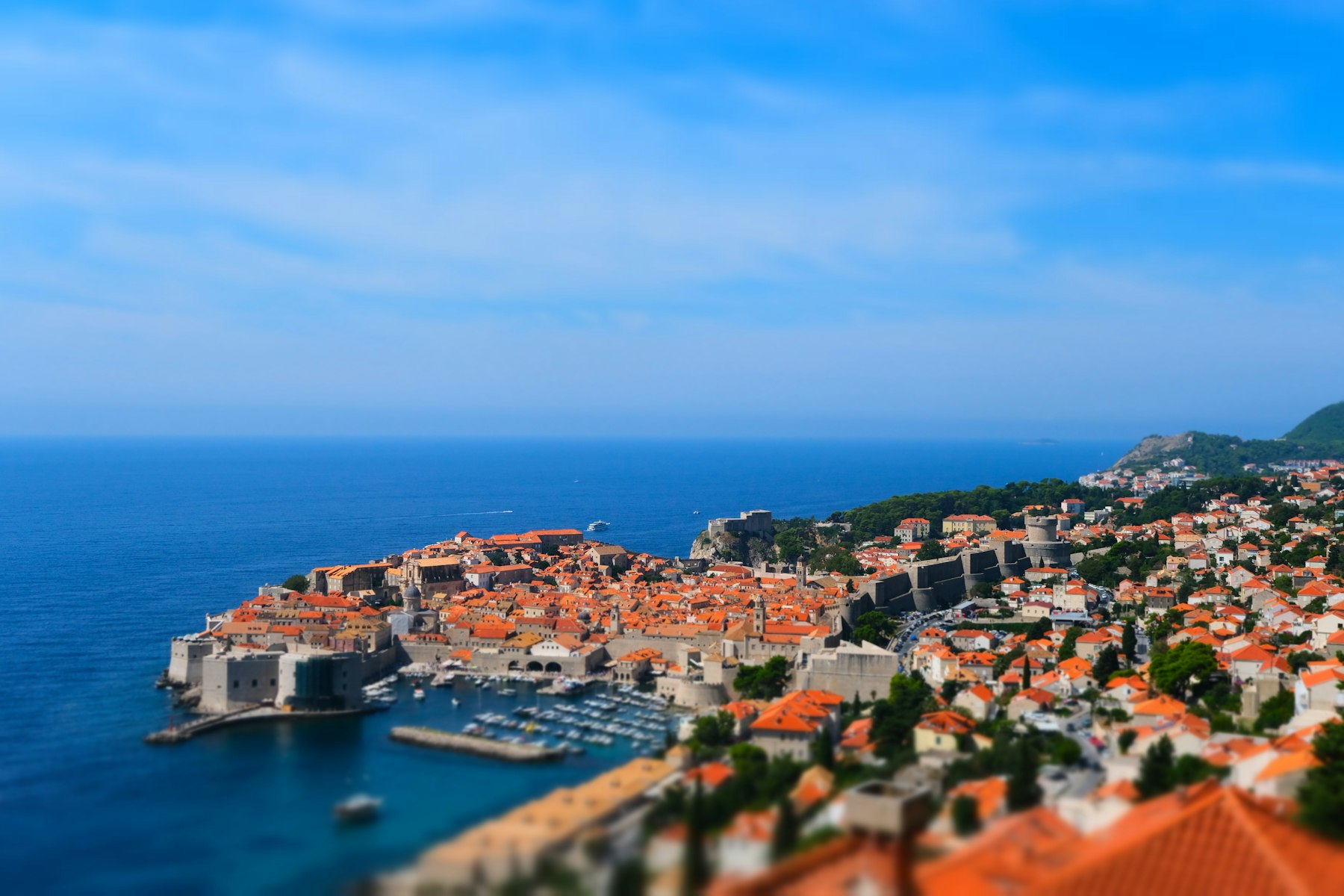
6. Dubrovnik: The Most Watched of All the Things to Do in Croatia
Fourteen State of Conservation reports, filed in 1991, 1992, 1993, 1994, 1995, 1996, 1997, 1998, 2014, 2016, 2018, 2021, 2023 and 2025. The first eight belong to the war and its aftermath; UNESCO’s own record notes the city was damaged by armed conflict in the 1990s and became the focus of a major restoration programme the organisation coordinated. The six since 2014 belong to a different era and a different pressure.
None of that is an argument against going. The Old City is 96.7 hectares of Gothic, Renaissance and Baroque churches, monasteries, palaces and fountains, preserved through a catastrophic 1667 earthquake and through the shelling, by a place UNESCO calls the ‘Pearl of the Adriatic’ and which became a Mediterranean sea power from the 13th century onwards. Go. But go in the knowledge that this is the one site on the Croatian register that the Committee has never stopped looking at.
The practical consequence is about timing rather than about avoidance, and it is the biggest single lever on a week of things to do in Croatia. Sleep inside the walls, be on them at seven in the morning, and be elsewhere between ten and four.
Best for: two nights, not four — the shortest stay of any of the things to do in Croatia on this list.
Go when: late October or March — judgment, and the single highest-leverage decision on any Croatian itinerary.
7. Plitvice Lakes: Thirty Thousand Hectares of Moving Water
Croatia’s largest national park covers almost 30,000 hectares — 29,581.71, inscribed in 1979 — in the lower Dinarides in the centre of the country. The lakes are divided into an upper group formed on dolomite, with mild relief and thick forest, and a smaller, shallower lower group set in a limestone canyon.
What makes it a World Heritage property rather than merely a beautiful place is the mechanism. The natural dams between the lakes are tufa barriers, built by calcium carbonate deposited out of the flowing water — and the process is biological as much as chemical, driven by mosses, algae and aquatic bacteria. The park also holds 84 hectares of old-growth beech and fir.
Twelve conservation reports, the most recent in 2021. Treat that the way you treat Dubrovnik’s: as information about timing, not as a reason to strike it off a list of things to do in Croatia.
Best for: the one entry among these things to do in Croatia that is landscape rather than architecture; a single full day, broken out of a Zagreb–Split drive.
Go when: first entry of the day, shoulder season, and never on a summer weekend — judgment.
MORE: We ran the same method on another Mediterranean country earlier this month — the best tourist cities in Greece, reordered by what UNESCO actually lists.
| Property | Inscribed | Area | Conservation reports | Setting |
|---|---|---|---|---|
| The Cathedral of St James in Šibenik | 2000 | 0.1 ha | 0 | Coastal |
| Episcopal Complex of the Euphrasian Basilica, Poreč | 1997 | 1.1 ha | 0 | Coastal (Istria) |
| Historic City of Trogir | 1997 | 6.4 ha | 0 | Island |
| Historical Complex of Split with the Palace of Diocletian | 1979 | 20.8 ha | 0 | Coastal |
| Stari Grad Plain | 2008 | 1,376.53 ha | 0 | Island (Hvar) |
| Stećci Medieval Tombstone Graveyards | 2016 | 49.15 ha | 1 | Inland, shared with 3 countries |
| Venetian Works of Defence, 16th–17th centuries | 2017 | 378.37 ha | 3 | Coastal, shared with 2 countries |
| Ancient and Primeval Beech Forests | 2007 | 99,947.81 ha | 9 | Inland, shared with 17 countries |
| Plitvice Lakes National Park | 1979 | 29,581.71 ha | 12 | Inland |
| Old City of Dubrovnik | 1979 | 96.7 ha | 14 | Coastal |
Sorted by number of State of Conservation reports, fewest first. Inscription years and property areas are UNESCO’s published figures; the report counts are ours, taken from the entries listed on Croatia’s state-party page in October 2026. Areas for the three transnational properties cover the whole serial inscription across every participating country, not Croatia’s components alone. Six of the ten sit on the coast or on an island; a seventh, the Venetian fortifications, does too, but is shared with Italy and Montenegro.
Planning the Things to Do in Croatia: Dates, Bases and Ferries
Everything in this section is judgment drawn from building these trips rather than from a published source — the mechanics of fitting the things to do in Croatia into a real week.
Two bases beat five
Croatia reads as a long thin coast on a map, so people book a different town every night. It is the commonest mistake we unpick. Split for four nights and Hvar for three covers six of the ten properties comfortably, with Trogir and Šibenik as half-day drives and Stari Grad Plain a twenty-minute ride from the Hvar ferry.
Istria is a separate trip
Poreč is about four hours from Split and reads much more like Italy than like Dalmatia. Pairing it with Venice or Ljubljana works. Bolting it onto a Dalmatian week does not, and it is the itinerary we are most often asked to rescue.
Book the ferry, then the hotel
Island sailings thin out sharply either side of summer, and the car ferries fill before the foot-passenger ones. On a shoulder-season trip the sailing schedule is the constraint that sets everything else — decide the crossings first and fit the rooms around them.
Shoulder season is not one season
May and late September behave differently. May gives you green hills, cool water and a half-awake island economy; late September gives you warm sea, harvest and restaurants still fully staffed. To swim, take the autumn; for the walls to yourself, take the spring.
See how we build a Croatian week →
Frequently Asked Questions
What are the best things to do in Croatia for first-time visitors?
Split, Trogir and Dubrovnik cover the architecture, and one day at Plitvice Lakes covers the landscape. That is four of Croatia’s ten World Heritage properties in a single week. Our judgment is to add Stari Grad Plain on Hvar as a fifth, because it is the one that changes how the others read.
How many days do you need for the main things to do in Croatia?
Seven to nine nights for Dalmatia. Four in Split reaches Trogir, Šibenik and Plitvice; three on Hvar reaches Stari Grad Plain; two in Dubrovnik is enough and four is too many. Istria needs its own three or four nights and does not fit inside the same week.
What are the best things to do in Croatia away from the crowds?
Go by the conservation record. Poreč, Trogir, Split, Šibenik and Stari Grad Plain have no State of Conservation reports listed on UNESCO’s Croatia page at all, against fourteen for Dubrovnik and twelve for Plitvice Lakes. Those five are where the pressure is not.
When is the best time to visit Croatia?
Late May into mid-June, or the second half of September into early October. That is judgment rather than a published figure: it is where we see warm water, running ferries and open restaurants overlap with manageable numbers inside the walled towns. Outside that window several of the best things to do in Croatia are simply harder to reach.
Is Dubrovnik still worth visiting?
Yes, with conditions. It carries more UNESCO conservation reports than any other Croatian property — fourteen, from 1991 to 2025 — and that is information about when to go rather than whether. Two nights, inside the walls, on the ramparts by seven in the morning, elsewhere from ten until four.
The Dorian Destinations Verdict
The standard list of things to do in Croatia is a sprint between the two most monitored places on the national register, with the five unmonitored ones passed on the motorway. It is exactly backwards.
Build the week the other way round. Split as the base, because a living Roman palace absorbs people in a way a walled city cannot. Trogir for the morning you realise you are walking a street grid surveyed before Rome was an empire. Hvar for the plain rather than the port.
Then give Dubrovnik two nights at the edge of the season and spend them properly — inside the walls, early and late, out of the middle of the day. It has earned every one of its fourteen files and it is still one of the great sights of the Mediterranean. It simply should not be the spine of the trip.
And treat Istria as a different country, because culturally it very nearly is — and because no honest list of things to do in Croatia pretends the two halves fit inside one week.
Sources: UNESCO World Heritage Centre — Croatia state-party record, including the State of Conservation entries counted above; and the individual property records for Trogir, Split, Šibenik, Poreč, Stari Grad Plain, Dubrovnik, Plitvice Lakes, Stećci, the Venetian Works of Defence and the Ancient and Primeval Beech Forests. UNESCO descriptive text is available under licence CC-BY-SA IGO 3.0 and is quoted here, not reproduced. Seasonality, pacing and basing advice is Dorian Destinations’ own judgment.
Best of Travel · Croatia · Europe · Cultural Travel