

Travel Smart
Know Before You Go
Airport Lounge Access: Count the Visits Before You Buy a Year

Co-Founder & Travel Advisor, Dorian Destinations · Published October 9, 2026 · ET
Plan the trips that make airport lounge access worth buying →
Nobody buys airport lounge access for the free crisps. They buy forty-five quiet minutes before a long flight, which is a good thing to want. The trouble starts when you pay for a whole year of it without counting how often you walk through the door.
Here is what we end up explaining to clients more than almost anything else on the logistics side. The thing you are buying is not a lounge. It is a probability — the odds that on the particular days you fly, out of the particular airports you use, there is a free seat in a room you are entitled to enter. Hardly anybody prices airport lounge access that way, and the networks selling it are in no hurry to suggest you start.
Every number below comes from one of two places and we have said which. The membership tiers, the per-visit charges, the size of the network and the dates on which card issuers withdrew benefits are as reported by The Points Guy, which keeps the best public record of programme mechanics anywhere. The lounge-construction figures come from the same outlet’s reporting on American Express and American Airlines announcements.
The Points Guy is also an affiliate publisher: it is paid when a reader is approved for a credit card through its site. That makes its programme mechanics excellent and its card recommendations a paid placement wearing editorial clothes. We have taken the first and none of the second. You will not find a card named as a recommendation anywhere on this page — not in the body, not in the table, and not in the FAQ, which is exactly where people go looking for one.
Where we are making a judgment call rather than citing a figure — whether a membership suits a given pattern of travel, when a lounge is likely to be heaving — we have labelled it as judgment in the line itself. And here is what we cannot do. We are travel advisors, not a lounge operator and not a card broker. We cannot get you into a room that has hit capacity, we hold no membership to lend you, and we will not tell you which card to apply for.
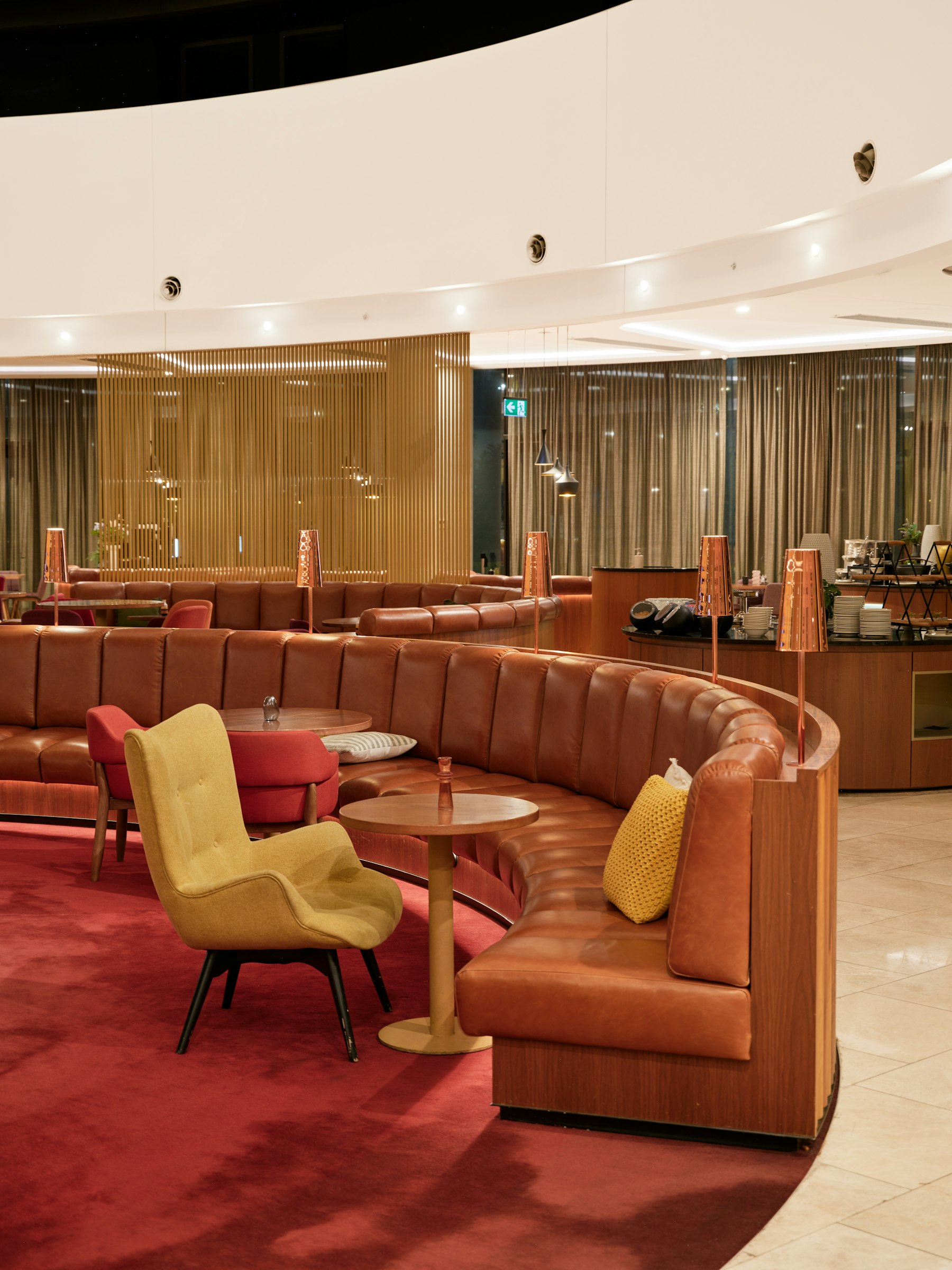
Designing a lounge that gives our customers more space to relax, work and recharge is our top priority. — Heather Garboden, chief customer officer, American Airlines, announcing a new Charlotte club
Read that quote again, because it is more revealing than it looks. The chief customer officer of a major airline, given a podium to talk about a brand-new lounge, led with space. Not the cocktails, not the showers, not the chef. Space. That is what the people building these rooms know and what the people buying airport lounge access mostly do not: the binding constraint is square footage, and they have sold more memberships than they have chairs.
What airport lounge access actually buys you
Strip away the marketing photography and an airport lounge is a room with a door policy. You get in through one of four doors, you get a seat if there is one, and the quality of what is behind the door varies more than almost any other travel product we deal with. The Points Guy puts the two ends of that range plainly: the Vienna Lounge at Vienna International is in a class of its own, and the Bellini VIP Lounge in Catania is, in its words, basically the opposite. Both are in the same network. Both cost you the same visit.
The seven sections below are not a ranking. They are the seven things we check before telling a client that paying for airport lounge access is sensible — starting with the one that disqualifies more people than the other six together.
1. Start with your own airport, not the airport lounge network map
Priority Pass advertises more than 1,700 eligible locations across 600-plus cities in 145 countries, and that number does a lot of persuading. The figure that matters to you is smaller and much less prominent: the network reaches more than 40 US airports. The United States has several hundred commercial ones. If the airport you leave from most Tuesday mornings is not among the forty, the membership does nothing on the leg where you most wanted it.
This is why we ask for a client’s last twelve months of departures before anything else — not their dream trip, their actual boarding passes. For a lot of people the airport lounge network is excellent abroad and patchy at home, which is a fine thing to buy if you know that is what you are buying.
Best for: anyone who flies out of Atlanta, Dallas Fort Worth, JFK, Miami, San Francisco, Charlotte, Las Vegas or Minneapolis, all of which the network covers.
Do this first: look up your two most-used airports by name on the operator’s own lounge finder before you spend a penny.
2. The four doors into an airport lounge
There are only four, and they are worth separating because people routinely confuse two of them. You can hold a paid membership in a network such as Priority Pass. You can hold a credit card that grants you a membership in that network — branded Priority Pass Select, and not the same product. You can be flying a premium cabin or hold airline elite status, which gets you into that airline’s own club. Or you can walk up and pay on the day.
The fourth door is the one everybody forgets, and it is the yardstick for the other three: divide any annual fee by the cost of one walk-in visit and you have the number of airport lounge visits it has to earn back.
Best for: working out which airport lounge conversation you are actually having before you compare prices.
Go when: you can name which of the four airport lounge doors you would use on your next three flights.
3. The arithmetic almost nobody does
Priority Pass sells three tiers directly, and The Points Guy lists them as follows. Standard is $99 a year and every visit costs $35, for you and for anyone you bring. Standard Plus is $329 a year, includes ten visits, and charges $35 for each one after that. Prestige is $469 a year with all of your own visits included, though guests still pay $35 every time.
Set the three against each other and the picture is less flattering than the brochure. Standard at six visits costs $309, which is cheaper than Standard Plus; at seven it costs $344, which is not. So Standard Plus only starts earning its keep on your seventh trip through a lounge door in a year.
The step up to Prestige is stranger still. The gap between the two upper tiers is $140, and $140 is exactly four visits at $35. Standard Plus already covers ten, so Prestige does not pull ahead until your fifteenth visit. Put differently, the most expensive membership on the shelf costs roughly what thirteen walk-up visits would, and you have to beat that before the word unlimited has cost you nothing.
Fifteen airport lounge visits is routine for someone who flies weekly for work and unreachable for the family that takes three trips a year, which is most of the people who ask us. Our judgment, not anyone’s published figure: if you cannot count seven realistic visits in last year’s calendar, do not buy a tier at all.
Best for: anyone who has never written the number down.
Go when: you have counted actual past visits, not planned future ones — and treat the seven-visit and fifteen-visit thresholds as the two lines that matter.
4. Enrolling is a step, not a formality
If your membership arrives bundled with a credit card, it is not switched on when the card is. You have to enrol through a link inside your card account, and The Points Guy notes the physical membership card can take a week or two to reach you by post. We have watched perfectly organised people get turned away at a lounge door holding the credit card that supposedly entitles them to walk through it.
Do it the day the card arrives, not the week you fly, and download the app in the same sitting — the digital card is what saves you when the posted one has not. Five minutes of admin turns an airport lounge benefit you have already paid for into one you can use.
Best for: anyone whose airport lounge access came attached to a card rather than bought outright.
Do this when: the card arrives — before the trip, not during it.
5. The benefit that keeps quietly getting cut
For years the most useful part of a Priority Pass membership at US airports was not the lounges at all. It was the restaurant credit: more than 30 participating airport restaurants in the States, with a credit that The Points Guy puts at an average of $28 per person. At an airport with no network lounge, that was lunch.
Then the issuers started removing it. American Express took it out some time ago. Capital One removed it at the start of 2023 for personal Venture X cardholders. Chase removed it in July 2024. The US Bank Altitude Reserve grants eight Priority Pass visits a year which, per a bank spokesperson, cannot be spent at restaurants at all. The feature survives on a short list of cards, several of which are closed to new applicants.
The lesson generalises well beyond this one perk, and it is the reason we are careful about how clients choose cards: a benefit that can be withdrawn by the issuer without touching the annual fee is not a fixed part of what you bought. Our piece on travel rewards cards makes the same argument from the points side.
Best for: anyone who chose a card specifically for a named airport lounge perk.
Go when: you re-read the benefit terms each year at renewal, not at sign-up.
6. Guests are where the money quietly goes
Look again at the three tiers and notice the one charge that never disappears. Guests are $35 a visit on Standard, $35 on Standard Plus, and $35 on Prestige — the tier whose whole pitch is that visits are included. Unlimited means unlimited for one person.
A couple flying four times a year, both ways, is eight lounge visits for the traveller and eight for the partner. On Prestige that is $469 plus $280 of guest charges, and the second person is paying walk-up rates the entire time. Individual lounges also set their own guest rules and age policies, so a family of four can find the sums change again at the door.
If you travel as a pair or a family, the arithmetic in section three is the wrong arithmetic. Run it on the household, not the member, and a card that explicitly includes guests usually beats a higher personal tier — which is a structural point, not a recommendation of any particular card.
Best for: couples and families, who are the group most often sold the wrong airport lounge tier.
Go when: you have multiplied every visit by the number of people walking in with you.

7. The airport lounge problem they are all building their way out of
Here is the clearest evidence that crowding is real: watch what the operators are spending on. American Express is expanding its planned Newark Centurion Lounge from 18,000 square feet to more than 30,000, which will make it the largest in that network, ahead of Atlanta at close to 26,000 — and the opening has slipped from 2026 to an expected 2027. American Airlines has announced a Charlotte Admirals Club of more than 40,000 square feet, the biggest in its network, because the two clubs it already has there are, in The Points Guy’s words, dated and often overrun with guests. Charlotte is American’s second-busiest hub.
Nobody builds a 40,000 square foot room to solve a shortage of canapes. They build it because the existing one is full, and it is full because access has been sold faster than floor space has been added. Our judgment: assume any airport lounge at a major US hub is at its worst in the ninety minutes before the evening departure bank.
Best for: deciding whether an airport lounge will actually deliver the quiet you are buying it for.
Go when: your flight sits outside the peak — a mid-morning departure from a hub is a different lounge from a six o’clock one.
More from Travel Smart: the other thing people buy for the airport and then misuse. TSA PreCheck benefits: pay the extra $35 and get both lanes.
What a single lounge visit really costs on each route in
| Route in | Annual cost | Your own visits | Each guest, every time | Starts to pay at |
|---|---|---|---|---|
| Pay on the day | $0 | $35 each | $35 | Never — it is the benchmark |
| Standard membership | $99 | $35 each | $35 | Visit 1, if you go at all |
| Standard Plus membership | $329 | 10 included, then $35 | $35 | Visit 7, versus Standard |
| Prestige membership | $469 | All included | $35 | Visit 15, versus Standard Plus |
Annual fees and the $35 visit charge are as reported by The Points Guy from Priority Pass’s own published tiers. The break-even column is our arithmetic on those two figures, not a published claim, and it ignores guests entirely — add them and every threshold moves against the membership. Card-supplied Priority Pass Select access is a different product with its own visit counts and guest rules, set by the issuer rather than the network.
Before you pay for airport lounge access, do these three things
Check the terminal, not just the airport
Several large airports have network lounges in one terminal and none in another, and an airside connection you cannot make in forty minutes is the same as no lounge at all. Find the actual location and its opening hours, then check them against the time your flight usually leaves. A lounge that shuts at eight is no use on a red-eye.
Find out what else the membership opens
Priority Pass also covers Minute Suites — small private rooms with a bed, available in Atlanta, Charlotte, Salt Lake City, Dallas Fort Worth and Philadelphia. The first hour comes with the membership and further hours run at a discounted $34. On a long connection that is a materially better use of the benefit than another gin and tonic, and most members never discover it.
Put a number on what the quiet is worth
This is the part we genuinely cannot do for you, and it is judgment rather than arithmetic. If three hours of calm before a transatlantic flight is worth $35 to you, the walk-up door is open whenever you want it. If it is worth $35 roughly fifteen times a year, buy the top tier and stop reading. The mistake is paying for the fifteen-visit answer and living the three-visit life.
Have us check the lounge list before you pay for a year →
Frequently Asked Questions
Is airport lounge access worth it?
It depends entirely on a number most people never calculate. On Priority Pass’s own tiers a walk-up visit is $35, so a $469 Prestige membership is worth buying at roughly fifteen visits a year and not before. Count last year’s actual airport lounge visits, then decide. That threshold is our arithmetic on published fees.
How much does airport lounge access cost?
The Points Guy reports Priority Pass memberships at $99 for Standard, $329 for Standard Plus and $469 for Prestige per year. Standard charges $35 per visit, Standard Plus includes ten visits, and Prestige includes all of the member’s own. Guests cost $35 every time on all three tiers.
Which credit card should I get for airport lounge access?
We will not answer that one, and we would be wary of anyone who does without asking about your spending first. Most published card rankings are affiliate placements. We are travel advisors, not a card broker, and naming a card here would make the rest of this page worth less to you.
Can I bring a guest into an airport lounge?
Usually yes: airport lounge guests cost $35 per visit on every Priority Pass tier, including the unlimited one. Individual lounges set their own guest limits and child policies on top of that, so a family can find the rules change at the door. Check the specific lounge, not just your membership.
Does a credit card membership start automatically?
No. Card-supplied Priority Pass Select membership has to be enrolled through a link in your card account, and the membership card can take a week or two to arrive by post. Enrol the day your credit card turns up and download the app at the same time, so the digital card covers you.
The Dorian Destinations Verdict
Do not buy the top tier. For the overwhelming majority of the people who ask us about this, the correct answer is no annual membership at all — pay the $35 on the two or three days a year when a quiet room genuinely rescues a bad connection, and let the rest go. The second-best answer, for someone whose airport lounge access already comes with a premium card, is to enrol properly and then forget about it rather than chasing value out of a benefit that keeps getting trimmed.
That advice is not good for us. Clients who are told to buy the expensive thing feel looked after; clients told to spend $70 a year and nothing else tend to wonder what they are paying an advisor for. We make nothing on any of these memberships either way, which is precisely why we can say it plainly — and it is the same reason we told readers of our companion pass piece to stop chasing a threshold that did not fit their flying.
Spend the money on the part of the journey that is not optional instead. An airport lounge improves ninety minutes; how much slack sits between your connections improves all of it — which is the argument our piece on booking timing makes at length. Buy airport lounge access last, not first.
Talk to a Dorian Destinations advisor →
Sources: membership tiers, visit and guest charges, network size, enrolment mechanics, restaurant-credit withdrawals and Minute Suites rates from The Points Guy’s Priority Pass guide; lounge-capacity reporting from the same outlet on the Centurion Lounge expansion and the new Charlotte Admirals Club, which is also the source of the Heather Garboden quotation; lounge-choice practice from its airport lounge guide; lounge locations from Priority Pass’s own finder. The Points Guy is an affiliate publisher paid on approved card applications; we have used its programme mechanics and none of its product recommendations. All break-even figures are our own arithmetic on its published fees. Related reading: premium travel cards and TSA PreCheck benefits.
Travel Tips and Hacks · Flights · Points and Miles · Booking