

Beyond the Obvious
Discover More
Europe Danube River: Keep Going Past Budapest to the Sea

Co-Founder & Travel Advisor, Dorian Destinations · Published September 30, 2026 · ET
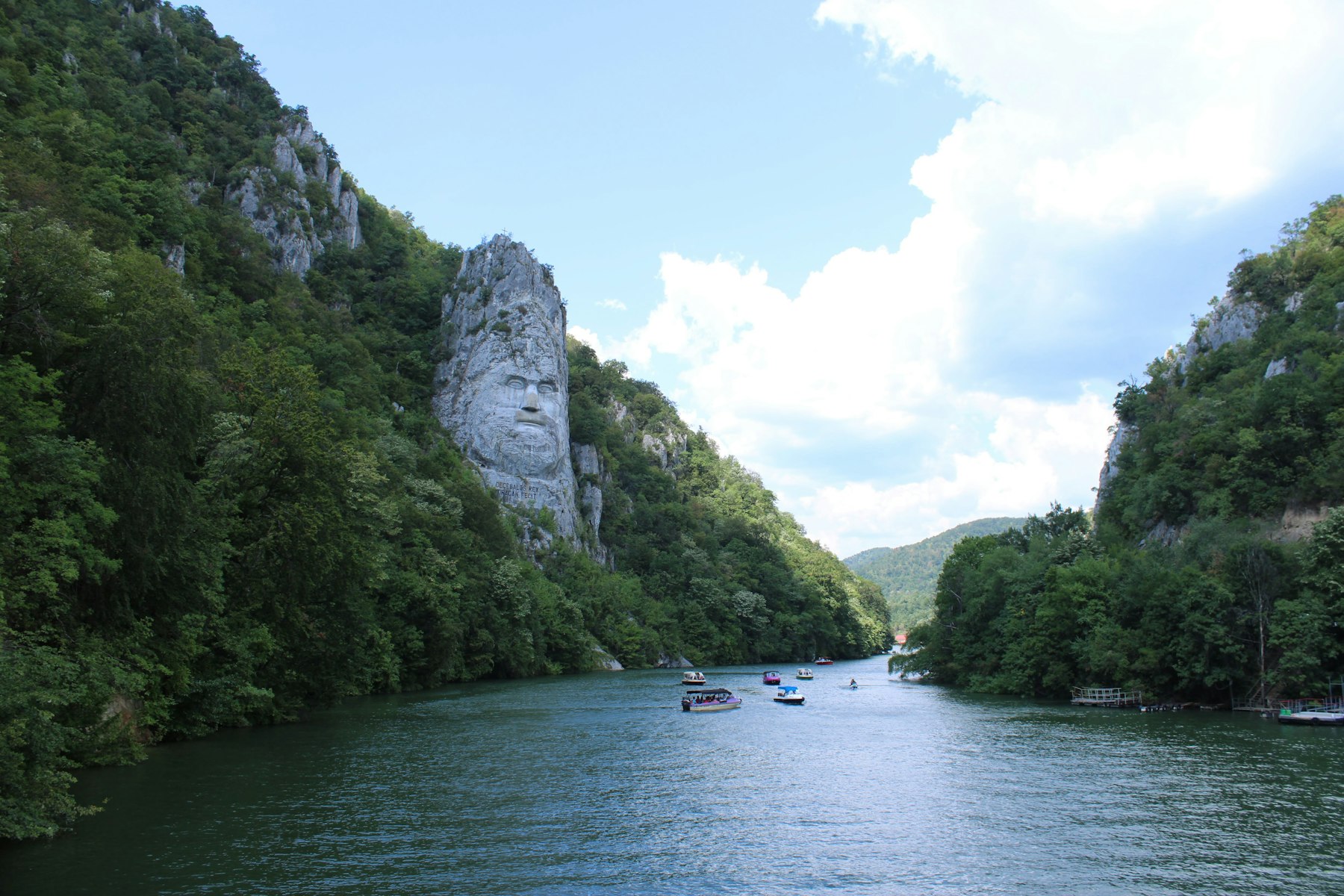
Plan a Danube that does not end at Budapest →
Book a Danube cruise and you will almost certainly be sold the same week: Passau to Budapest, or Budapest back to Passau. It is a lovely week. It is also a short piece of the Europe Danube River, and it stops at the exact point where the river starts getting interesting.
Here are two numbers, both lifted straight from UNESCO’s own property records, and together they make the case better than I can. The Roman frontier inscribed as the Danube Limes — the western segment, the one your ship glides past somewhere between Bavaria and Slovakia — ran “almost 600 km along the River Danube.” Downstream, the frontier of Roman Dacia “extended for more than a thousand kilometres.” Set those two figures beside each other and the stretch nearly every operator sells you is the shorter one.
Everything factual on this page comes from the World Heritage List records at UNESCO, read property by property: the inscription years, the inscribed areas, the descriptions, and every phrase inside quotation marks. UNESCO publishes that descriptive text under CC-BY-SA IGO 3.0, which is why it appears here quoted and attributed rather than quietly reworded into our own voice.
What UNESCO does not publish is an itinerary. It keeps no sailing schedules, ranks nothing, and holds no view on where a week on the water ought to begin. So the shape of this Europe Danube River piece — four properties above Budapest, four below it, and an argument that the second four are the better half — is ours. That is judgment, drawn from the way we build trips, and it is labelled as judgment everywhere it turns up: in every Go when line, in the table caption, and in the Verdict at the bottom.
And the limits, plainly. We are travel advisors, not a cruise line. We own no vessels, we hold no cabin allocation anywhere on the Europe Danube River, and we cannot make a ship sail a reach its operator has decided not to offer. Wherever a sentence would have needed a sailing date, a water level or a fare we could not source, you will find a question to put to your operator instead of a figure we would be inventing.
“The waters of the Danube, which flow into the Black Sea, form the largest and best preserved of Europe’s deltas.”
— UNESCO World Heritage List, Danube Delta, inscribed 1991
Where the Europe Danube River Actually Goes
Eight World Heritage properties sit on or along the Europe Danube River, spread across five countries. Four of them — the western Danube Limes, the Wachau, Vienna and Budapest — are upstream, and between them they account for almost the entire commercial cruise map. The other four sit downstream of Budapest, in Romania and Bulgaria, and I have never once seen them quoted in a mainstream brochure.
That imbalance is not about merit. It is about infrastructure. The upper Europe Danube River has deep, dependable locks, a dense cluster of ports within easy coach reach of Munich and Vienna airports, and forty years of European river-cruise fleet built to fit it. The lower river has fewer berths, longer distances between anything, and a fleet that has never been large. None of which is an argument that the lower river is worse. It is an argument that it is harder, which is a completely different thing and often the more interesting one.
1. The Danube Limes: Six Hundred Kilometres of Roman Frontier
Inscribed only in 2021, the western segment of the Danube Limes is the single most under-sold thing on the upper Europe Danube River. It ran, UNESCO says, “almost 600 km along the River Danube” from Bad Gögging in Germany, through Austria, to Iža in Slovakia, and it held the middle European boundary of the empire “for more than 400 years from the 1st century CE.”
The detail that stays with me is the scale of the garrison. The backbone was “a string of four legionary fortresses, each housing some 5,500 to 6,000 Roman citizens as soldiers,” with forts, fortlets and watchtowers strung between them and the Pannonian fleet patrolling the water in front. You are not sailing past scenery. You are sailing down the inside of a working military border that outlasted most modern countries.
Best for: anyone who finds a ruined watchtower more moving than a schloss.
Go when: our judgment for this stretch of the Europe Danube River is May or late September, when the towpaths are walkable and the coach excursions are not stacked three deep at the same fort.
2. The Wachau: The One Leg Everybody Already Sails
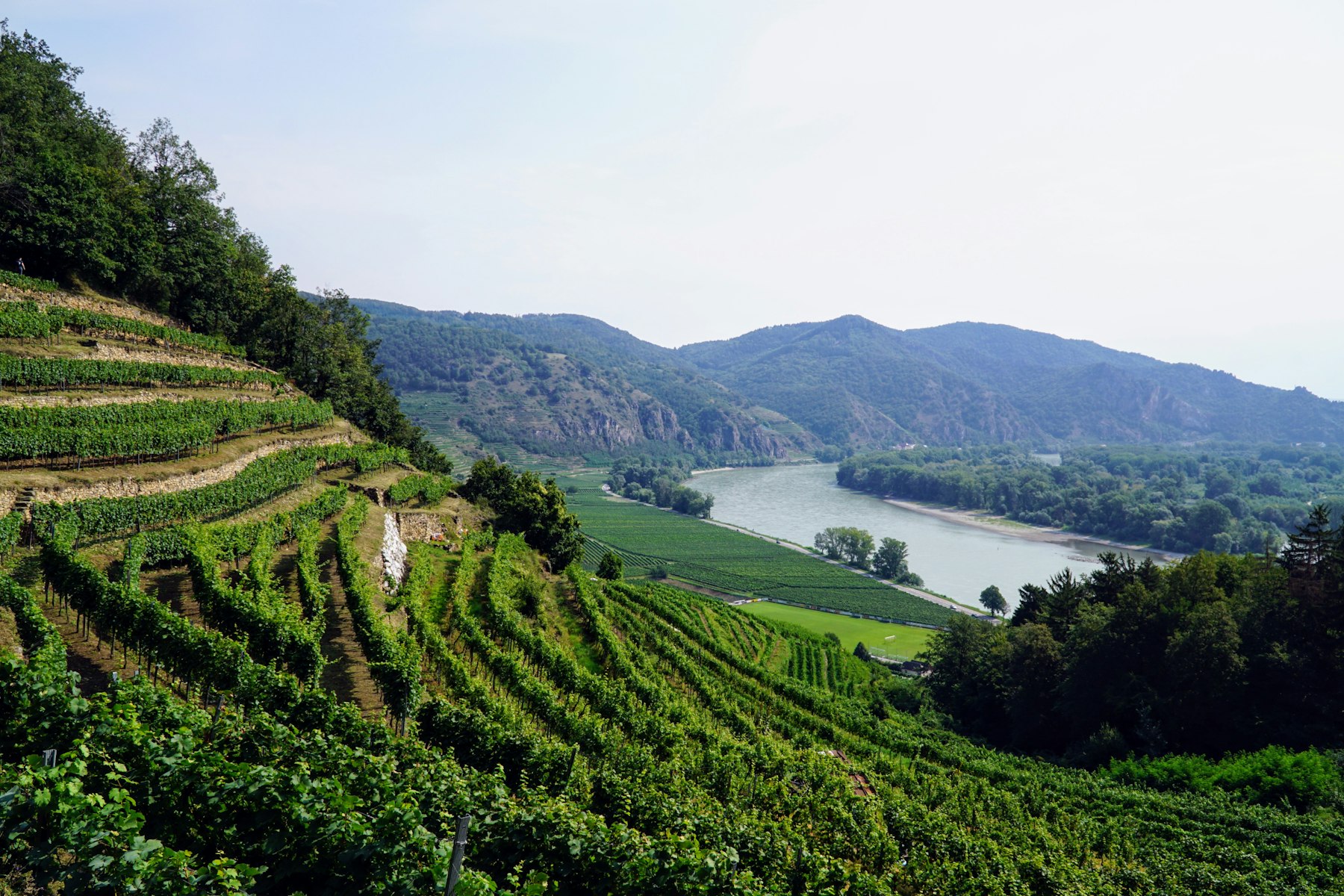
Between Melk and Krems the valley narrows into the Wachau, 18,462 hectares of terraced vineyard, monastery and ruin that UNESCO describes as showing “high visual and landscape qualities” and “many intact and visible traces of its continuous, organic evolution since prehistoric times.” It is the postcard, and it has earned the job.
What I had not appreciated until I read the record properly is how deliberate the terraces are. Clearing began in the Neolithic, but the landscape you photograph from the sun deck dates from around the year 800, when “the Bavarian and Salzburg monasteries began to cultivate the slopes of the Wachau, creating the present-day landscape pattern of vine terraces.” Twelve hundred years of the same crop on the same steps.
Best for: a first trip on the Europe Danube River, and for anyone who wants wine and apricots within a morning of each other.
Go when: we would sail it in late September for the harvest, though that is our judgment on atmosphere rather than anything UNESCO ranks.
3. Vienna: A Capital That Treats the River as a Back Garden
Vienna is inscribed at 371 hectares — the medieval core, the Baroque ensembles, the Gründerzeit blocks — and UNESCO is unusually direct about why it matters, crediting the city with “consolidating Vienna’s reputation as the ‘musical capital’ of Europe” across four centuries.
Here is the thing nobody tells you before you book: Vienna barely faces the water. The inscribed property grew from a Roman settlement whose defences were demolished in the twelfth century, and the city spent the next eight hundred years expanding inland. Your ship ties up on a canal or a cut some way from anything in the record above. That is not a complaint, it is a planning fact, and it is the reason a Vienna day off a boat feels shorter than a Vienna day off a train.
Best for: music, coffee houses, and the single best museum afternoon on the river.
Go when: we would give Vienna two nights on land rather than one day off a Europe Danube River ship, which is our judgment and not a UNESCO position.
4. Budapest: Where Every Europe Danube River Cruise Stops
Budapest is the one property on this list that genuinely is a river city. The inscription covers 476 hectares of “two originally quite separate cities: Buda on the spur on the right bank and Pest on the plain on the left bank,” joined by W. T. Clark’s suspension bridge, “finalised in 1849,” which “symbolised the reunification of Buda and Pest, which did not actually come about until 1873.” Andrássy Avenue was added in 2002, and beneath it runs “the European continent’s first underground railway,” built 1893 to 1896.
And this is where the brochure ends. Not because the Europe Danube River ends — it has most of its length still to run — but because this is where the fleet turns round. If you take one thing from this page, make it that: Budapest is a terminus for commercial reasons, not geographic ones.
Best for: everyone, genuinely. It is the best city on the Europe Danube River.
Go when: in our judgment, as a start point rather than a finish, so the good part is still ahead of you.
5. Roman Dacia: The Only Province Entirely North of the River
Inscribed in 2024 and almost unknown outside Romania, Frontiers of the Roman Empire – Dacia “extended for more than a thousand kilometres along the western, northern and eastern borders of the Roman province of Dacia, from the Danube River on each end.” Read that last clause twice. The frontier leaves the water and comes back to it, because “Dacia was the only Roman province located entirely north of the Danube River.”
UNESCO counts seven distinct sectors of frontier, land and riverine, “integrated into a unitary border, an unparalleled situation in other sectors of the Roman limes,” plus an eighth holding high-altitude marching camps. It held for roughly 170 years and secured Rome’s access to gold and salt. It is, in other words, the mirror image of stop one, on the far side of the continent, and hardly anyone has heard of it.
Best for: the traveller who did the Rhine and the upper Europe Danube River and wants the sequel nobody else has read.
Go when: our judgment is late spring or early autumn, because the inland sectors involve real driving and real heat in July.
6. Ivanovo: Frescoes Cut Into a Danube Tributary
The Rock-Hewn Churches of Ivanovo sit in the Rusenski Lom valley, a tributary running down to the Danube near Ruse, and they have been on the List since 1979 — which makes them older as an inscription than almost everything upstream. Five chapels, churches and monastic cells cut straight into the rock, dating from the thirteenth and fourteenth centuries.
UNESCO does not hedge about the painting: the frescoes “reveal an exceptional artistry and a remarkable artistic sensitivity for 14th century painting,” and “by their very expressiveness surpass any other historical monuments discovered” in the Palaeologan style. They break the Byzantine rules on purpose — the record notes “a clear preference for the nude, the landscape, an architectural background in a composition, drama, an emotional atmosphere.” At 171.9 hectares this is the smallest property on the page and the one I would least want to miss.
Best for: anyone who thinks medieval painting is all flat gold and stiff saints.
Go when: we would go in spring, on our own judgment about this end of the Europe Danube River, when the valley is green and the rock is not baking.
7. Srebarna: Ninety-Nine Nesting Species on the West Bank
Srebarna Nature Reserve is a lake and wetland of 638 hectares on the Bulgarian bank, inscribed in 1983, and it is the kind of place that sounds minor on paper and is not. UNESCO calls it “an important wetland on the Western Palaearctic bird migratory flyway,” providing “nesting grounds for 99 species of birds and seasonal habitat to around 80 species of migratory birds.”
The geography does the work for you: “the property is surrounded by hills which provide a natural boundary and offer an ideal means for observing the waterfowl.” Floating reedbed islands, flooded willow woodland, wet meadows at the northern end, and belts of riverine forest with old white willows running along the Danube itself. You stand above it and look down into it, which is the opposite of most birding, and much easier.
Best for: anyone travelling with a birder, and anyone who wants one genuinely quiet morning on the Europe Danube River.
Go when: our judgment is the spring migration, though we would ask your operator to confirm conditions rather than trust a season.
8. The Danube Delta: The End of the Europe Danube River
And then the river stops being a river. The Danube Delta, inscribed in 1991 and by far the largest property here at 312,440 hectares, is where “the waters of the Danube, which flow into the Black Sea, form the largest and best preserved of Europe’s deltas.”
UNESCO’s numbers are the whole argument: “over 300 species of birds as well as 45 freshwater fish species in its numerous lakes and marshes.” Compare that to Srebarna’s 638 hectares and you get a sense of the shift in scale — this single property is roughly four hundred and ninety times larger. It is also the only stop on the page where the main vessel is beside the point. The Delta is reached in small boats, through channels, and the experience has nothing whatever in common with a sun deck.
Best for: the end of a long Europe Danube River trip, when you want the landscape to do the talking.
Go when: we would build it in for four nights minimum, which is our judgment about pace rather than a published recommendation.

MORE: We made the same argument about a different river earlier this month — Rhine River Cruise: Get Off the Ship at These Seven Stops.
The Eight Properties, Side by Side
| # | Property | Country | Inscribed | Inscribed area | Relative to Budapest |
|---|---|---|---|---|---|
| 1 | Danube Limes (Western Segment) | Germany, Austria, Slovakia | 2021 | 821.7474 ha | Upstream |
| 2 | Wachau Cultural Landscape | Austria | 2000 | 18,462 ha | Upstream |
| 3 | Historic Centre of Vienna | Austria | 2001 | 371 ha | Upstream |
| 4 | Budapest, Banks of the Danube | Hungary | 1987 | 476 ha | The turnaround |
| 5 | Frontiers of the Roman Empire – Dacia | Romania | 2024 | 1,491.6 ha | Downstream |
| 6 | Rock-Hewn Churches of Ivanovo | Bulgaria | 1979 | 171.9 ha | Downstream |
| 7 | Srebarna Nature Reserve | Bulgaria | 1983 | 638 ha | Downstream |
| 8 | Danube Delta | Romania | 1991 | 312,440 ha | Downstream |
Inscription years and areas are taken verbatim from each property’s UNESCO World Heritage List record and are the inscribed core only — buffer zones are larger and are not counted here. The areas span a factor of roughly eighteen hundred, from Ivanovo at 171.9 hectares to the Delta at 312,440, so read the column as a description of what was inscribed rather than of how much there is to see. The upstream and downstream column is our own classification, not a UNESCO category.
What the Europe Danube River Looks Like Below Budapest
Everything above is sourced. This section is not — it is the practical advice we give clients, and I want to be clear about which is which. Three questions do most of the work here, and all three are questions rather than claims because the answers change by operator and by season.
Ask which weeks the vessel is actually positioned downstream
Most lower-Danube sailings exist as a handful of repositioning weeks rather than a year-round schedule. Ask any operator quoting you a Danube cruise how many of this river’s eight World Heritage properties the ship actually reaches — and then ask what happens to the itinerary if water levels cancel a leg. The answer to the second question tells you more about the company than the first.
Ask how the Delta is reached, and in what
A large river vessel does not go into the Delta channels. So ask whether the Delta days are run by transfer and small boat from a mooring, how many hours of that there are, and whether the small boats are the operator’s or a local subcontractor’s. A brochure that says “Danube Delta” and means “a coach to a jetty” is not lying, but it is not the same trip.
Expect the ship to be smaller, and budget the time
The lower Europe Danube River has never carried the fleet the upper river has, so the vessels are fewer and generally older. We think that is a fair trade and we say so; you may not. Either way, build in more days than an upstream week would need, because the distances between the four downstream properties are not upstream distances.
See how we build a lower-Danube route →
Frequently Asked Questions
How many UNESCO World Heritage sites are on the Danube?
UNESCO publishes no Europe Danube River list, so this is our count, not theirs. Reading the state-party records for Germany, Austria, Slovakia, Hungary, Romania and Bulgaria, we count eight inscribed properties that sit on the river or on a channel running straight into it. Four are upstream of Budapest and four are downstream.
Why do most Danube cruises end in Budapest?
Commercial reasons, not geographic ones. The upper Europe Danube River has the locks, the berths and four decades of purpose-built fleet within coach reach of Munich and Vienna airports. Budapest is where that infrastructure runs out, so it is where the ships turn round — even though the river has most of its length still to run.
Which countries does the Europe Danube River flow through on this route?
The eight properties in this piece sit across five countries: Germany, Austria and Slovakia share the western Danube Limes, Hungary holds Budapest, and Romania and Bulgaria hold the four downstream properties between them. The Wachau and Vienna are both Austrian, which is part of why the upper river feels so concentrated.
Is the lower Europe Danube River worth the extra days?
Our answer is yes, with a caveat we will not dress up. You trade a newer ship, a denser schedule and easier flights for four properties almost nobody in your life will have seen. If what you want from a Europe Danube River cruise is comfort and ease, the upstream week is genuinely the better product.
When is the best time to sail the Europe Danube River?
This is judgment, not a sourced recommendation. We would sail the upper river in late September for the Wachau harvest, and the lower river in late spring, when the Delta migration is on and the inland Dacia sectors are not yet baking. Ask your operator about water levels either way.
Can you see the Danube Delta from a river cruise ship?
Not properly. UNESCO describes 312,440 hectares of lakes and marshes, and the parts worth reaching are channels a large vessel cannot enter. The Delta is a small-boat experience at the far end of the Europe Danube River, run out of a mooring, so treat any ship-based Delta day as an introduction and give it four nights if you actually want to see it.
The Dorian Destinations Verdict
If you are only going to sail the Europe Danube River once, do not book the Passau to Budapest week. Start in Budapest and go east instead, and accept that you will not see the Wachau or Vienna this time. Those two are the easiest things in Europe to reach on a separate trip, by train, in a weekend, at an hour of your choosing. Dacia, Ivanovo, Srebarna and the Delta are not.
I should be honest about what that advice costs us. A seven-night Passau to Budapest cruise is a vastly easier sale — it is the product the entire industry is actually built to deliver, the commissions are better, and nobody has ever rung me up annoyed about the Wachau. Telling you to skip Vienna, on a river where Vienna is the headline, is not a recommendation anyone makes for commercial reasons.
But the two numbers at the top of this page have not moved. The Roman frontier your ship sails past runs almost 600 kilometres. The one it never reaches runs more than a thousand. Whichever half you pick, pick it on purpose rather than because it was the only one in the brochure.
Talk to a Dorian travel advisor →
Sources: UNESCO World Heritage List records for the Danube Limes (Western Segment), the Wachau Cultural Landscape, the Historic Centre of Vienna, Budapest, Frontiers of the Roman Empire – Dacia, the Rock-Hewn Churches of Ivanovo, Srebarna Nature Reserve and the Danube Delta, together with the state-party listings for Austria, Hungary, Romania, Slovakia and Bulgaria, all read on 30 September 2026. UNESCO descriptive text is published under CC-BY-SA IGO 3.0 and is quoted and attributed here, never paraphrased as our own. Seasonality, pacing and the upstream-downstream framing are Dorian Destinations judgment and are labelled as such throughout.
River Cruises · Danube River Cruise · Europe · Cultural Travel