

Curated Travel
The Dorian List
Best Places to Visit in Europe: Pick the Month, Then the Place

Co-Founder & Travel Advisor, Dorian Destinations · Published September 28, 2026 · ET
Plan a trip around your actual dates →
Ireland has two World Heritage sites. Two. And one of them you can only reach by boat, in summer, when the Atlantic feels like allowing it. That is the flaw running through almost every list of the best places to visit in Europe you will read this week: they tell you where, at length, and they tell you almost nothing about when.
We get the same email every February. Someone has a fortnight of leave, a budget they have thought hard about, and eight European cities copied off the internet, and they want to know which three to cut. It is the wrong question, asked in the wrong order. The right one is what the dates already contain — because a week in Kraków in September is simply a different holiday from that same week on the Adriatic, and only one of the two is any good in September.
So this is a calendar of the best places to visit in Europe, not a league table. Seven months, seven places, each one a UNESCO World Heritage property with a public record you can read yourself. No place appears twice, no month is padded, and where the reasoning is ours rather than a source’s, we say so in the line.
Every factual claim below — inscription year, protected area, the description of what is actually there — comes from that property’s own record on the World Heritage List, read on 28 September 2026, and each is linked. UNESCO’s descriptive prose is published under CC-BY-SA IGO 3.0, so where we quote it we have put it in quotation marks and attributed it.
The month attached to each entry, though, is ours. It is judgment built from how we actually book these trips and which clients come home happy, and it is labelled as judgment every single time it appears. We are travel advisors, not a weather service and not a tour operator: we hold no seat allocation on the Skellig boats, no cabins on a fjord, and we cannot promise you a clear morning at any of the best places to visit in Europe.
“It is the most spectacularly situated of all Early Medieval island monastic sites, particularly the isolated hermitage perched on narrow, human-made terraces just below the South Peak.” — UNESCO, on Sceilg Mhichíl
Why the Best Places to Visit in Europe Change With the Calendar
Europe is small enough to fly across in three hours and varied enough that those three hours cross about four climates. A continent that narrow and that mixed rewards one skill above all others: matching a fixed set of dates to the one region doing its best work in them.
Most trip planning runs the other way round. You fall for a place, you find the cheapest week, and then you spend the holiday explaining the weather to yourself. Flip it. Start with the fortnight you can actually take off, and the shortlist of the best places to visit in Europe collapses from forty candidates to about three — which is a far easier decision, and a much better trip.
1. January and February — Switzerland, by Train Over Two Alpine Passes
Winter in the Alps is usually sold as a lift pass, which quietly excludes anyone who does not ski. The answer, and one of the best places to visit in Europe in January, is a railway. The Rhaetian Railway in the Albula / Bernina Landscapes, inscribed in 2008 over 152.42 hectares, brings together two historic lines crossing the Swiss Alps through two passes.
The Albula line opened in 1904 and runs 67 km, and UNESCO counts what it took to build: 42 tunnels and covered galleries, and 144 viaducts and bridges. The Bernina pass line adds another 61 km. In deep winter the thing is genuinely absurd — a scheduled train, running on time, through a landscape that has no business having a train in it.
Best for: travellers who want one of the best places to visit in Europe in deep winter and have no interest whatsoever in skiing.
Go when: January into February, for the low sun and a snow line well below the track — our judgment about the best places to visit in Europe in winter, not a UNESCO one.
2. April — Turkey, and Istanbul Before the Heat
The Historic Areas of Istanbul cover 765.5 hectares, inscribed in 1985, on a peninsula that UNESCO places “between the Balkans and Anatolia, the Black Sea and the Mediterranean.” The city was successively the capital of the Eastern Roman Empire and of the Ottoman Empire.
The record is unusually direct about why it matters: Istanbul has been bound up with “major events in political history, religious history and art history for more than 2,000 years,” and its value rests on “its unique integration of architectural masterpieces that reflect the meeting of Europe and Asia.” The Theodosian walls that hold the historic peninsula went up in the early fifth century.
Best for: a first trip east among the best places to visit in Europe, still running on European flight times and European hotel standards.
Go when: April, before the summer heat makes walking the peninsula a chore — judgment.
3. May — Croatia, Where Two of the Best Places to visit in Europe Sit Three Hours Apart
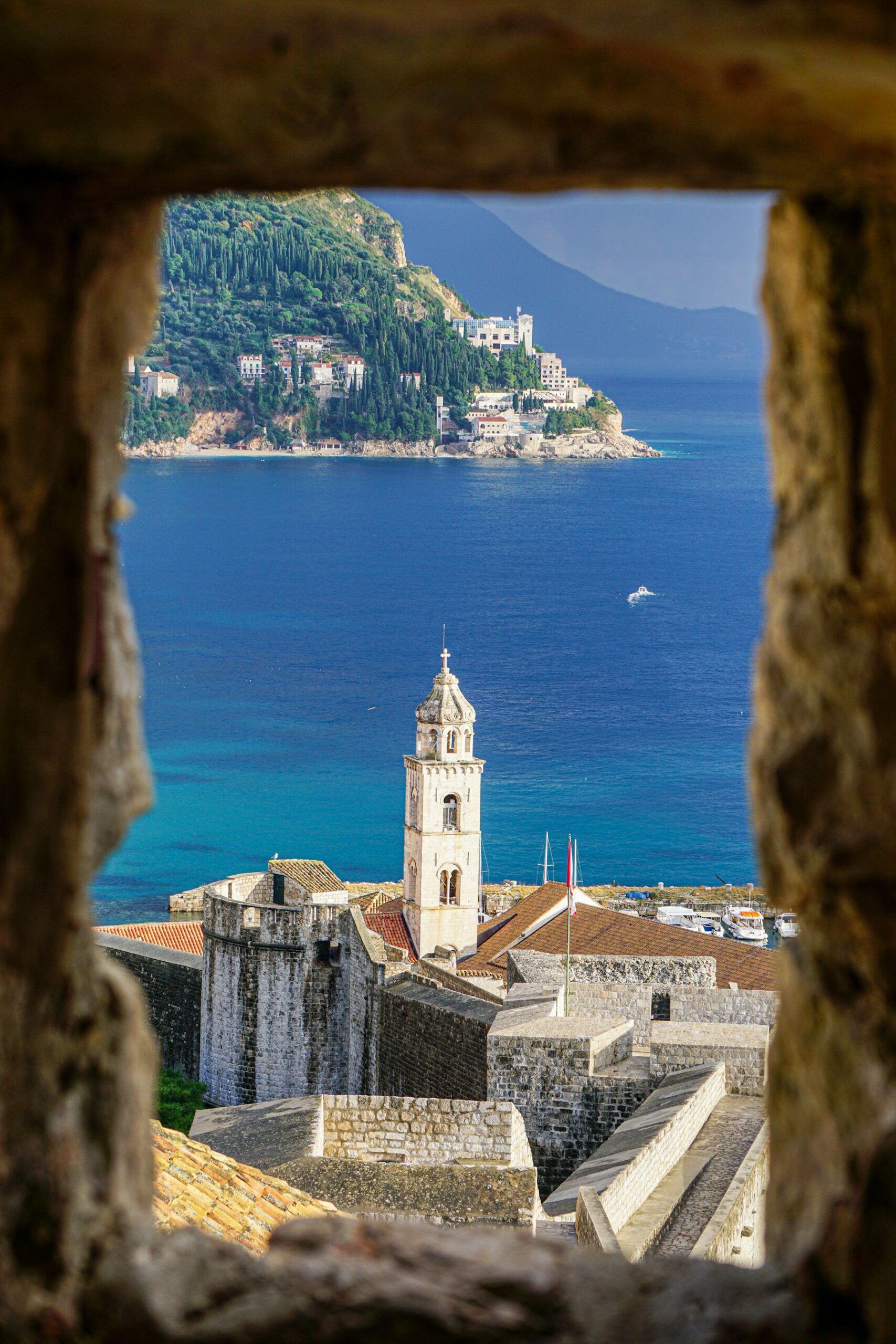
Croatia holds ten World Heritage properties, and two of the best sit an easy drive apart on the same coast. The Old City of Dubrovnik — 96.7 hectares, inscribed in 1979 — is the one UNESCO calls the “Pearl of the Adriatic,” an important Mediterranean sea power from the 13th century onwards.
It has been knocked down twice and kept its shape both times: “severely damaged by an earthquake in 1667,” the record notes, it nonetheless preserved its Gothic, Renaissance and Baroque churches, monasteries, palaces and fountains, and after being “damaged again in the 1990s by armed conflict” it became the focus of a major UNESCO-coordinated restoration.
Three hours up the coast, the Historical Complex of Split with the Palace of Diocletian is a tighter 20.8 hectares, also 1979. The ruins of a palace built between the late third and early fourth centuries AD are not on the edge of the city; they are scattered through it, with a cathedral raised in the Middle Ages out of the stone of the ancient mausoleum.
Now the warning, and it belongs on the best entry rather than the worst. Dubrovnik’s protected old city is 96.7 hectares — smaller than a decent city park. In July and August that space absorbs the summer crowd and the day-trip traffic at once, and we will talk clients out of those weeks rather than book them into a version of the place we would not enjoy ourselves.
Best for: anyone who wants two genuinely great old cities and a coast, without the peak-season compression.
Go when: May, comfortably before the high season builds — judgment, and the single firmest one on this list.
4. June — Ireland, and the Two-Site Country
Ireland has exactly two World Heritage properties, which for a country that size is a kind of statement about how the best places to visit in Europe are distributed. One of them, Sceilg Mhichíl — Skellig Michael — is 21.58 hectares inscribed in 1996, and UNESCO puts it “at the extreme north-western edge of Europe, rising from the Atlantic Ocean almost 12 km west of the Iveragh Peninsula in County Kerry.”
The numbers give you the shape of it. A U-shaped depression known as Christ’s Valley sits 130 m above the sea, flanked by peaks of 185 m and 218 m. Three landing points connect by flights of steps to the monastic remains. The rock is deeply eroded by its exposure and, the record adds, “almost frost-free.”
Best for: one unforgettable day at one of the best places to visit in Europe, inside an otherwise gentle week of Kerry driving and eating.
Go when: June, for the longest days and the calmest sea — judgment. Landings depend entirely on the swell, so ask your boat operator what their actual landing rate was last season; that is a number they can answer and we would never assert on their behalf.
5. July — Norway, and the Best Places to Visit in Europe in School Holidays
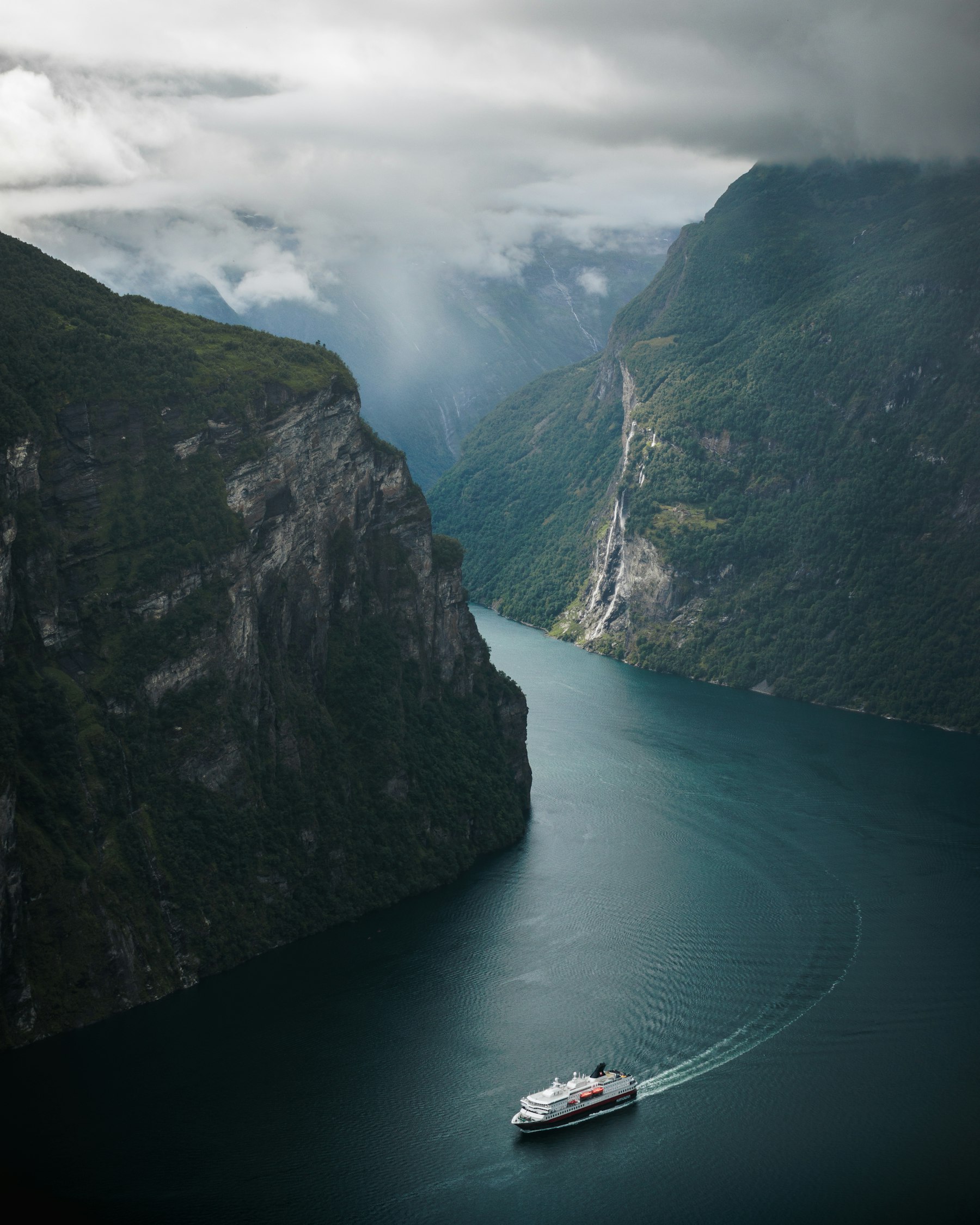
July is the month most families cannot move, and most of Europe answers it badly. Norway answers it well. The West Norwegian Fjords — Geirangerfjord and Nærøyfjord were inscribed in 2005 across 122,712 hectares, of which 10,746 are sea.
UNESCO describes them as “exceptional in scale and grandeur in a country of spectacular fjords,” among the world’s longest and deepest, varying “in breadth from just 250 m to 2.5 km wide.” The record calls the pair “a sort of type locality for fjords” still displaying active geological processes, and puts them among “the most scenically outstanding landscapes in the world.”
What that means on the ground in July is long light, walkable temperatures and water calm enough for small boats. It is also the one entry here where the crowd does not really matter, because the scale of the place swallows it.
Best for: households locked to school holidays who refuse to spend them in a queue.
Go when: July, for the light and the sea state — judgment, and the firmest summer entry on our list of the best places to visit in Europe.
6. September — Poland, Kraków and What Is Underneath It
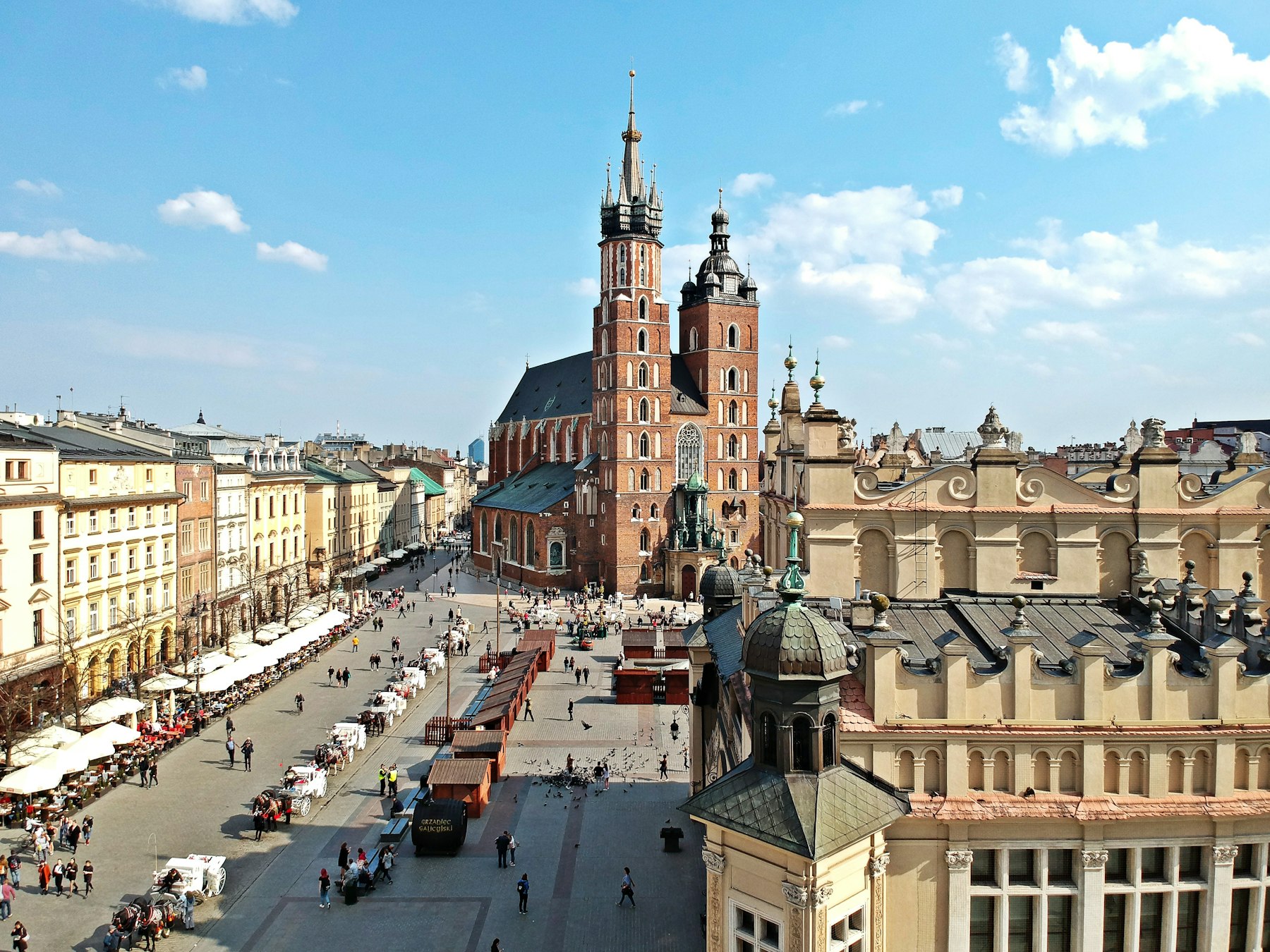
The Historic Centre of Kraków, 149.65 hectares inscribed in 1978, is described by UNESCO as three urban ensembles at once: the medieval chartered city, the Wawel Hill complex, and the town of Kazimierz. The city was chartered in 1257 and was once the capital of Poland, and the record calls it “one of the most outstanding examples of European urban planning.”
Half an hour away sit the Wieliczka and Bochnia Royal Salt Mines, also 1978, across 1,104.947 hectares. They were worked “in parallel and continuously from the 13th century until the late 20th century,” which UNESCO ranks as “one of the earliest and most important European industrial operations.” Miners cut chapels and statues out of the rock salt, and an underground tourist route has existed since the early 19th century — this is not a new attraction bolted onto an old hole, and it earns its place among the best places to visit in Europe.
Best for: a short city trip to one of the best places to visit in Europe, with real weight to it and a price that still surprises people.
Go when: September, once the summer heat has gone and before the light does — judgment.
7. November and December — Austria, and Salzburg in the Dark
The Historic Centre of the City of Salzburg, 236 hectares inscribed in 1996, is something Europe has almost none of left. UNESCO calls it “an outstanding example of an ecclesiastical city-state, peculiar to the Holy Roman Empire,” and states flatly that “no other example of this type of political organism has survived so completely.”
It is also, in the record’s phrase, “the point where the Italian and German cultures met.” Two Italian architects, Vincenzo Scamozzi and Santino Solari, gave the town most of its Baroque face, and the skyline is “characterized by its profusion of spires and domes, dominated by the fortress of Hohensalzburg.” Among the best places to visit in Europe, a compact Baroque town does its best work in the dark, lit, at four in the afternoon.
Best for: a short, unhurried winter break at one of the best places to visit in Europe, with music in it and no flight longer than it needs to be.
Go when: late November into December — judgment.
| Month | Where | The inscribed property | Inscribed | Protected area |
|---|---|---|---|---|
| January–February | Switzerland | Rhaetian Railway, Albula / Bernina Landscapes | 2008 | 152.42 ha |
| April | Turkey | Historic Areas of Istanbul | 1985 | 765.5 ha |
| May | Croatia | Old City of Dubrovnik / Split with Diocletian’s Palace | 1979 | 96.7 ha / 20.8 ha |
| June | Ireland | Sceilg Mhichíl | 1996 | 21.58 ha |
| July | Norway | West Norwegian Fjords | 2005 | 122,712 ha |
| September | Poland | Historic Centre of Kraków / Wieliczka and Bochnia | 1978 | 149.65 ha / 1,104.947 ha |
| November–December | Austria | Historic Centre of Salzburg | 1996 | 236 ha |
Inscription years and protected areas are taken from each property’s own World Heritage record. The months are our judgment, not UNESCO’s, and areas are the inscribed core only — buffer zones are larger and are not shown.
How to Actually Book the Best Places to Visit in Europe
Three habits separate the trips that work from the trips people quietly regret, and none of them is about picking a better city off a list of the best places to visit in Europe.
Fix the month before you look at a single hotel
Write your dates down first and treat them as the constraint they are. Everything after that is a much shorter conversation, and you stop paying a premium to visit somewhere in the one month it is worst.
Ask who actually controls access
A site with a boat, a permit, a timed ticket or a single road in is a site somebody else controls. Find out who that is early. On our list, the Skellig landings and the salt mine routes both run on someone else’s capacity, and the answer to what is available comes from them, not from us.
Leave one day in every week unbooked
Weather-dependent entries need a second attempt built in, or they become the thing you flew for and missed. One free day per week is the cheapest insurance in travel, and it is the change clients thank us for most often afterwards.
See how we build a trip around one fixed fortnight →
Frequently Asked Questions
What are the best places to visit in Europe?
There is no single answer, because it depends entirely on when you can travel. Our seven, month by month, are Switzerland in deep winter, Istanbul in April, the Croatian coast in May, Kerry in June, the Norwegian fjords in July, Kraków in September and Salzburg in early winter. Every one is a World Heritage property.
What is the best month to visit Europe?
May and September are the two we recommend most often, because they give you warm, long days almost everywhere without the July and August compression. That is our judgment from how trips actually turn out, not a published figure. If your dates are fixed elsewhere, the answer is to change which of the best places to visit in Europe you choose, rather than the month.
When is the best time to visit Europe to avoid crowds?
Shoulder season, which in practice means late April to early June and the whole of September. The honest caveat is that shoulder season is no longer quiet everywhere — it is quieter. Where crowding is genuinely acute, as in Dubrovnik’s 96.7-hectare old city, the more reliable fix is going somewhere else in July.
Can you visit Skellig Michael all year round?
No. Sceilg Mhichíl sits almost 12 km out in the Atlantic off County Kerry and is reached only by boat, so landings depend on the swell and run in the summer months. Ask your operator directly what they can and cannot land in — that is their number to give, not ours to estimate.
How many World Heritage sites does Croatia have?
Ten, according to UNESCO’s own country record. Two of them, the Old City of Dubrovnik and the Historical Complex of Split with the Palace of Diocletian, were both inscribed in 1979 and sit on the same stretch of Dalmatian coast, which is why they pair so naturally into one week.
Is Europe worth visiting in winter?
Yes, if you choose for it rather than settle for it. Winter suits compact Baroque towns like Salzburg, which is lit and walkable by four in the afternoon, and Alpine rail journeys such as the Rhaetian Railway. It does not suit coastal or island sites, most of which close or become unreachable.
The Dorian Destinations Verdict
If your dates can move, move them, and the whole problem dissolves. If they cannot — and for most people they cannot — then stop shortlisting places and start from the month you have been given. That single reversal is worth more than any ranking of the best places to visit in Europe, including this one.
And here is the position we will actually defend: if the only fortnight you own is in July or August, we would rather send you north than sell you the Mediterranean. Dubrovnik in August and Dubrovnik in May are not the same city, and the version we would book for ourselves is the one in May. Saying that costs us money — a peak-season Adriatic booking is a bigger and easier sale than a Norwegian one — but we would rather lose the margin than have you come home having paid a premium for the worst week of somebody else’s year.
The seven best places to visit in Europe above are a starting grid, not a bucket list. Take the one that matches your month. Then look up the other nine Croatian properties, or the second Irish one, and see what the calendar does with those.
Talk to a Dorian travel advisor →
Sources: property records from the UNESCO World Heritage List — Rhaetian Railway, Historic Areas of Istanbul, Old City of Dubrovnik, Split and the Palace of Diocletian, Sceilg Mhichíl, West Norwegian Fjords, Historic Centre of Kraków, Wieliczka and Bochnia Royal Salt Mines and Historic Centre of Salzburg, together with the Croatia and Ireland country records, all read on 28 September 2026. UNESCO descriptive text is quoted under CC-BY-SA IGO 3.0. Months, seasonality and all planning advice are Dorian Destinations’ own judgment.
Best of Travel · Europe · Cultural Travel · Luxury Travel