Passport Validity: 7 Essential Checks for Smarter Travel
By Franco Interian
Published October 19, 2026 · 9:14 AM ET
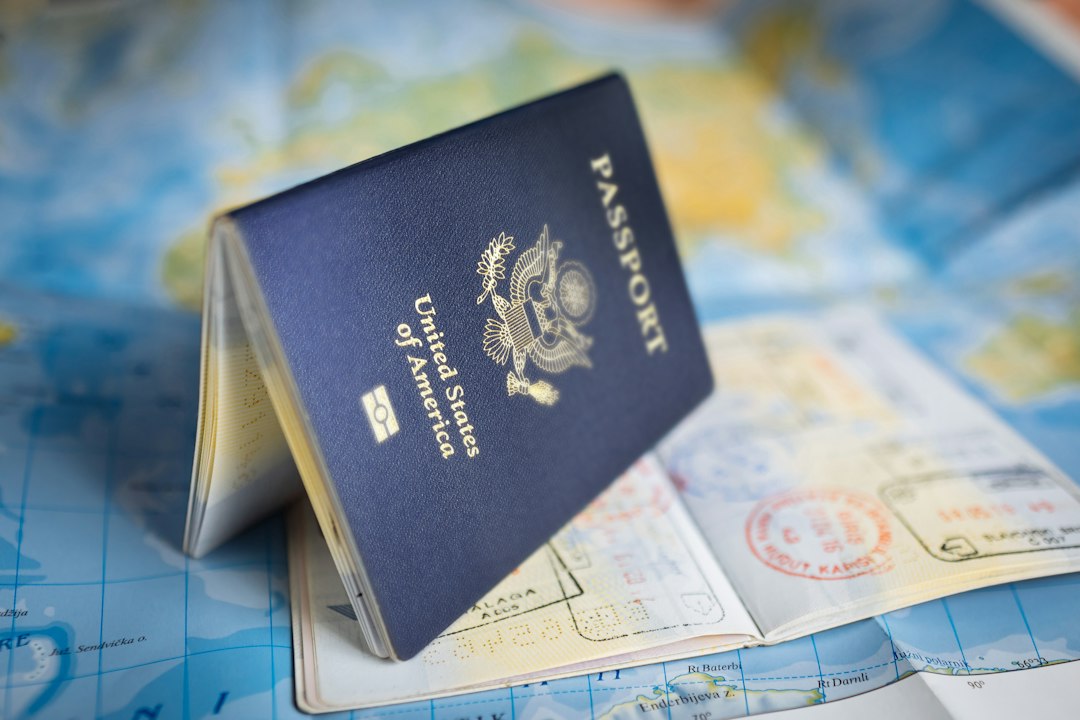
Passport validity deserves a place on your travel checklist before you book the flights. A passport that has not expired can still fall short of a destination’s entry requirements, and the important date may be your arrival, your departure or the day the document was issued.
This week’s Travel Tips & Hacks turns that uncertainty into seven practical checks, so you can make the booking with a clearer picture of what needs to be ready.
Imagine finding the ideal flight for a long-awaited journey, then discovering that one passport in the family needs attention. The best time to check your passport is while your travel plans are still flexible. Put the documents beside the itinerary before you pay, and a small administrative task can become a useful part of choosing the right dates, route and booking terms.
The best time to check your passport is while your travel plans are still flexible.
In this guide
For this October 19 installment, we checked the U.S. Department of State, the European Union’s Your Europe guidance and GOV.UK. The examples below concern ordinary U.S. passport holders taking short tourist trips; nationality, residence status and document type can change the answer. Use each destination’s current official guidance for your own journey.
Passport validity belongs in the booking decision
A hotel confirmation can be flawless while the document needed to reach it is unsuitable. The useful habit is to check the passport before making a financial commitment, alongside the route, cancellation terms and travel dates. That gives you room to renew, change the timing or choose a different itinerary while those choices are still straightforward.
Our recommended method is a small travel-document worksheet: one row per traveler and one entry for each destination. Record the passport’s issue and expiry dates, the relevant arrival or departure date, and the official requirement. Keep the source link with the answer. You are building a repeatable check, not relying on a remembered rule from last year’s holiday.
1. Start your passport validity check with the actual book
Take the passport out of its drawer. Read the dates directly from the document you intend to carry, rather than an old airline profile or a photograph saved before your last renewal. Confirm the name, nationality, issue date and expiry date. When several family members travel together, lay out every document before opening the booking page.
The distinction between a book and a card matters. The State Department’s passport book and card comparison states that a U.S. passport card cannot be used for international air travel. A card in your wallet is therefore not a substitute for the book needed on an overseas flight, even when the destination is nearby.
Best for: Travelers booking after a long gap, families managing several documents and anyone who recently renewed. Check when: Before the first nonrefundable reservation. Put a simple status beside each name: ready to check, renewal needed, or question to resolve. A blank cell is easier to notice than an assumption hidden in a group chat.
2. Map every border crossing before counting months
Write out the journey in order, including overnight connections and the return route. A London stay followed by Paris requires separate checks for the UK and the Schengen area. The passport validity rule for the first stop does not answer the question for the next one. The same principle applies when a cruise or touring itinerary visits several countries.
For each connection, establish whether you remain in an international transit area or must cross the border. A terminal change, baggage collection or airport hotel can make that a practical question worth resolving with the airline and the airport’s official information. Do not assume that every connection requires entry, or that every connection avoids it. Transit requirements deserve their own check.
Keep the worksheet specific: “UK, arrive November 1, leave November 8” is more useful than “Europe, November.” Add the later destinations underneath. If you subsequently move a flight, extend a stop or add a side trip, revisit those rows. A passport validity check is only as current as the itinerary used to make it.
3. Compare the destination’s rule, not a universal six-month rule
These three examples show why the starting date matters. They summarize passport validity only, not all entry conditions. Visas, travel authorizations, permitted length of stay and other requirements must be checked separately. The table is a planning aid, and the linked official guidance should be reopened before travel.
| Destination | Validity requirement | Date to use |
|---|---|---|
| United Kingdom | Passport valid for the whole visit | Your full UK stay |
| Schengen area, ordinary short visit | At least three months beyond planned departure; issued within the previous ten years at entry | Entry for issue age; departure for remaining validity |
| Peru | At least six months of validity from entry | The date you enter Peru |
GOV.UK’s Standard Visitor guidance specifies validity for the whole stay. For the Schengen example, the EU’s guidance for non-EU travelers sets out the three-month and ten-year checks. Do not apply Schengen guidance to all European countries: the UK and Ireland, for example, require their own checks.
The State Department’s Peru entry information specifies six months from entry and one blank visa page. A comfortable personal buffer can make planning easier, but it should not obscure the actual destination requirement. Record both the rule and the date on which you based your answer.
4. Count from the correct date and leave breathing room
For a hypothetical Peru arrival on November 1, 2026, six months later is May 1, 2027. For a hypothetical Schengen departure on November 15, 2026, three months later is February 15, 2027. These are calendar examples of the different baselines, not guarantees of admission. The applicable issue-date check and other entry conditions still have to be satisfied.
Use calendar months when the rule says months; do not silently replace three months with ninety days. If your dates fall near the limit, confirm the calculation with the relevant consulate and your carrier before committing. Better still, resolve a marginal passport early enough that a modest itinerary change will not undo your preparation.
Our preference is to avoid planning right against the last acceptable day when renewal is practical. An extra night, a changed return flight or a later border crossing can change the calculation. This is a planning margin, not a claim that every country requires six months after your return. Write the legal minimum and your preferred buffer on separate lines.
The issue date is a separate field for a reason. An expiry date on its own cannot establish compliance with a rule about when a document was issued. During your passport validity review, read both dates, then check the passport’s condition and available visa pages against the destination guidance. A single green check beside “not expired” leaves too much unanswered.

5. Check every traveler, especially children
A family can receive passports in the same month and still have very different expiry years. The State Department’s passport FAQ explains that passports issued to children under sixteen normally last five years, while those issued at sixteen or older normally last ten. Use the printed dates on each document instead of applying the adults’ timeline to everyone.
Give each person a separate row, including the youngest traveler. If someone has another nationality, a residence permit or a different type of travel document, check the rules that apply to that person’s circumstances. A travel companion’s successful trip is useful context, but it does not settle your own entry requirements.
Best for: Multigenerational trips and school-holiday planning. Check when: Before the group pays deposits. Ask one person to coordinate the checklist, while each adult verifies their own information. Keep copies of identity documents in a secure place and share them only through an appropriate channel when needed; a planning worksheet can use names and dates without becoming a passport-number directory.
If a child’s document needs replacing, use the official child-passport application instructions. The adult renewal process is not automatically available to a child. Put application appointments and required supporting documents on the planning calendar before choosing flights around an optimistic delivery date.
6. Allow for the full renewal timeline
Passport validity and renewal timing belong on the same page. The State Department’s current processing-time page, checked October 19, lists routine processing at four to six weeks and expedited processing at two to three weeks. Those are processing estimates, not the complete time from submitting an application to holding the new passport.
The same page says mailing can add up to two weeks for the application to arrive and another two weeks for delivery of the new passport. Processing times can change, and requests for additional information can lengthen the process. Recheck the official page before choosing a service or making plans that depend on a particular delivery date.
Plan the application around any intervening travel, too. The State Department’s passport FAQ warns that the old passport cannot be used for travel after applying for the new one. Do not treat a renewal application as a harmless background task while assuming the old document remains available for a weekend abroad.
A useful decision point is simple: if the trip depends on receiving a new passport, decide whether to wait for it or book arrangements whose written flexibility terms you can accept. Do not assume an airline, hotel or tour operator will waive penalties for a passport problem. Read the terms of the actual reservation before making that tradeoff.
Talk Through Your Travel Plans
7. Update the details, then recheck before departure
When the new passport arrives, repeat the document check using the new book. The passport number changes after renewal, according to the State Department. Review any airline records or travel profiles that contain the old details, and use the carrier’s instructions to update them where necessary. Do not assume an old saved profile has refreshed itself.
Some travel permissions are tied to a particular passport. GOV.UK states that a UK electronic travel authorisation is linked to the passport used to apply. If you replace that document, check the official service’s instructions before relying on an earlier approval. Passport validity, permission to travel and permission to enter are distinct checks.
Finally, compare the completed worksheet with the final itinerary and the documents in your bag. Reopen the official sources shortly before departure, particularly if the route or dates have changed. Keep the right book accessible for the journey. The point of this routine is to resolve questions while you still have time to act, then let the trip itself take center stage.
Your practical passport validity worksheet
Keep this short record with your itinerary. It works best when you can see the decision and its evidence together, rather than searching through a collection of screenshots with no dates or context.
- Traveler and document: Name, nationality, document type, issue date and expiry date.
- Journey: Every destination, relevant connection, arrival date and departure date.
- Rule: Required remaining validity, the date from which it runs, and any issue-age or blank-page condition.
- Evidence: Official source link and the date you checked it.
- Open items: Renewal, airline clarification, visa or authorization check, and who will resolve it.
- Final review: Updated itinerary, current document and any changed passport-linked details.
A completed checklist should make the next action obvious. “Passport expires in May” is a fact; “compare May expiry with November entry and the six-month rule” is a task. If a row remains uncertain, resolve it before treating the trip as ready to book.
Passport validity: frequently asked questions
Do I always need six months left on my passport?
No universal six-month rule covers every destination. The UK, Schengen area and Peru examples above use different tests. Check the official requirements for your nationality, passport type, route and dates. A conservative planning buffer is useful, but it does not replace checking the actual rule.
Should I count from my arrival date or my return date?
Use the date specified in the destination’s rule. Peru’s guidance for U.S. travelers uses entry; the Schengen short-visit example uses planned departure for the remaining-validity calculation. A trip’s first flight and final return are not automatically the right baselines for every country along the way.
Does an airline accepting my booking prove my passport is suitable?
No. A reservation confirmation is not a completed entry-document assessment. The State Department warns that airlines may refuse boarding when required passport validity is missing. Check before booking where possible, and resolve uncertainty with the carrier and the relevant official authority before travel.
What if a child’s passport expires sooner than the adults’ passports?
Assess the child’s document separately. A U.S. passport issued before age sixteen normally has a shorter validity period. Compare the printed expiry date with every destination’s requirements and use the official child-application process if a replacement is needed. Do not assume one family’s passports expire together.
Can I rely on expedited processing for a last-minute trip?
Treat the published processing time as an estimate and allow for delivery and any follow-up requests. Read the State Department’s current urgent-travel instructions when a trip is close. Avoid making a nonrefundable booking on the assumption that an expedited application guarantees a particular arrival date.
Should I check again after renewing?
Yes. Inspect the new passport, update stored details where required and review any permission linked to the previous document. Then run the passport validity check against the final itinerary. Renewal can resolve the expiry issue while creating a separate need to update travel records.
The Dorian verdict
Make the passport check part of choosing the trip. Start with the real document, compare each destination’s rule with the correct dates, and resolve renewal needs before committing money you cannot comfortably recover. That small habit creates room for better decisions and a calmer departure.
For a complex route, our recommendation is a single worksheet covering the whole party and the whole journey. Keep the official links, revisit it when the itinerary changes, and treat unresolved questions as planning tasks. A well-prepared passport is a quiet detail that helps everything else go smoothly.
Sources checked October 19, 2026: U.S. Department of State passport FAQ, passport book/card comparison, processing times and Peru entry guidance; GOV.UK Standard Visitor and ETA guidance; European Union Your Europe travel-document guidance. Links appear beside the relevant claims. Recheck current requirements before booking and departure.